


Antique Mantelpiece Porcelain Figures
Antique mantelpiece porcelain figures bring character to a room, ranging from playful Staffordshire animals to delicate 18th-century allegorical groups.
Antique Mantelpiece Porcelain Figures
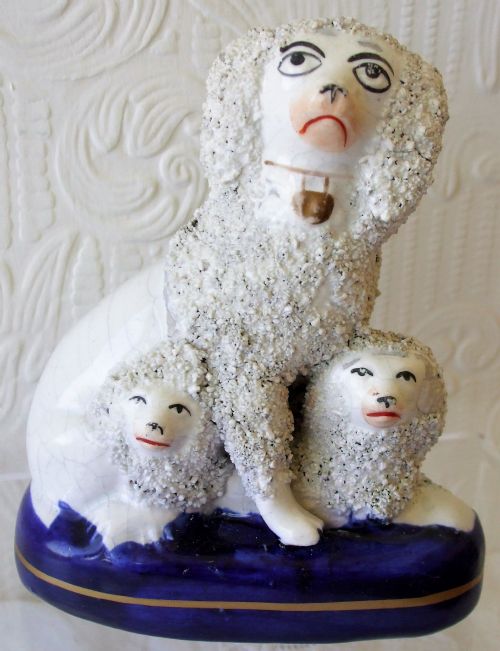
These pieces are sculptural ceramic objects designed to sit upon a mantelpiece, encompassing figurine groups, spill vases, and portrait figures. When you search for antique mantelpiece porcelain figures, you encounter everything from English earthenware spaniels and poodles to Continental porcelain musicians and allegorical deities.
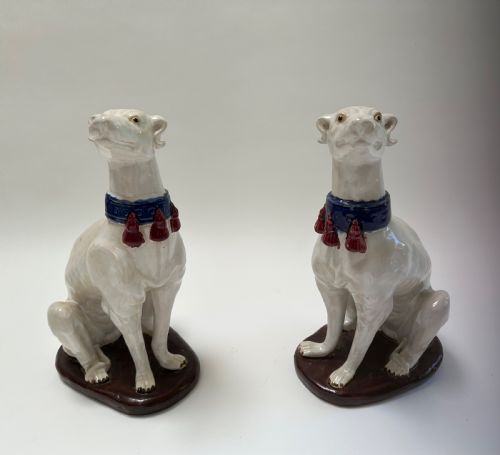
The selection leans heavily toward 19th-century Staffordshire pottery productions alongside Victorian earthenware and porcelain figures. Pairs of animals such as sheep, deer, and dogs dominate the domestic output, while Continental factories supply grander mythological and figural groups.
Forms vary from flatback portrait pieces intended to be viewed solely from the front to fully modelled multi-figure compositions. Spill vases incorporate a practical tube alongside the figures for holding taper matches by the hearth.
Materials and construction methods
Surface enrichment often relies on lead glaze, enamel, and applied gold leaf or gilt highlights to catch the flickering light of the fireplace. Meiji period Japanese pieces and English factories alike utilised distinct mineral oxides to achieve rich blue, copper lustre, and polychrome palettes.
The listings demonstrate a strong preference for 19th-century English earthenware, particularly Staffordshire animal pairs and spill vases.
Assessing quality and execution
Quality rests upon the crispness of the moulding and the sensitivity of the hand-painted details upon the porcelain or earthenware surface. Finer examples display subtle facial expressions and carefully controlled enamel work, whereas simpler utilitarian figures exhibit broader, stencilled brushwork.
The presence of crisp gilding, deep copper lustre, and well-preserved glaze without extensive crazing elevates a piece. Workshop mastery appears in the balance of complex figural groups and the clean separation of seated animals from their plinths.
Bow Porcelain·Volkstedt Richard Eckert·Royal Capodimonte Factory·Royal Doulton·Eugene Clauss of Paris·Royal Dux·Sitzendorf·Beswick·James Dudson
The Antique Mantelpiece Porcelain Figures Glossary
- Flatback
- A figure moulded with a detailed front and a flat, unglazed or minimally finished rear designed to stand flush against a wall. This construction method saves material and focuses visual attention entirely upon the frontal display.
- Spill vase
- A hollow cylindrical holder incorporated into a figural grouping specifically to store taper matches used for lighting candles and fires. These utilitarian vessels merge domestic practicality with decorative ceramic sculpture.
- Bisque
- Unglazed porcelain fired once to produce a matte, biscuit-like texture resembling fine marble. It gained immense popularity in the 19th century for classical and sentimental figural compositions.
- Copper lustre
- A metallic glaze technique that imparts a reflective, iridescent copper sheen to earthenware surfaces. Staffordshire potters frequently applied this finish to animal groups to create a striking visual impact.
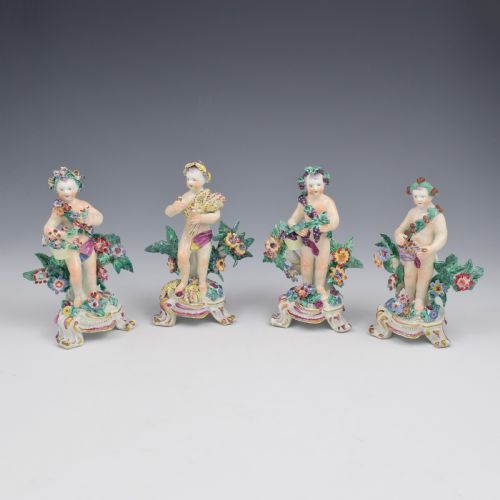
- Putto
- A plump, naked child motif, often winged, derived from classical mythology and frequently seen in 18th-century allegorical porcelain sets. These figures add a sense of theatrical movement to mantelpiece displays.
Antique Mantelpiece Porcelain Figures: Frequently Asked Questions
How do I display antique mantelpiece figures safely?
Place them on a stable, level mantel shelf away from direct heat sources and heavy foot traffic that might cause vibrations. Using museum putty underneath the base secures lighter pieces against accidental knocks.
Keep them out of direct sunlight to prevent the hand-painted enamels and gilt highlights from fading over time.
What is the difference between earthenware and porcelain?
Earthenware is an opaque, porous ceramic fired at lower temperatures, commonly found in sturdy Staffordshire animal groups and spill vases. Porcelain is a finer, vitrified material fired at much higher heats, resulting in a dense, translucent body favoured by Continental factories.
Porcelain holds finer moulded details and sharper enamel colours, whereas earthenware offers a heavier, more rustic charm.
Were Staffordshire dogs meant for fireplaces?
Pairs of spaniels and poodles were traditionally manufactured in Staffordshire to sit on either end of a cottage mantelpiece. Local legend suggests facing them inward toward each other meant the owners were at home, though they served primarily as cheerful domestic ornaments.
Their sturdy earthenware construction and flat backs suited the narrow shelves above coal-burning hearths.