
Antique Mahogany Swing Toilet Glass
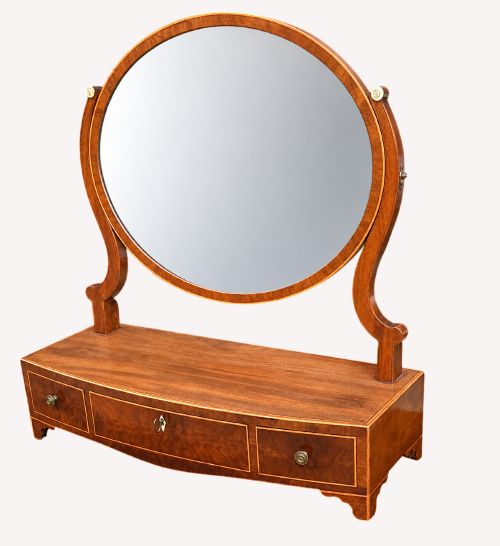
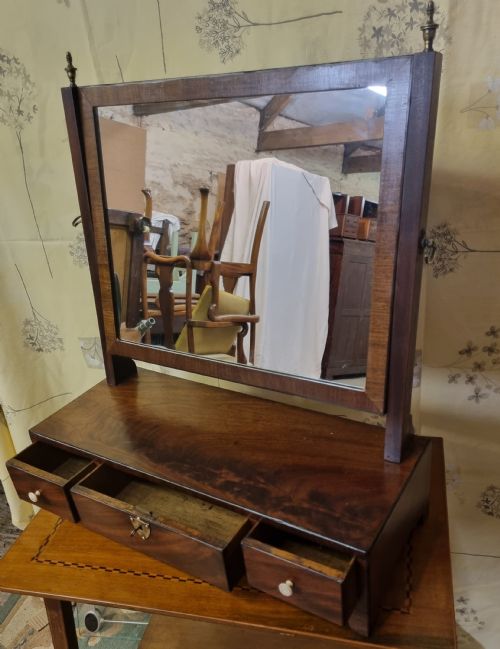
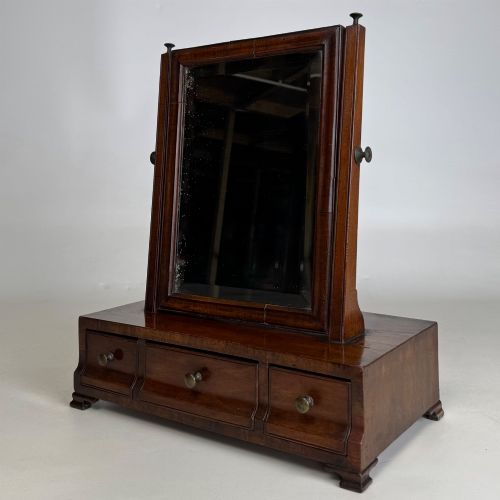
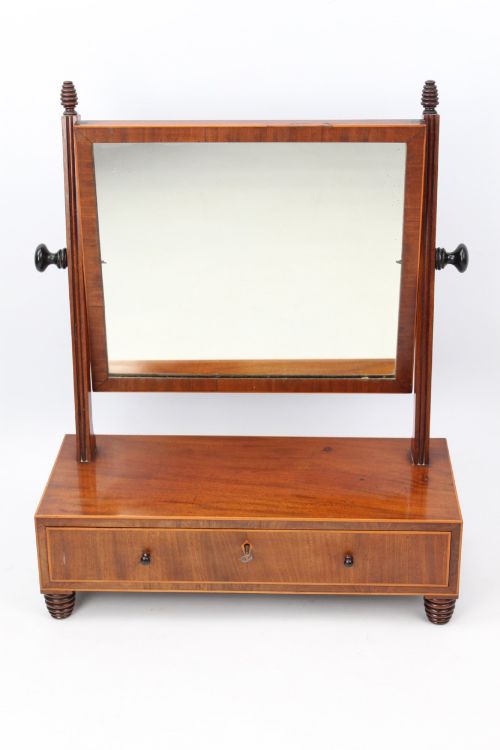
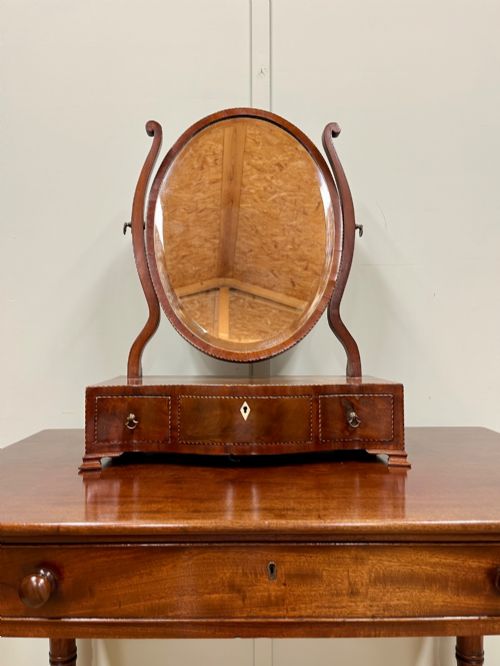
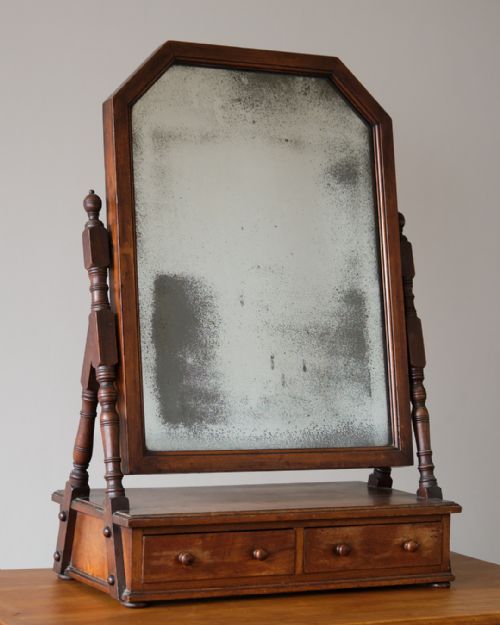
An antique mahogany swing toilet glass sits upon a dressing table, pivoting to catch the light while concealing small valuables in its base drawers.
Antique Mahogany Swing Toilet Glass
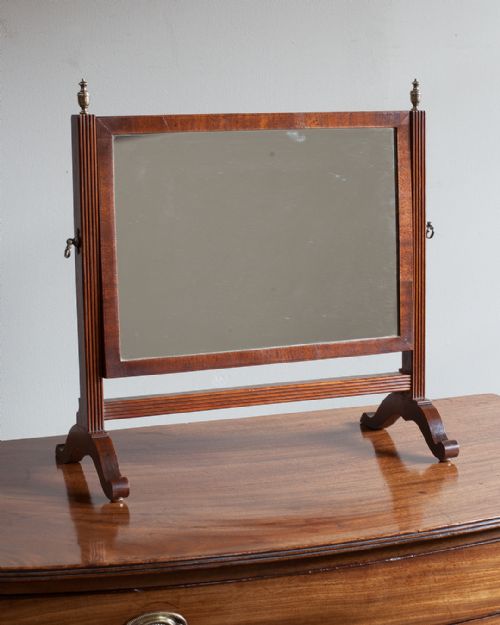
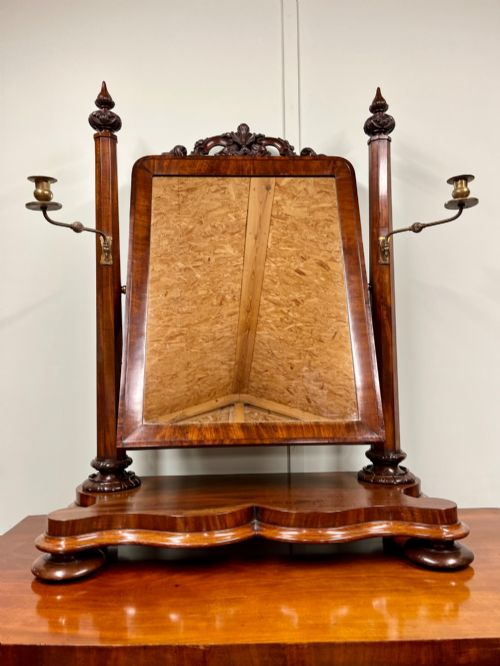
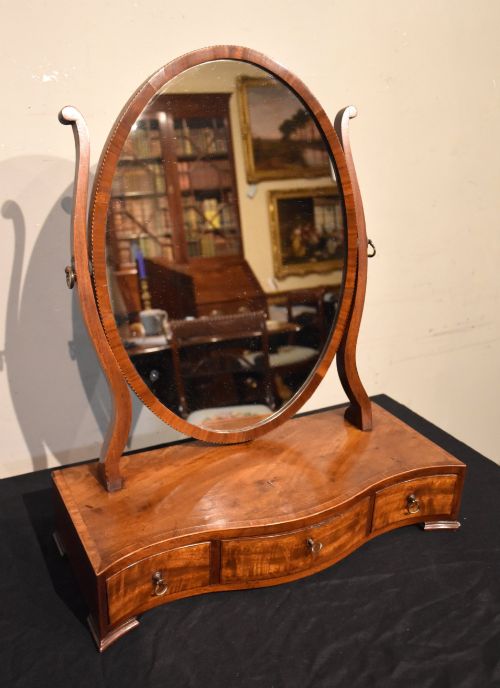
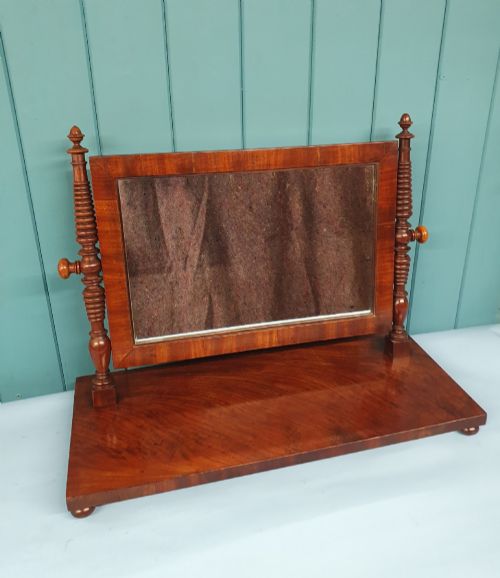
An antique mahogany swing toilet glass is a tabletop dressing mirror designed to tilt within upright frame supports, commonly referred to as a toilet mirror or dressing mirror.
The pieces listed here date from the eighteenth century through the nineteenth century, encompassing Georgian, Regency, and Victorian periods.
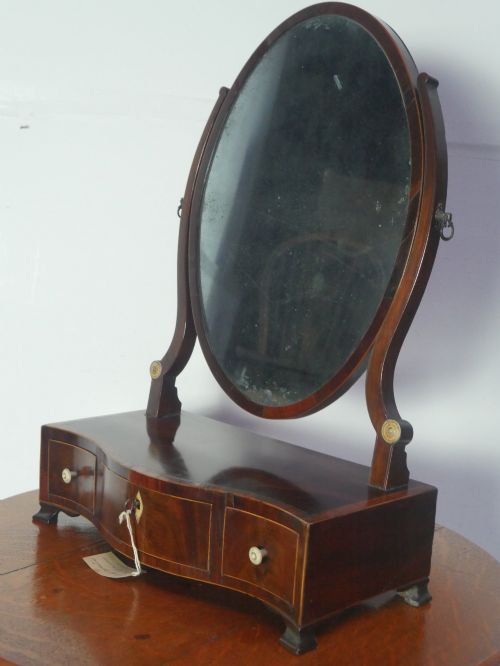
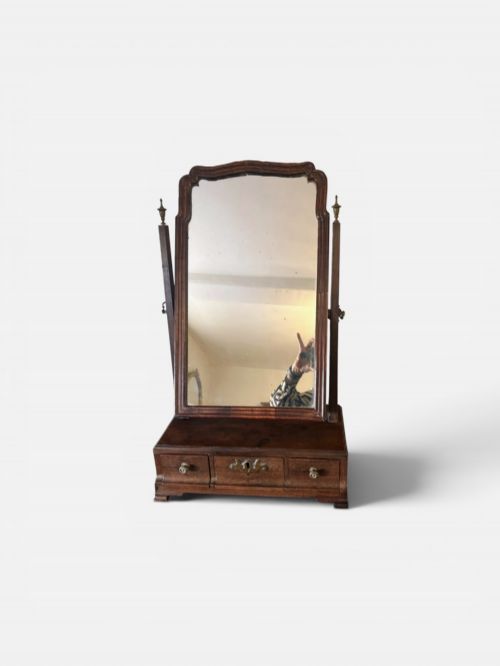
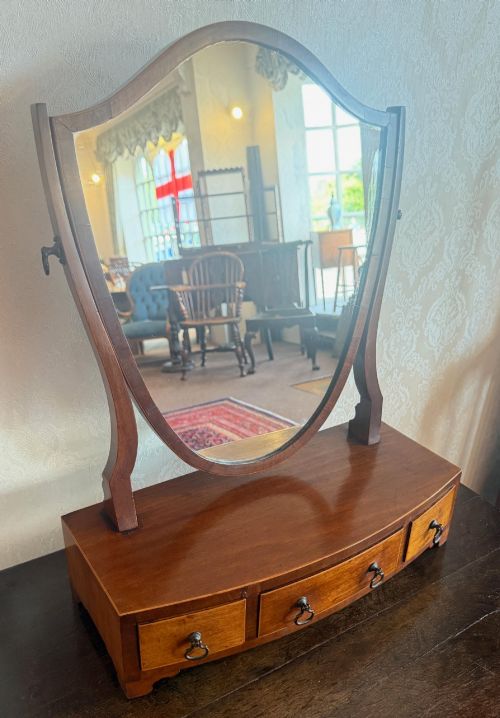
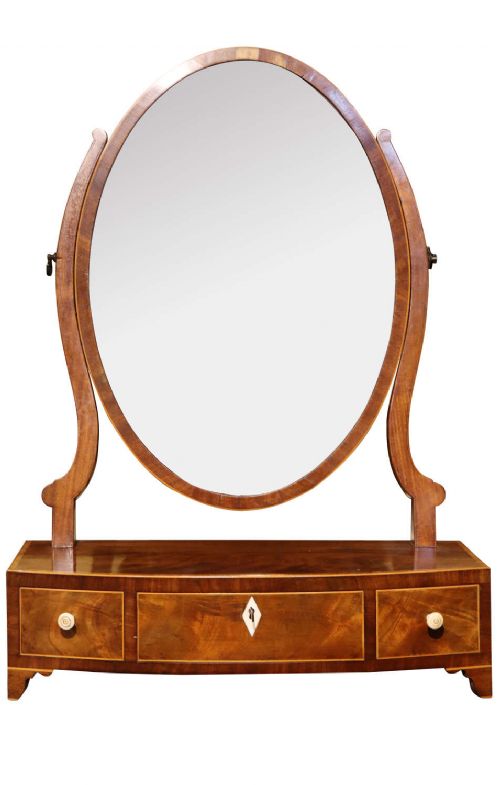
Most examples feature a rectangular or oval glass plate mounted above a box base fitted with small drawers for storage.
How they were made
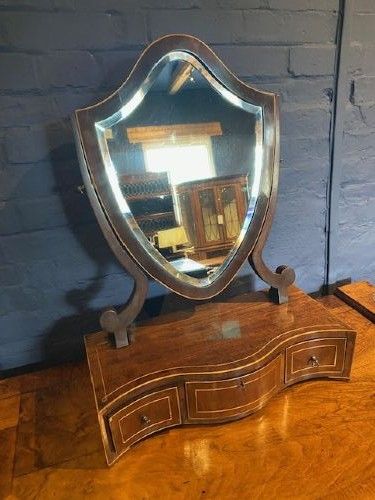
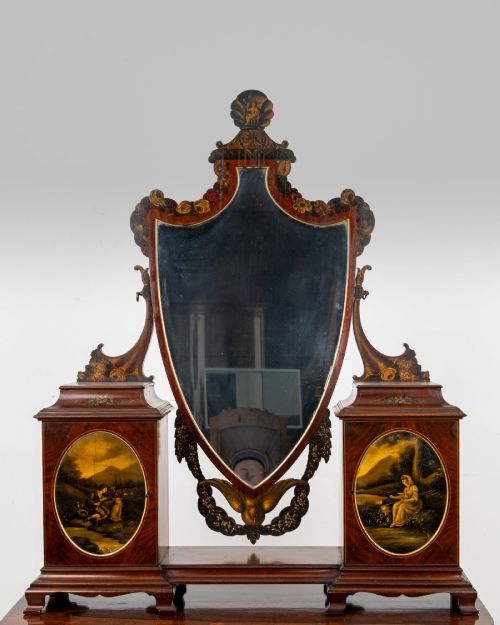
Cabinet makers utilised solid mahogany and mahogany veneers, occasionally incorporating crossbanding, satinwood, or Dutch marquetry inlay onto the surfaces.
Metal components typically include brass adjustment screws on the frame uprights and small brass handles on the drawers, alongside bone escutcheons on certain examples.
The inventory spans the eighteenth and nineteenth centuries, featuring Georgian, Regency, and Victorian periods with mahogany, brass, and glass.
What varies in quality
Proportion and timber selection dictate the distinction between standard production and finer pieces, with figured mahogany and subtle serpentine fronts marking superior examples.
The construction of the base box, the neatness of the drawer dovetails, and the retention of original mirror glass and brass hardware determine the integrity of a piece.
Heal And Sons
The Antique Mahogany Swing Toilet Glass Glossary
- Swing toilet glass
- A tabletop mirror mounted on pivots between two upright arms allowing it to tilt. It typically sits on a small drawer base.
- Cheval mirror
- A full-length standing dressing glass supported on a frame with four legs. Table top versions also exist.
- Serpentine front
- A furniture front curving outward in the centre and inward at the sides. This shape appears on several Georgian mirror bases.
- Crossbanding
- A narrow strip of veneer laid around the border of a panel with the grain running perpendicular to the centre. It frames the primary mahogany grain.
- Parcel-gilt
- Partially gilded woodwork where gold leaf highlights specific carved details. This technique appears on mid-eighteenth-century pieces.
Antique Mahogany Swing Toilet Glass: Frequently Asked Questions
What is a toilet glass?
A toilet glass is a historical term for a dressing table mirror used for personal grooming. They were placed on top of chests of drawers or dressing tables.
The frame holds a pivoting mirror plate above a small set of drawers intended for jewellery and cosmetics.
How do I date a mahogany mirror?
Dating relies on combining the timber choice, cabinet construction methods, and overall style. Georgian pieces show different proportions and mouldings compared to Victorian examples.
Secondary woods inside the drawers and the type of mirror glass also provide clues to the period of manufacture.
Are the mirror plates original?
Many mirrors retain their original glass, which can exhibit light foxing or silver degradation due to age. Replacements occur frequently because fragile mirror plates broke easily over the centuries.
Original glass often shows slight distortions and thinner silvering compared to modern replacements.
What is the difference between a toilet mirror and a cheval mirror?
A toilet mirror is a small tabletop piece designed to sit on a surface. A cheval mirror is a much larger floor-standing glass.
Some Edwardian variations bridge the two categories by sitting on a table while functioning as a larger cheval glass with an attached jewellery cabinet.