
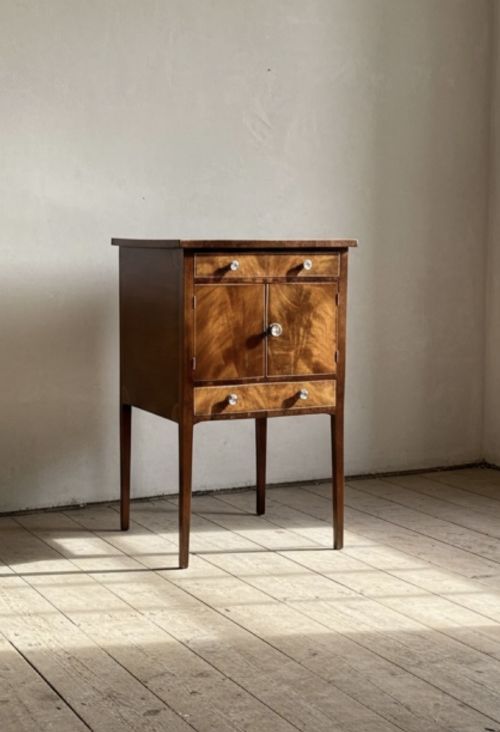

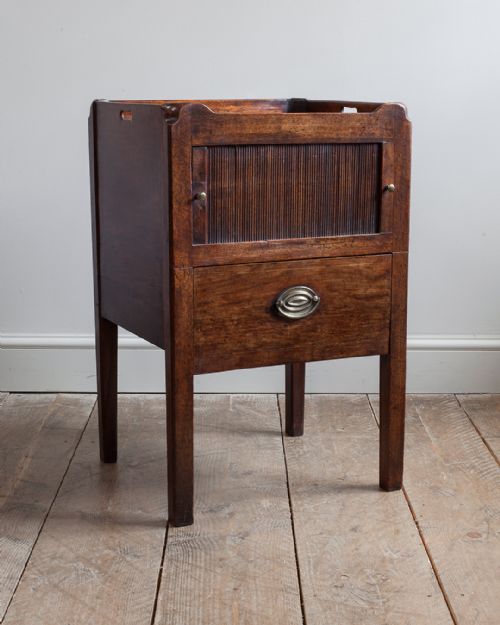
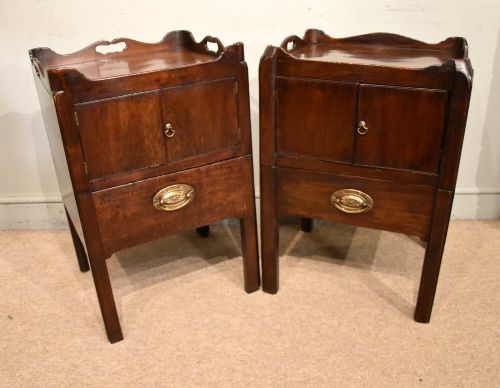
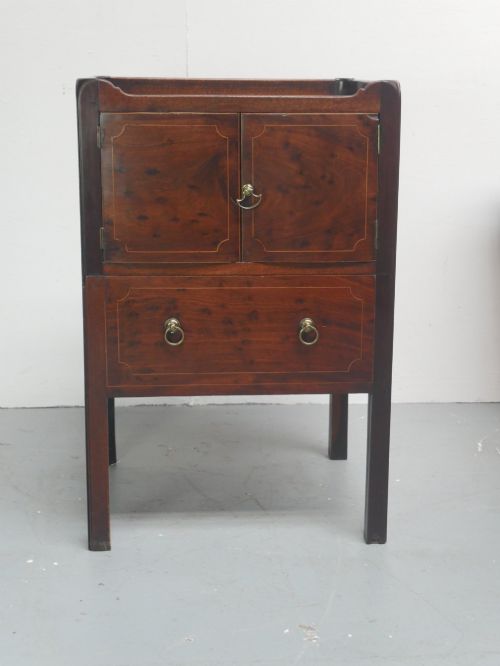
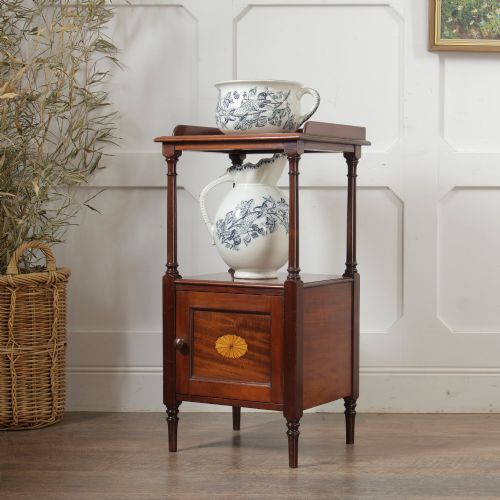
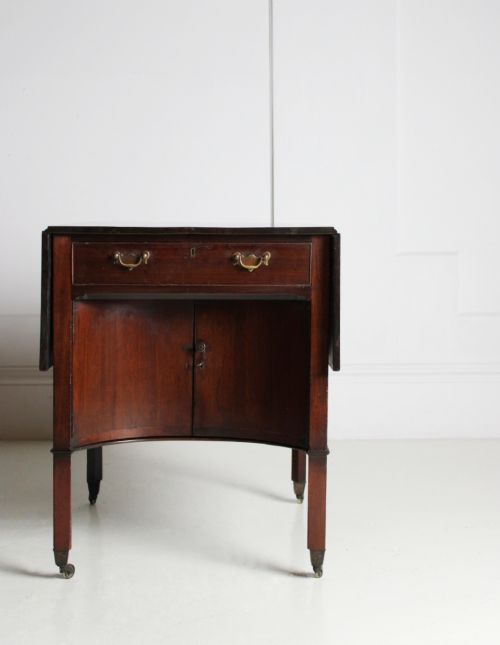
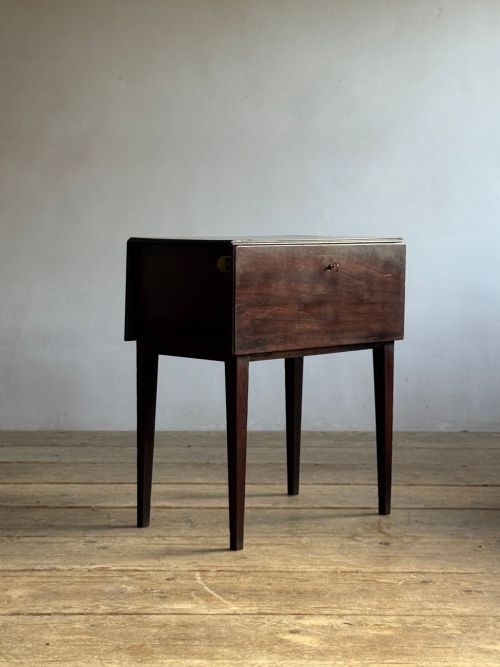
Antique Mahogany Commode Table
An antique mahogany commode table brings rich timber figure and practical enclosed storage to a bedroom or sitting room, bridging utilitarian purpose and refined cabinet-making.
Antique Mahogany Commode Table
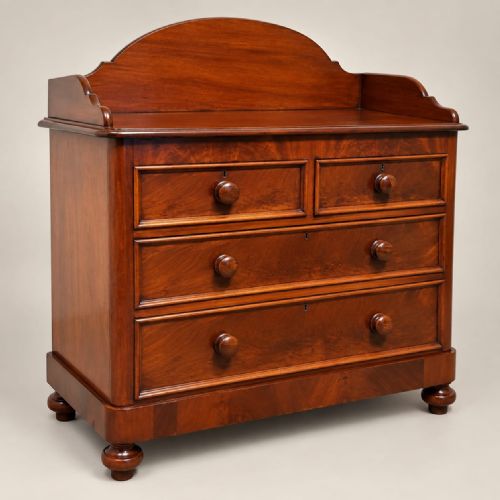
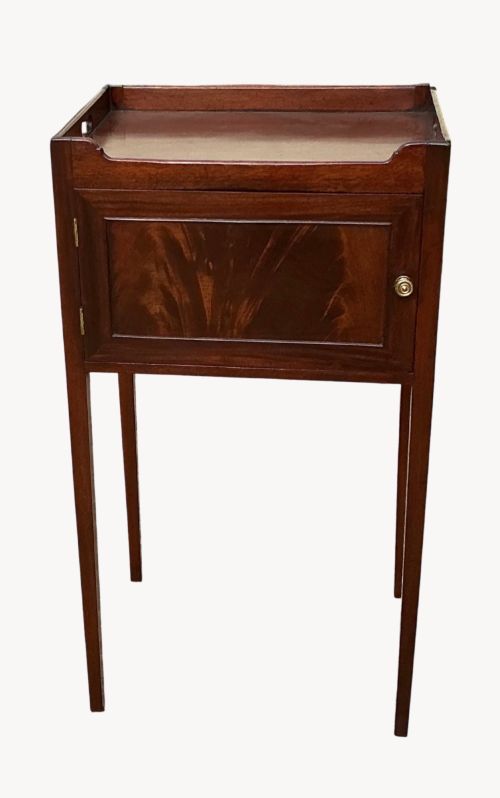
When you search for an antique mahogany commode table, you are looking at a diverse group of small case furniture designed primarily for bedside or personal use across several centuries. The pieces represented here span the eighteenth, nineteenth, and early twentieth centuries, encompassing periods from Georgian and Regency to Victorian and later revival styles.
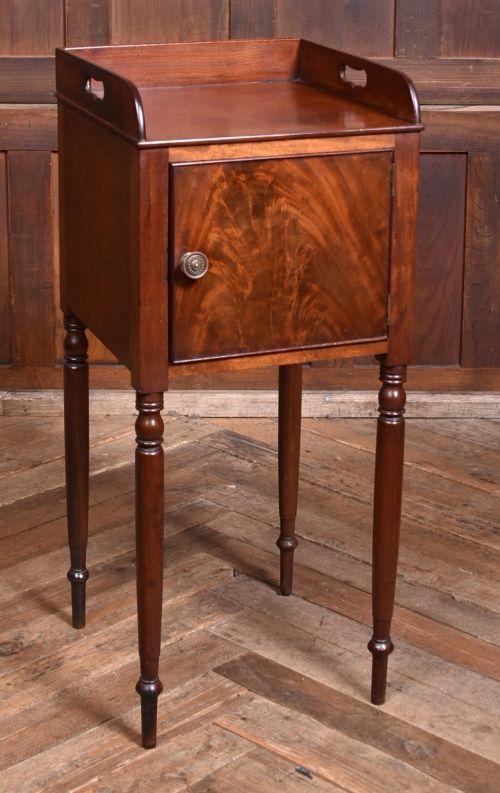
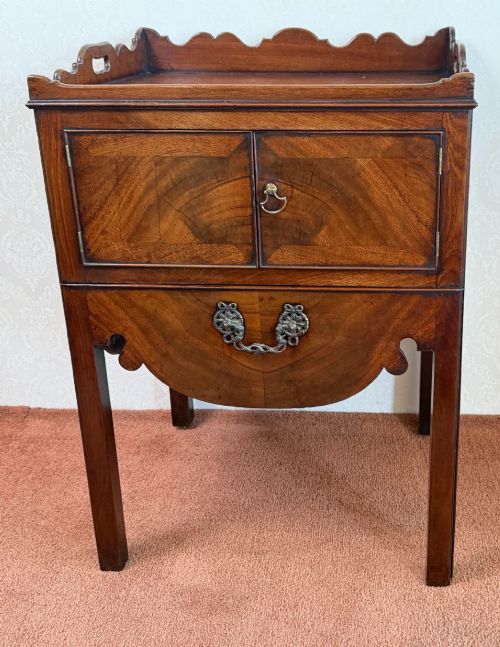
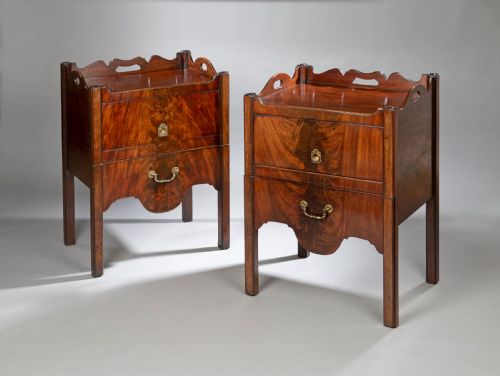
The most common forms you will encounter on this page are bedside cabinets, nightstands, and pot cupboards, alongside occasional chests of drawers and tray top commodes. These items served intimate daily functions in period bedchambers, often housing chamber pots or providing discrete surfaces for personal items before modern plumbing.
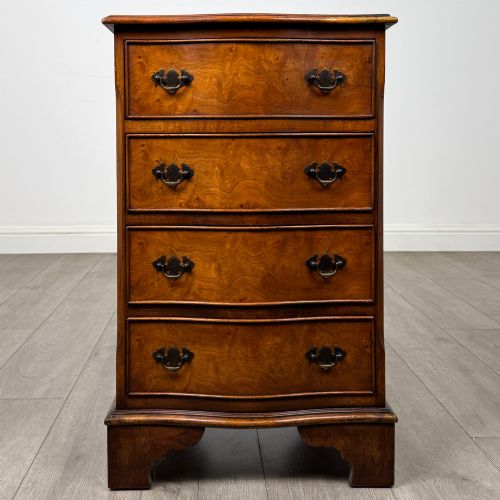
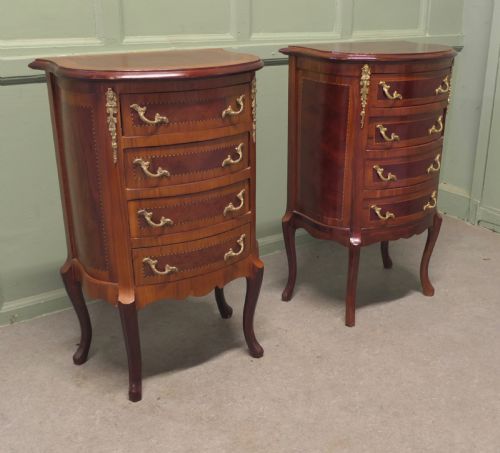
Origins range from classic English workshop productions in Georgian mahogany to continental expressions such as French Louis XV style bow front chests and marquetry marble-top consoles. While some examples remain strictly utilitarian, others display sophisticated serpentine fronts, tambour doors, or cylindrical forms tailored for affluent domestic interiors.
How they were made
Cabinet-makers relied on solid mahogany and flame mahogany veneer applied to secondary structural timbers, often highlighting the rich natural grain figure of the wood through careful selection. Surface ornamentation frequently incorporated contrasting boxwood inlay and boxwood stringing to define panel borders and drawer edges.
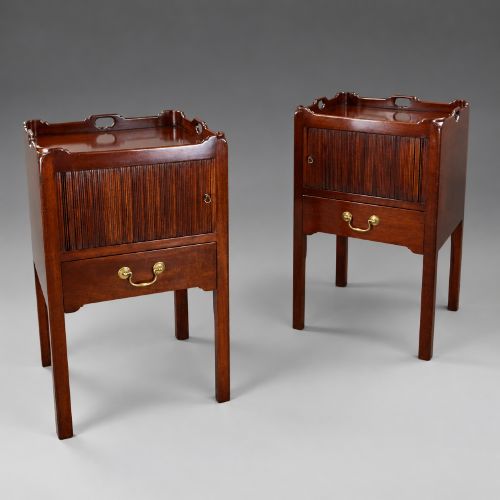
Hardware played an essential functional and decorative role, with original brass handles, hinges, and occasional carrying mounts fixed to doors and drawers. Structural variations include tray tops designed to prevent items from rolling off, tambour slides running in grooved tracks, and hinged lids concealing fitted interiors.
Some nineteenth-century gentlemen woke to find their bedside commode disguised as a modest library table, guarding secrets behind dummy book spines.
What varies in quality
Quality in these small case pieces rests heavily on the selection of timber, particularly where figured flame mahogany veneer or symmetrical grain patterns adorn the primary display surfaces. Superior examples demonstrate rigorous timber matching across drawer fronts and cabinet doors, ensuring the grain flows logically across the elevation.
Construction methods and secondary woods also dictate the tier of craftsmanship, distinguishing standard workshop production from finer pieces with dovetailed drawer boxes, dust boards, and original brass hardware. The subtlety of edge mouldings, the crispness of boxwood inlay, and the retention of original functional mechanisms elevate certain items above simpler domestic counterparts.
The Antique Mahogany Commode Table Glossary
- Commode table
- A low cabinet or chest of drawers designed for domestic use, historically serving personal sanitary functions or bedside storage. These pieces often feature enclosed cupboards below a flat or tray top surface.
- Tray top
- A raised rim surrounding the upper surface of a small table or commode, designed to prevent objects from slipping off. This feature is particularly characteristic of eighteenth-century bedside furniture.
- Tambour front
- A flexible shutter door constructed from narrow vertical strips of wood glued to a canvas backing, allowing it to slide smoothly around curved corners in a track. It was favoured for concealing small compartments in high-end cabinet work.
- Serpentine
- A curved furniture front characterised by a convex centre flanked by concave wings, or vice versa, creating a flowing wave-like outline. This shape requires advanced woodworking skill to execute accurately.
- Flame mahogany
- A highly decorative veneer cut from the fork of a mahogany tree where the branches join the trunk, producing a distinctive flickering flame pattern. Cabinet-makers reserved this timber for principal facade panels.
Antique Mahogany Commode Table: Frequently Asked Questions
What is the difference between a commode and a bedside table?
In historical terms, an antique commode typically denotes a low cabinet with enclosed storage such as doors or drawers, whereas a bedside table may include open shelves or simpler leg frames.
Over time, terminology shifted, and many eighteenth-century bedside cupboards and nightstands are catalogued under the broader heading of commodes due to their enclosed storage function.
What periods do these mahogany cabinets come from?
The pieces seen here range from the mid eighteenth century through the Georgian and Regency eras into the Victorian period and later twentieth-century revivals.
Earlier examples often display clean architectural lines and fine boxwood stringing, while Victorian and revival pieces introduce heavier proportions or varied French styling.
Where were these pieces used in a historic home?
These items were primarily designed for bedchambers and dressing rooms to provide discrete storage and convenient surface space near the bed.
Their compact footprints also allowed them to function as small side tables or occasional stands in private drawing rooms and boudoirs.
Are tambour doors common on antique bedside tables?
Tambour doors appear on select high-end Georgian pieces, offering a neat sliding mechanism that conceals interior storage without requiring clearance for swinging doors.
These flexible wooden shutters demonstrate advanced joinery and are typically found on refined tray top commodes.