

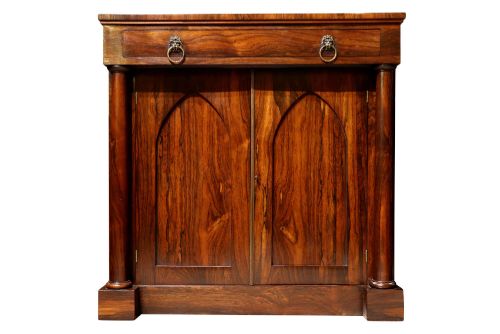
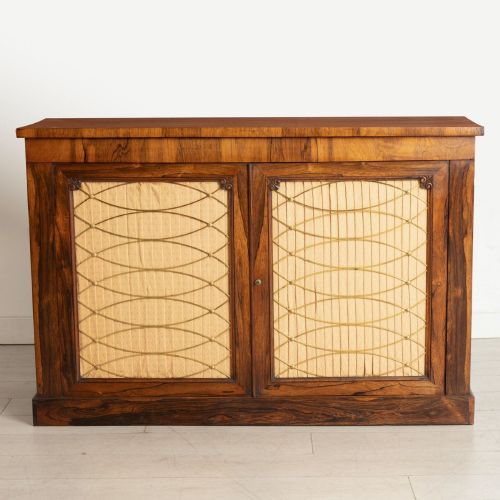
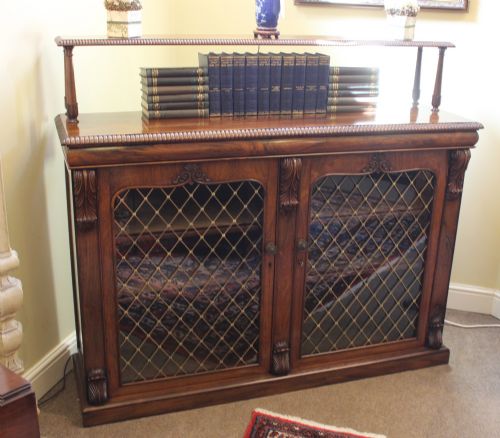
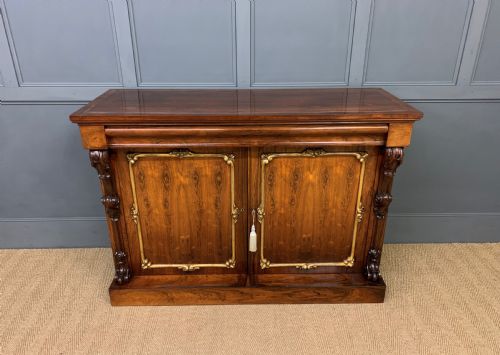
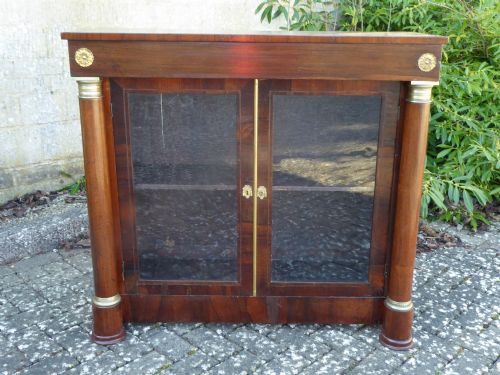
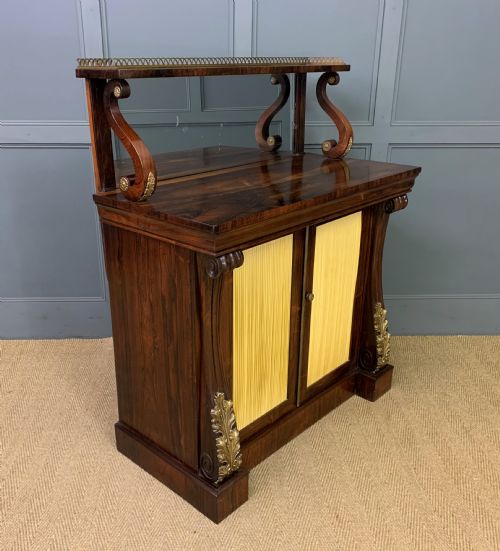

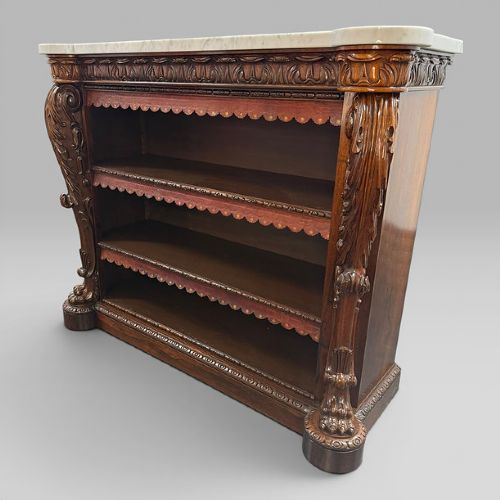
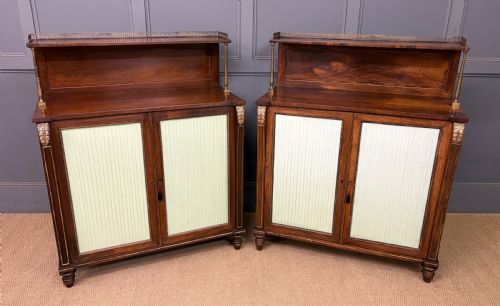
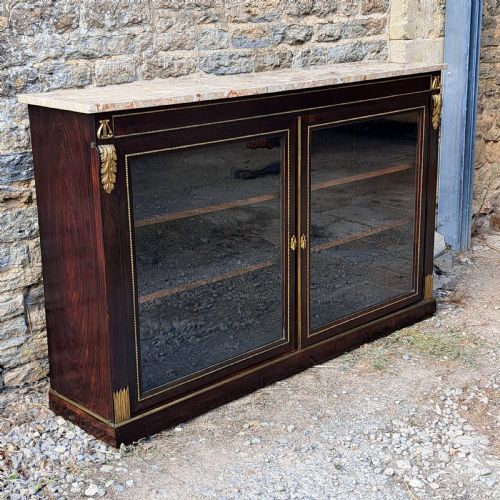


Antique Low Rosewood Credenza
An antique low rosewood credenza brings rich timber grain, gleaming brass inlay and low proportions to a room.
Antique Low Rosewood Credenza
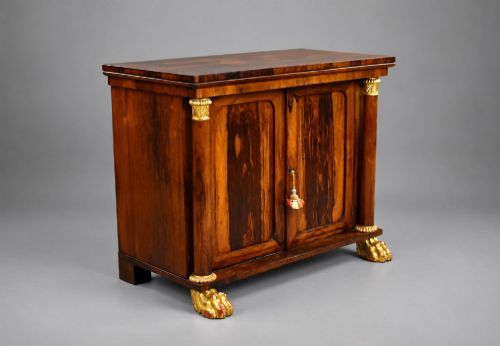
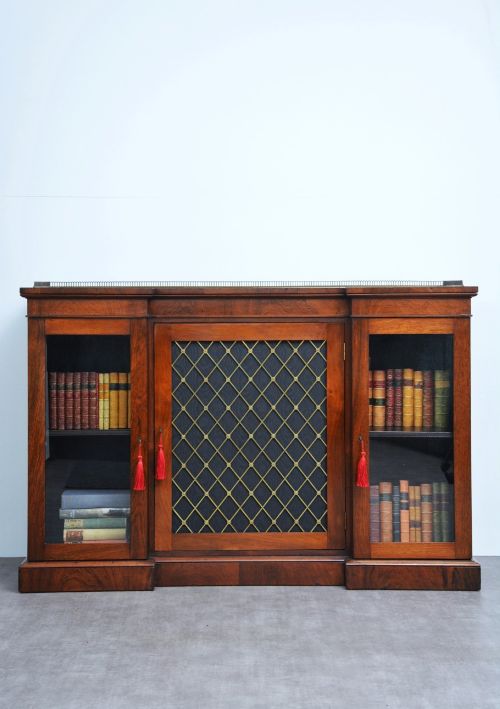
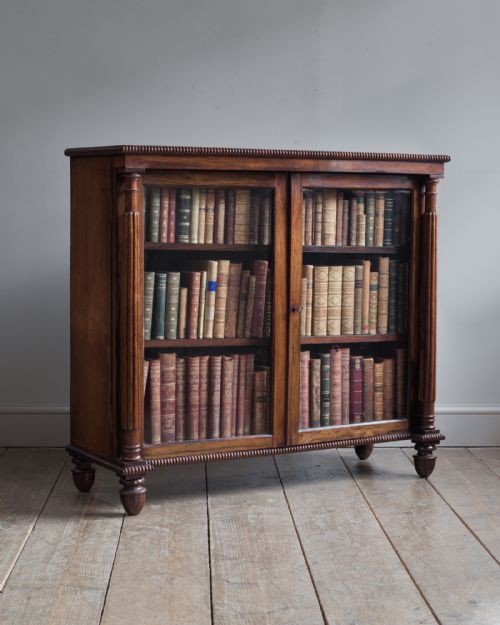
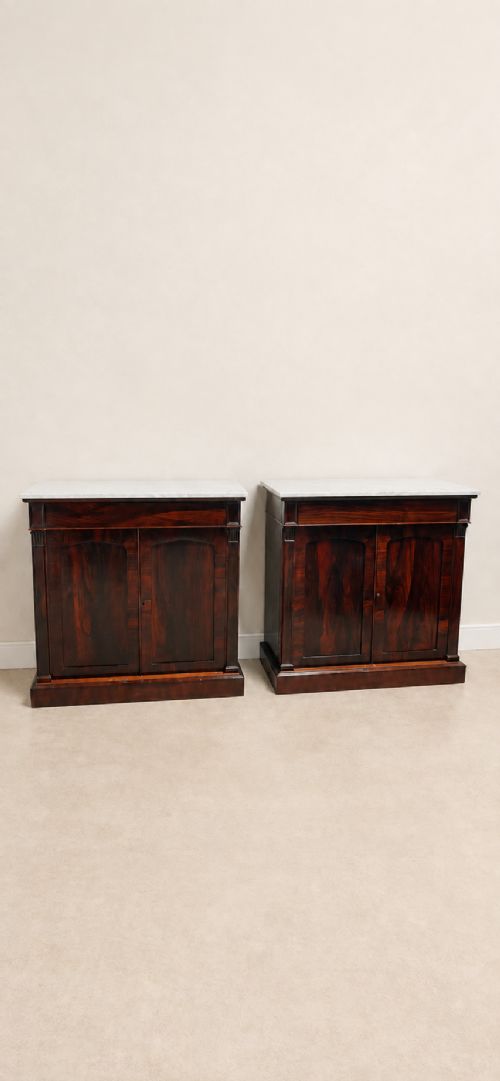
An antique low rosewood credenza is a low-slung cabinet designed for storage and display, appearing primarily in Regency, Victorian, and Georgian periods. These pieces span various forms including side cabinets, chiffoniers, and open bookcases that sit close to the floor. Most examples on this page date from the nineteenth century, reflecting the craftsmanship of the Regency and William IV eras.
The construction typically incorporates rich tropical timbers alongside functional shelving or cupboard doors. Makers frequently paired rosewood with brass mounts, glass panels, or fabric-backed grilles to create a striking low profile. Buyers seeking this phrase encounter items designed to serve as both functional sideboards and decorative focal points within a room.
What varies in quality
Quality in an antique low rosewood credenza rests upon the selection of the timber grain and the precision of the brass inlay work. Superior examples display continuous, book-matched veneer patterns across the doors and drawers, whereas simpler pieces show random grain direction. The crispness of carved details and the weight of cast brass mounts indicate the level of workshop attention.
Structural integrity also separates standard items from exceptional ones, particularly in the alignment of breakfront doors and the retention of original glass or fabric panels. Pieces attributed to prominent makers often demonstrate superior internal secondary woods and more refined proportioning. The presence of original locks, keys, and untouched patination distinguishes pieces that have retained their character over the centuries.
Antique Low Rosewood Credenza Retail Price Guide 2026
Typical asking prices for low rosewood credenza among the pieces listed under this phrase on Sellingantiques today, from the lower quarter to the upper quarter. They describe what is for sale here now, not the wider market.
Listings span the Regency, Georgian, and Victorian periods, using rosewood, brass, marble, and silk.
A. Solomon·Gillows
The Antique Low Rosewood Credenza Glossary
- Credenza
- A low cabinet or sideboard used for storage and display. These items sit lower than traditional dining sideboards and often feature glass doors or open shelving.
- Chiffonier
- A compact sideboard or cabinet, typically featuring a raised shelf or back panel. Many nineteenth-century examples include fabric-backed doors or brass grille work.
- Breakfront
- A cabinet design where the central section projects forward from the flanking outer cupboards. This architectural arrangement creates depth and shadow across the front elevation.
- Palisander
- A dense tropical timber often referred to historically as rosewood. Its dark, variegated grain patterns made it a favoured material for fine cabinet work.
Antique Low Rosewood Credenza: Frequently Asked Questions
Where did people put a credenza?
These cabinets served primarily in dining rooms and drawing rooms to store table linen, silver, or books while providing a surface for display.
Their low profile allowed them to sit beneath windows or mirrors without obstructing wall art or natural light.
How do I clean rosewood furniture?
Dust the timber regularly with a soft, dry cloth to prevent particulate buildup on the polished surface.
Avoid liquid cleaners and silicone sprays, applying a traditional wax sparingly only when the wood appears dry.
Are these cabinets suitable for modern TVs?
The low height and substantial surface area make many of these nineteenth-century cabinets appropriate for modern media placement.
Buyers should check internal shelf depths and cable management possibilities before placing modern equipment inside.
How do I distinguish Regency from Victorian pieces?
Regency designs lean towards classical restraint, featuring precise brass inlay, geometric symmetry, and formal architectural lines.
Victorian and later nineteenth-century examples often embrace bolder curves, heavier proportions, and more elaborate French Revival or Rococo influence.