

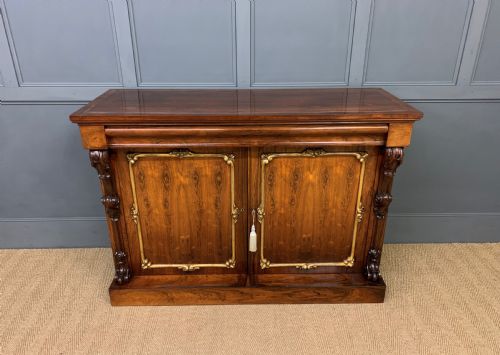


Rosewood Two Door Cabinet
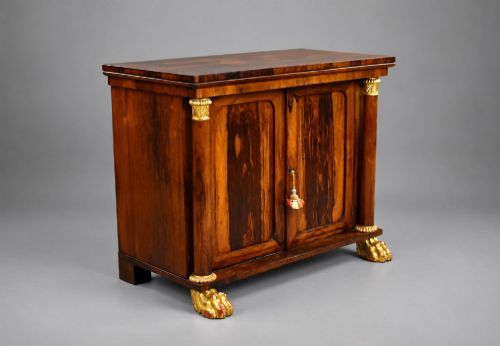
A rosewood two door cabinet brings rich grain and practical enclosed storage to a room, drawing the eye with its deep timber tones.
Rosewood Two Door Cabinet
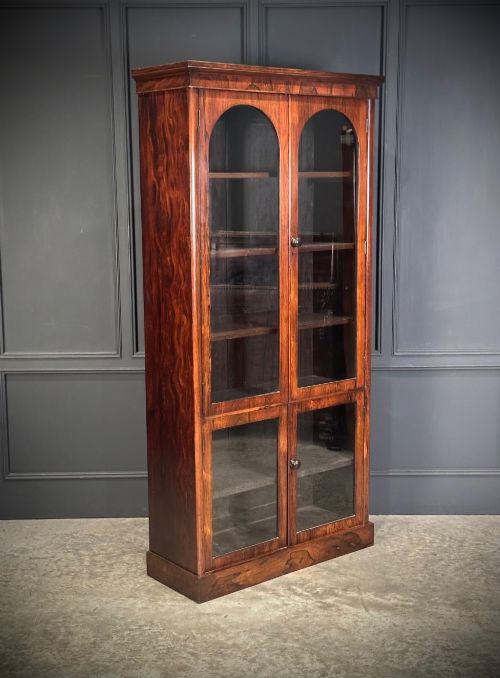
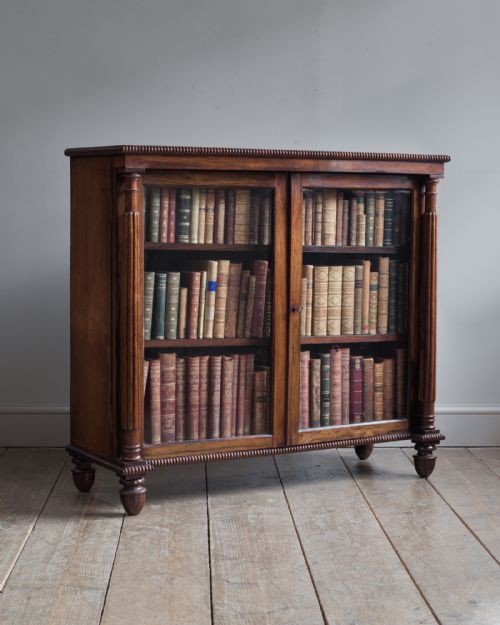
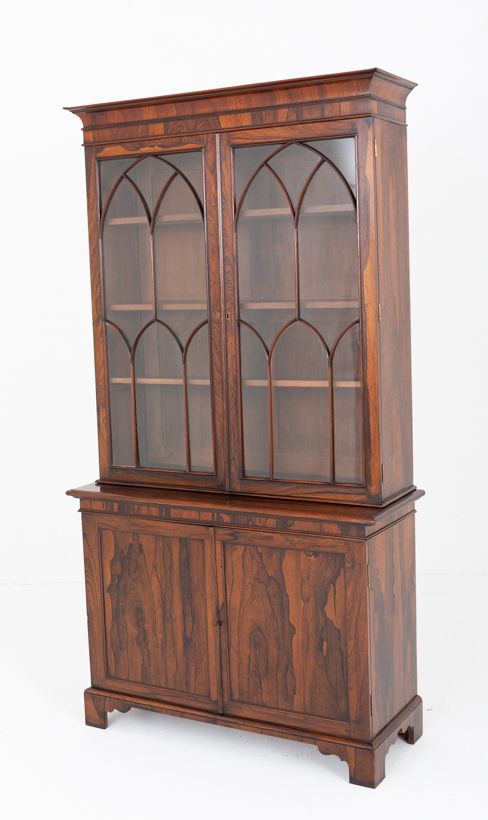
A rosewood two door cabinet is a substantial yet refined piece of furniture designed for storage and display, appearing frequently from the Regency, Victorian, and Georgian periods. These cabinets serve as side cabinets, chiffoniers, and bookcases, offering enclosed shelving behind timber or glazed doors.
The pieces on this page lean heavily towards Regency and nineteenth-century origins, often displaying formal architectural lines. Alongside standard side cabinets, variations include glazed bookcase formats and low standing cupboards suited for drawing rooms and libraries.
Origins stretch from British workshops to French and Anglo-Indian colonial makers, introducing diverse regional touches to the core form. Buyers encounter solid timber constructions as well as elaborate marquetry and brass inlay.
How they were made
Cabinet makers utilised dense rosewood and palisander veneers over secondary timbers, often selecting boards to create symmetrical grain patterns across the front doors. Surface decoration frequently involved brass inlays, ormolu mounts, and delicate marquetry.
Internal structures incorporated adjustable timber shelving and glazed panels framed in wood. Structural stability relied on traditional joinery, paired with marble tops on select French examples.
Rosewood Two Door Cabinet Retail Price Guide 2026
Typical asking prices for rosewood two door cabinet among the pieces listed under this phrase on Sellingantiques today, from the lower quarter to the upper quarter. They describe what is for sale here now, not the wider market.
The documented forms span side cabinets, chiffoniers, and glazed bookcases with distinct regional origins.
What varies in quality
The standard of a rosewood two door cabinet depends on the precision of its brass inlay, the depth of the timber's natural grain, and the crispness of any carved ornament. Superior examples display seamless veneer matching and finely cast metal mounts that integrate harmoniously with the dark wood.
Proportion and interior configuration also separate standard utility pieces from finer salon furniture. Cabinets retaining original glass, intact internal fittings, and balanced architectural proportions occupy the upper tier of the range.
The Rosewood Two Door Cabinet Glossary
- Rosewood
- A dense, heavy timber prized for its dark purple-brown hue and dramatic black grain patterns. It takes a high polish and was a favourite for luxury furniture throughout the nineteenth century.
- Ormolu
- Gilded bronze used for decorative mounts and feet on high-end furniture. The technique involves applying a mercury and gold amalgam to cast bronze.
- Marquetry
- The art of applying small pieces of veneer to a structure to form decorative patterns and pictures. Craftsmen used various contrasting woods and metals to achieve pictorial depth.
- Chiffonier
- A low sideboard or cabinet featuring enclosed storage beneath a tier of shelves or a drawer. This form gained popularity during the Regency and Victorian periods.
- Palisander
- A term applied to several rich tropical hardwoods, closely related to rosewood, frequently used in continental European furniture. It exhibits strong contrast in its striped grain.
- Glazed Bookcase
- A cabinet featuring glass-fronted doors designed to protect books from dust while displaying the bindings. These range from low table-height units to tall library pieces.
Rosewood Two Door Cabinet: Frequently Asked Questions
How do I care for a rosewood surface?
Keep the timber away from direct sunlight and extreme temperature shifts to prevent the wood from drying out or splitting. Dust regularly with a soft cloth and feed the grain occasionally with a suitable wax.
Avoid using modern liquid polishes or silicone sprays, which can build up and dull the natural lustre over time. A gentle application of beeswax preserves the depth of the rosewood finish.
Where should I place a side cabinet?
These cabinets work well in living rooms, dining spaces, and hallways where enclosed storage is useful. Their finished tops provide a surface for lamps, ceramics, or decorative objects.
Ensure the room has stable humidity levels, as antique timbers react poorly to damp conditions or radiator heat. Measuring the swing space of the two doors ensures comfortable access in tighter hallways.
What is the difference between side cabinets and chiffoniers?
A side cabinet generally focuses on enclosed cupboard storage with two doors, sometimes featuring a drawer or display top. Its primary function is to store household items while offering a decorative surface.
A chiffonier often includes a raised superstructure with small shelves supported by pillars above the main cabinet body. This variation evolved to display porcelain and silver in nineteenth-century drawing rooms.