


Antique Liquor Glass
These antique liquor glass pieces, spanning decanters, tantalus sets, and hip flasks, bring traditional craftsmanship and hospitality directly to your table.
Antique Liquor Glass
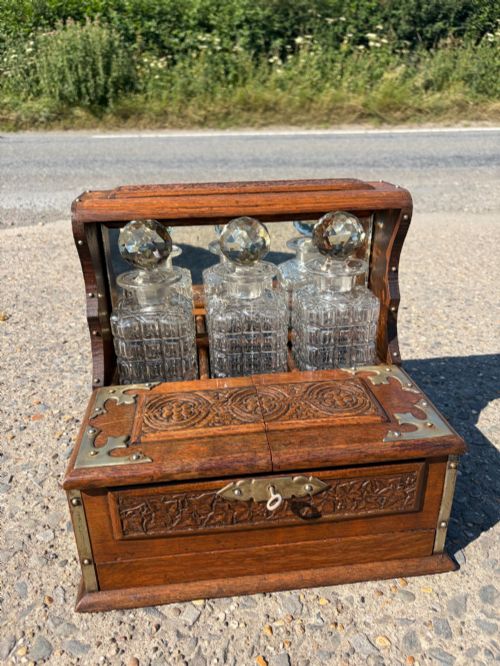
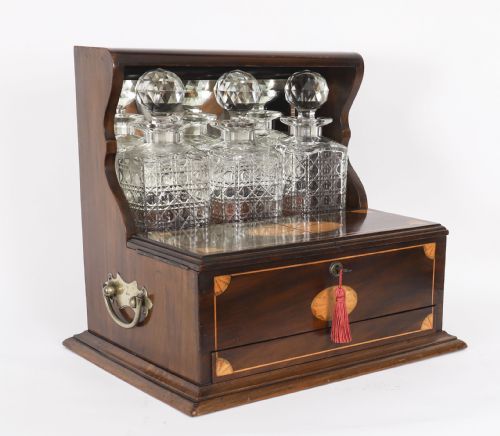
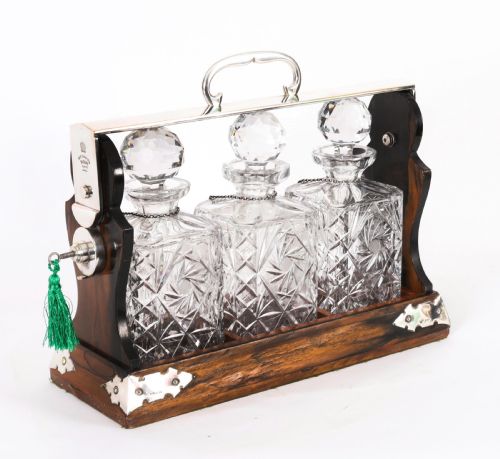
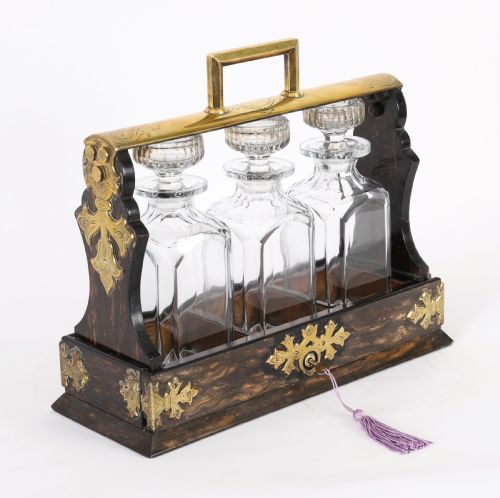
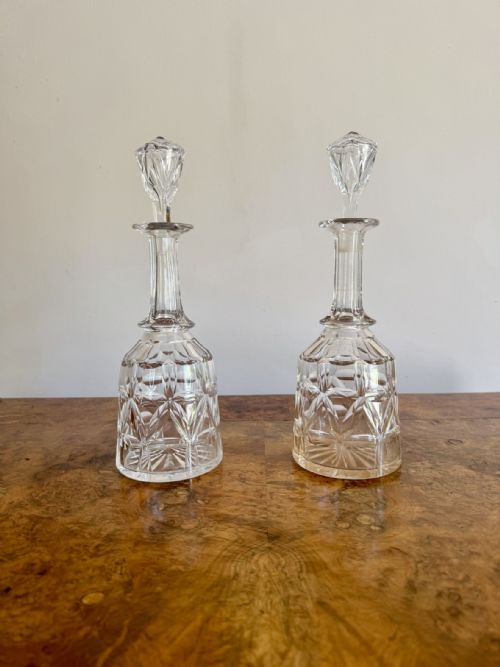
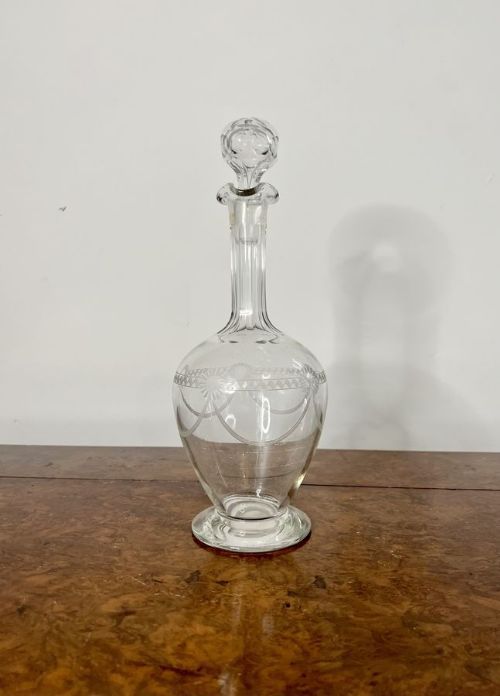
An antique liquor glass selection brings together barware designed for serving and securing spirits from the Georgian, Victorian, and Edwardian eras. You will frequently encounter heavy cut crystal decanters, paired sets housed in oak or coromandel wood frames, and silver-mounted glass flasks.
The objects range from single serving bottles and spirit dispensing barrels to elaborate locking tantalus cabinets and French cave a liqueur boxes. These pieces reflect the formal dining and entertaining habits of the nineteenth and early twentieth centuries.
How they were made
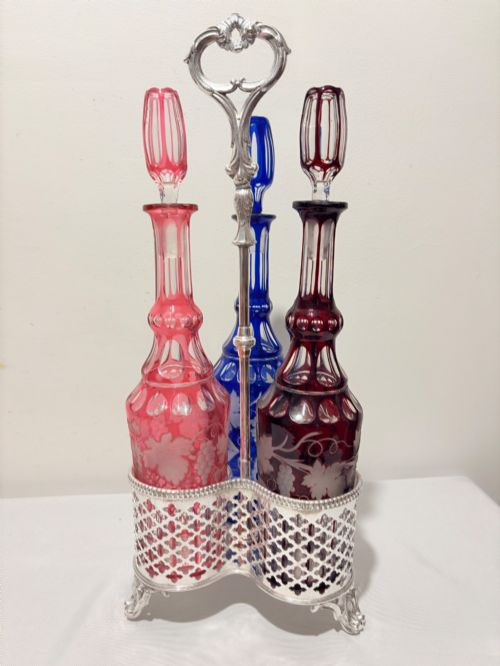
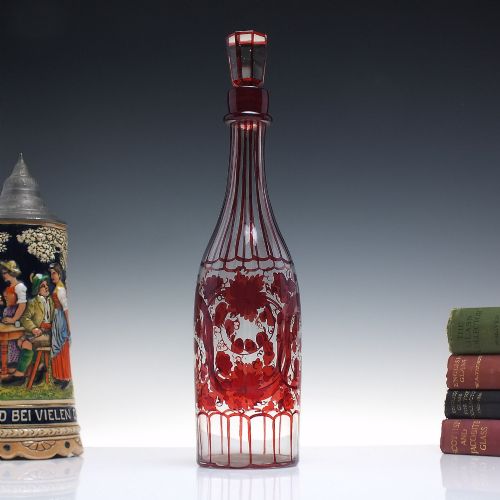
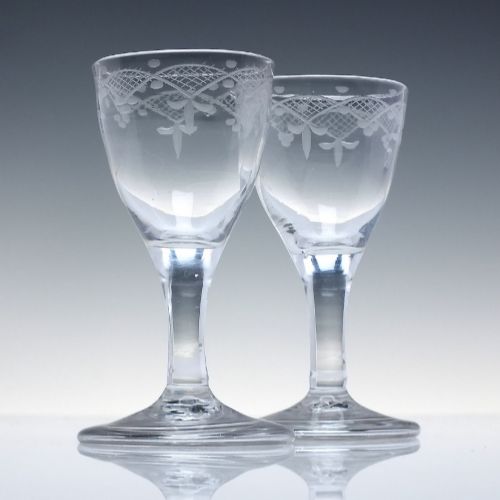
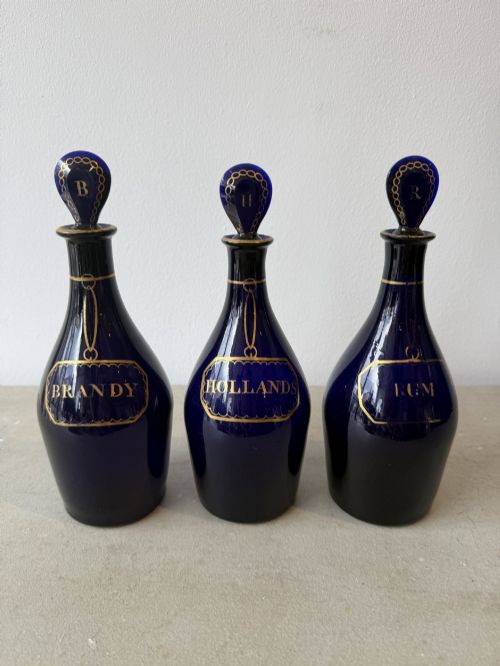
Maker workshops utilised clear, ruby, cranberry overlay, and Bristol blue glass, shaping vessels through hand blowing, cutting, and engraving. Many pieces feature painted details or hand-etched motifs depicting birds and vines.
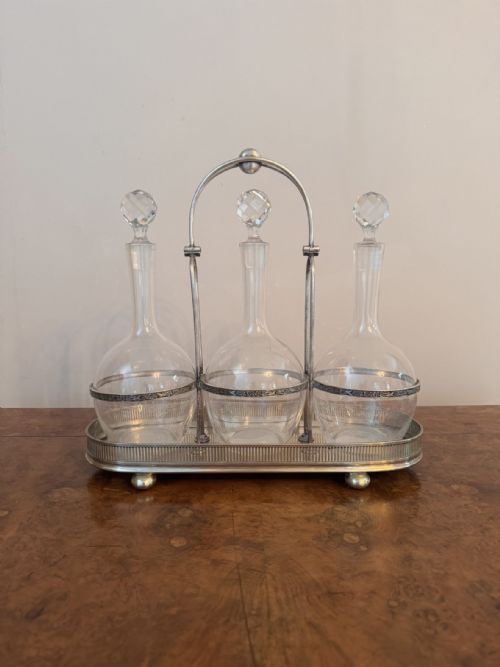
Mounts, stands, and locking mechanisms incorporate sterling silver, silver plate, brass, oak, and coromandel wood. Silver components often bear hallmarks alongside maker marks such as Walker and Hall or Betjemann’s.
Some Victorian spirit barrels dispensed drinks via brass taps, turning casual hospitality into an entertaining parlor trick.
What varies in quality
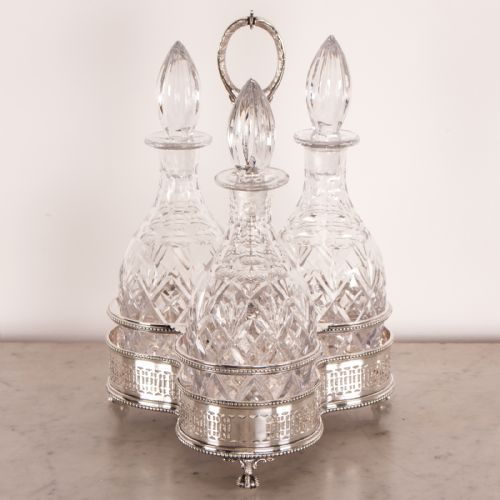
The distinction between ordinary and exceptional barware lies in the crispness of the glass cutting, the depth of the hand engraving, and the weight of the crystal. Superior examples display flawless clarity and balanced proportions.
Enclosing cabinetry and metal mounts also separate pieces; solid oak or coromandel tantalus frames fitted with working locks and fully intact silver hardware elevate the standing of the entire set.
Walker and Hall·Betjemann’s·Martin Hall and Co
The Antique Liquor Glass Glossary
- Tantalus
- A locking wooden frame designed to secure liquor decanters while still displaying their contents. The mechanism prevents guests from pouring drinks without a key.
- Cave a liqueur
- A French fitted box or casket housing a set of matching decanters and liqueur glasses, often finished in exotic wood. These portable cellars protected delicate glassware during travel.
- Hip flask
- A small curved container designed for carrying liquor on the person, typically constructed from glass wrapped in leather and fitted with a captive silver cup.
- Tot
- A small drinking glass or measure used for serving spirits. These vessels frequently feature sterling silver mounts and matching spirit labels.
- Claret decanter
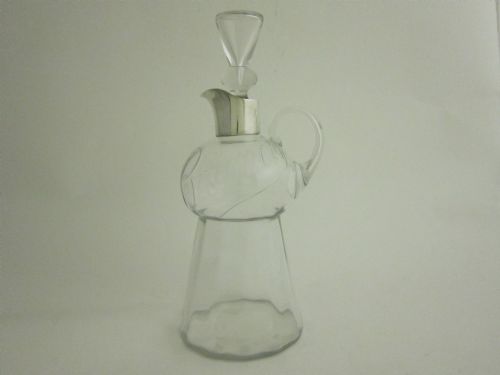
- A specific bottle form intended for serving red wine, often mounted in silver plate with an articulated pourer and handle.
Antique Liquor Glass: Frequently Asked Questions
How do I use a tantalus?
A tantalus operates by using a locking wooden bar that fastens over the stoppers of the decanters. Turning the key releases the top bar so the bottles can be lifted from the frame.
When locked, the stoppers cannot be removed, keeping the contents secure from unauthorized access.
What is a whiskey noggin?
A whiskey noggin is a small, single-serving decanter fitted with a silver mount and a hinged or attached pouring lip. They often include a matching silver tot label.
These compact vessels were popular for evening drams in studies and smoking rooms during the Edwardian period.
How can I tell Victorian glass from Edwardian glass?
Victorian glass often leans toward heavier, richly coloured pieces such as cranberry overlay, Bristol blue, and deeply cut crystal. Tantalus frames from this era frequently utilise coromandel or heavy oak.
Edwardian pieces tend to favour bell shapes, lighter cut glass designs, and elegant silver-plated stands with restrained ornamentation.
Are hip flask cups removable?
Many antique hip flasks feature a silver or metal cup fitted to the base of the glass body. This cup slides off to serve as a drinking vessel.
These components were threaded or friction-held to ensure the flask remained compact and functional for travel.