

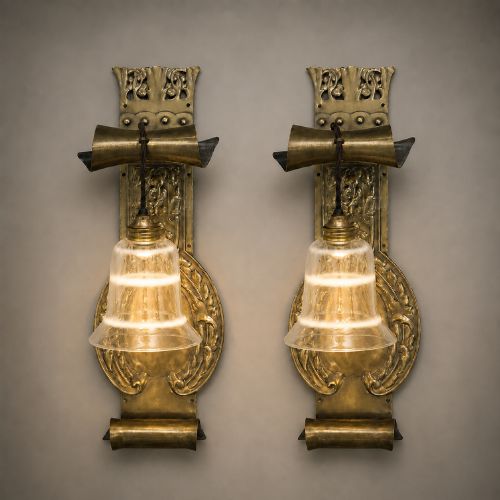
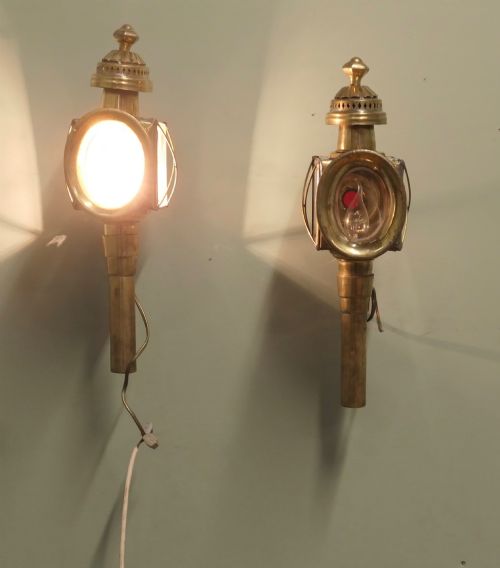
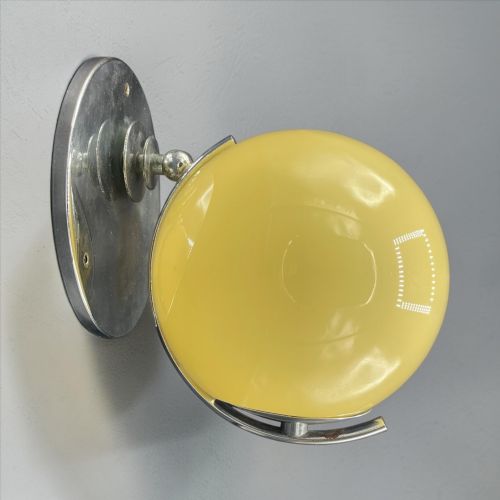
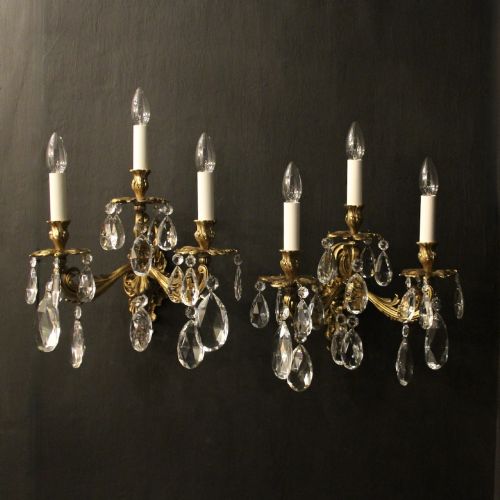
Antique Lighting Sconces
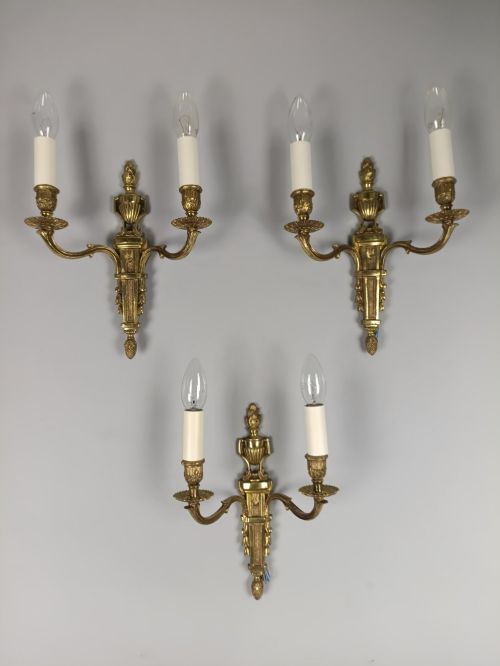
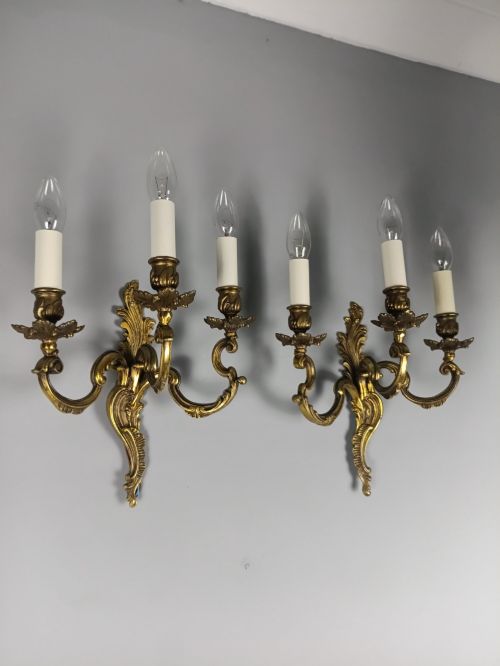
These antique lighting sconces bring steady candlelight and wired brilliance to a panelled room, offering the heavy cast metal and carved giltwood buyers seek.
Antique Lighting Sconces
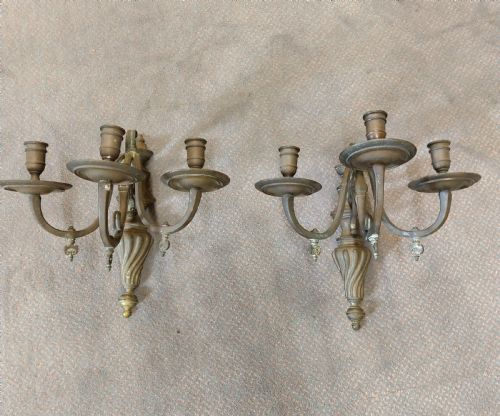
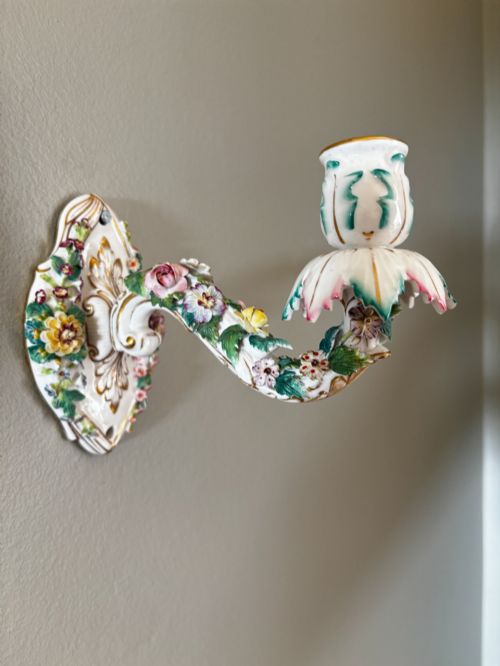
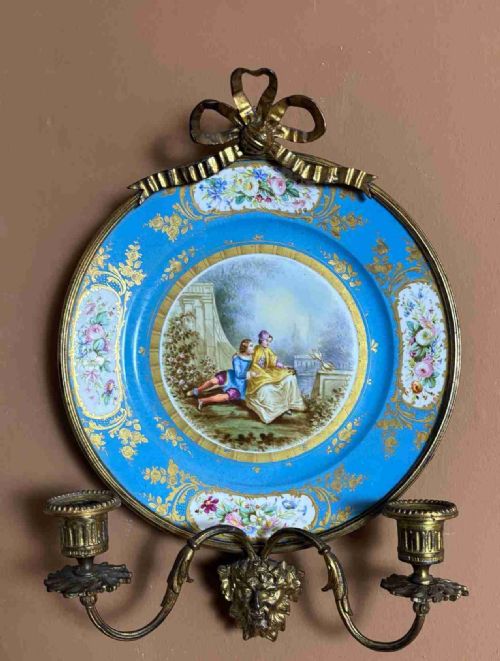
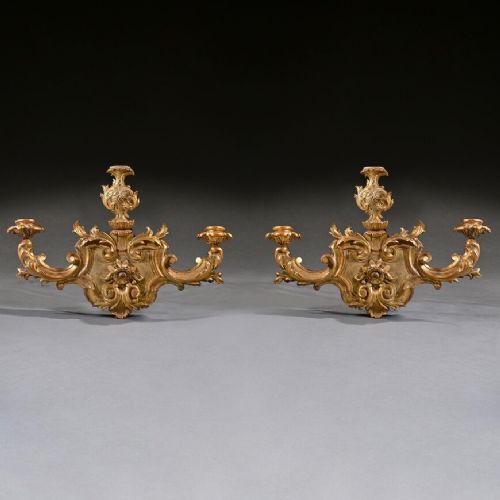
When you search for antique lighting sconces, you encounter wall-mounted fixtures designed to project illumination across a room using candles or electricity. The selection here leans heavily toward matched pairs and sets of four originating from French chateaux, English townhouses, and Florentine workshops.
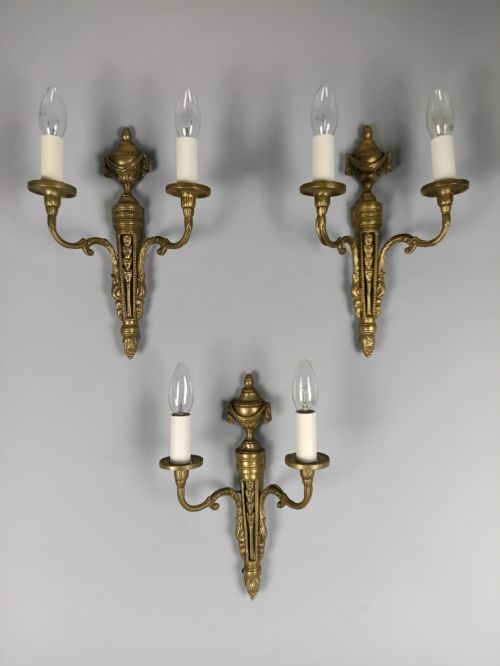
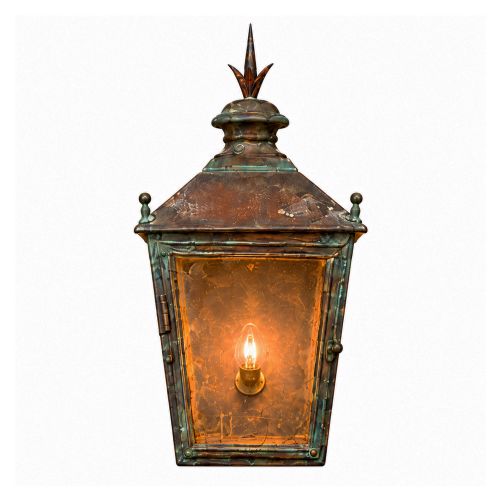
The forms span twin-arm wall lights, multi-branched girandoles, and glazed wall lanterns intended for corridors and grand staircases. Brass, gilt bronze, and carved wood dominate the choices, often styled in the manner of the French Rococo, Empire, or Edwardian periods.
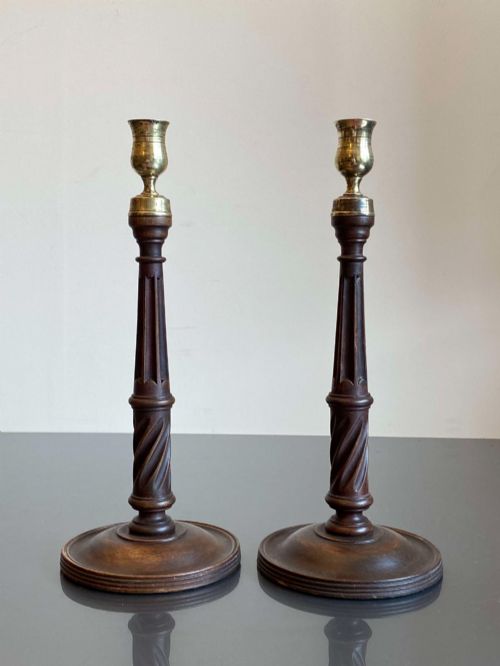
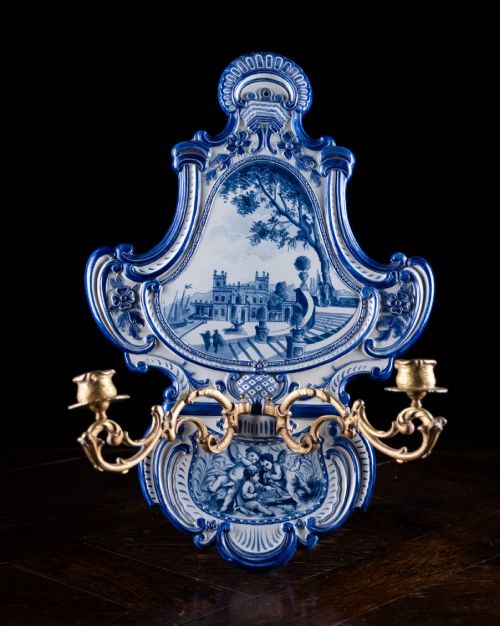
Buyers meet fixtures adapted from earlier candlesticks alongside pieces built specifically for the wall, incorporating everything from crystal drops to wrought iron. The predominant survivors date from the nineteenth and early twentieth centuries, reflecting changing domestic habits in illumination.
Materials and Construction
Foundry work governs the metallic pieces, utilising bronze, brass, and ormolu cast in detailed moulds and finished with chased details or heavy gilding. Giltwood alternatives rely on carved timber coated in gold leaf, providing a lighter wall weight while retaining a rich decorative surface.
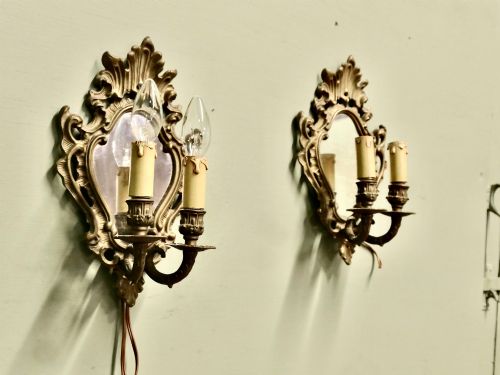
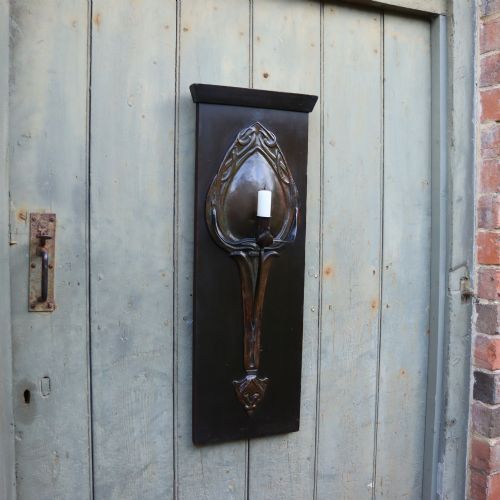
Glass components arrive as cut crystal drops, shades, or mirrored backplates designed to multiply the flickering illumination of a single candle. Wrought iron and copper appear in vernacular and Arts and Crafts examples, shaped by hand rather than poured into foundry flasks.
Antique Lighting Sconces Retail Price Guide 2026
Typical asking prices for lighting sconces among the pieces listed under this phrase on Sellingantiques today, from the lower quarter to the upper quarter. They describe what is for sale here now, not the wider market.
French workshops dominate the surviving inventory, complemented by English brassware and Florentine carved giltwood girandoles.
Assessing Quality and Merit
Quality rests in the crispness of the casting and the depth of the chasing, where sharper leaves and defined scrollwork distinguish superior foundry output from soft, blurred copies. The integrity of the gilding matters deeply, with genuine fire gilding or heavy gold leaf ageing differently than modern chemical plating.
Original matching components dictate the value of a pair or set, as mismatched arms or replaced drip pans disrupt the visual balance of the fixture. The weight of the metal and the complexity of the backplate construction reveal the original maker's commitment to durability and decorative ambition.
W.A.S. Benson·Bruce Talbert·Maison Baguès·REVO Leicester
The Antique Lighting Sconces Glossary
- Ormolu
- Gilded bronze, produced by applying an amalgam of gold and mercury to a bronze base and heating it until the mercury vaporised. It yields a rich, warm yellow surface that resists tarnish.
- Girandole
- A decorative wall bracket bearing candles or lamps, typically featuring a mirror attached to the backplate to reflect and multiply the light.
- Tole Peinte
- Painted sheet metal, frequently utilised for decorative lanterns and shades in vibrant hues with parcel gilt highlights.
- Giltwood
- Timber carved and coated with gold leaf or powder over a preparation of gesso, common in eighteenth and nineteenth-century decorative frames and sconces.
- Empire Style
- A neoclassical design movement originating in France during the rule of Napoleon, defined by military motifs, classical urns, and heavy gilt bronze mounts.
Antique Lighting Sconces: Frequently Asked Questions
How do I wire an old sconce?
Wiring antique lighting sconces involves routing modern heat-resistant flex through the original channels without compromising the structural integrity of the brass or bronze arms. Qualified electricians should handle the internal rewiring to meet safety standards.
Many fixtures retain hollow backplates or mounting stems specifically designed to conceal electrical cables against the wall surface.
Were these originally for candles?
A large proportion of these fixtures began life holding wax candles before being converted to electricity during twentieth-century modernisations. Drip pans and sconce cups designed to catch wax remain key indicators of this candle-burning heritage.
Later Victorian and Edwardian examples often emerged from workshops built explicitly for gas or early electrical wiring.
How do I mount them securely?
Mounting heavy cast bronze or carved giltwood requires fixing directly into wall studs or using heavy-duty wall anchors appropriate for plaster and lath. The weight of the backplate dictates the required anchor strength to prevent pulling away from the wall.
Professional installation ensures the fixture sits flush and bears the weight safely without damaging historic plaster.
Can I mix different pairs?
Placing matching pairs on opposite sides of a fireplace or doorway maintains symmetrical balance in a room's decorative scheme. Mixing distinct styles across different walls risks visual clutter unless united by a common metal or period.
Sets of four provide the ideal solution for larger spaces requiring uniform illumination without compromise.