


Antique Lidded Flagon
When you handle an antique lidded flagon, you hold a piece of historic drinking vessel design shaped for communal or personal service.
Antique Lidded Flagon
An antique lidded flagon is a sturdy vessel fitted with a hinged cover, designed to hold beverages from ale to wine. Buyers searching for an antique lidded flagon will encounter forms originating from the seventeenth century through to the Edwardian era, reflecting both domestic use and formal church service.
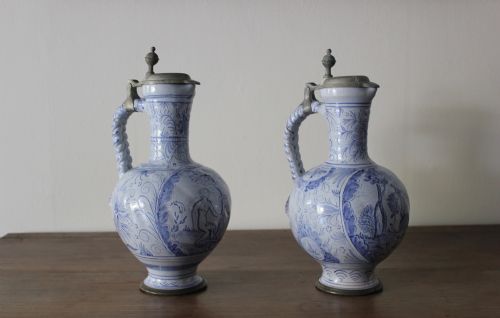
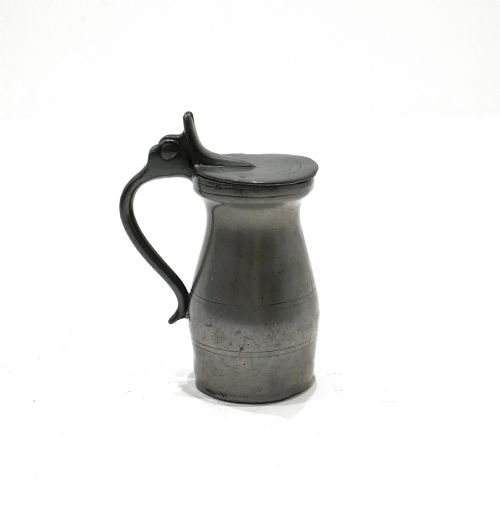
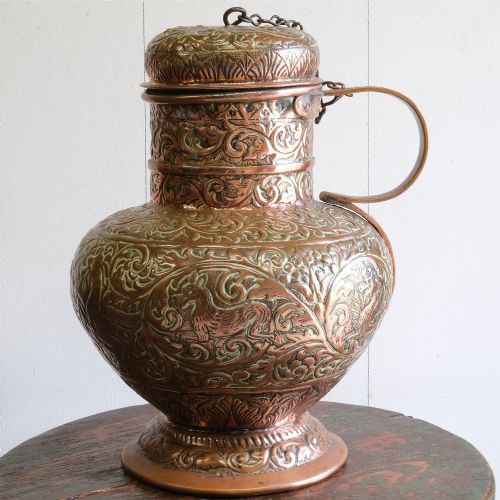
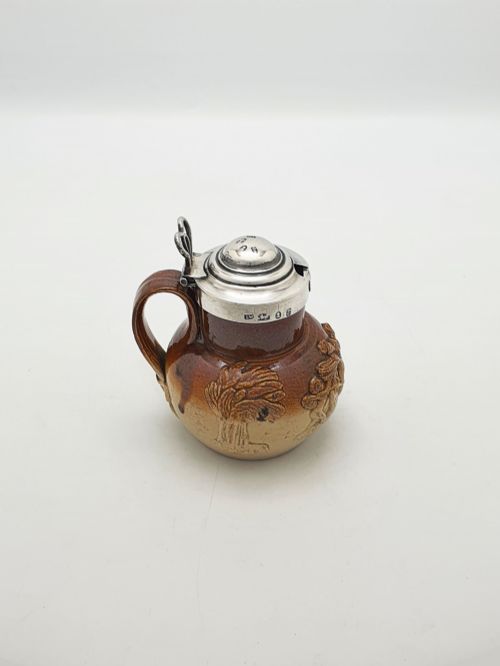
The selections available here span diverse regional traditions, including English, Scottish, Irish, and Channel Islands forms. Pewter examples dominate the selection, alongside items rendered in copper, sterling silver, Old Sheffield plate, and stoneware with silver collars.
Vessels range from intimate half gill measures and pint flagons to colossal church flagons and heavy German beer vessels. Stylistic expressions cover Georgian, Victorian, Dutch Baroque, and Art Nouveau designs.
Materials and construction methods
Metalware construction relies heavily on pewter, copper, and silver, shaped through casting, hammering, and soldering techniques. Pewter pieces utilise lead-tin or tin-copper alloys, often cast in multiple sections before being assembled and finished by hand.
Silver and Old Sheffield plate examples combine copper cores with fused silver sheets or rely on solid sterling silver, fashioned into tankards and jugs with secure hinged lids and thumbpieces. Stoneware and earthenware bodies appear alongside metal mounts, providing durable ceramic alternatives fitted with silver or metal collars.
Materials span traditional metalware alloys, sterling silver, ceramics, and glass, reflecting both domestic tavern life and ecclesiastical service.
Distinguishing quality across examples
Quality in these vessels rests upon the crispness of casting, the integrity of the hinged lid mechanism, and the retention of original touchmarks or maker stamps. Superior pieces display balanced proportions, substantial metal weight, and minimal distortion from centuries of handling.
The precision of engraving, the subtlety of applied decorative motifs such as crests or hops, and the survival of untouched patination elevate certain examples above utilitarian counterparts. Maker attribution and regional provenance further distinguish masterworks from standard workshop production.
John Heaney of Dublin·Robert Iles of London·John De St Croix·Nicolas Le Cheminant·Carter
The Antique Lidded Flagon Glossary
- Flagon
- A large drinking vessel with a handle and a lid, historically used for wine, ale, or cider. These vessels often feature hinged thumbpiece covers to keep contents secure.
- Tappit Hen
- A traditional Scottish type of pewter drinking measure featuring a lid with a knob on top. Capacities range from chops to Scots pints.
- Old Sheffield Plate
- A composite material made by fusing a thin sheet of silver to a thicker copper base. This technique was widely utilised before the invention of electroplating.
- Spirit Measure
- A small vessel designed to hold precise quantities of alcohol for trade or domestic service. These items often bear official capacity stamps.
- Spire Flagon
- A tall, tapering church flagon style common in eighteenth-century English pewter. The profile narrows sharply toward the lid.
Antique Lidded Flagon: Frequently Asked Questions
What were antique lidded flagons used for?
These vessels served primarily to store, measure, and pour alcoholic beverages such as ale, beer, cider, and wine. Many large examples also functioned as church flagons for communion wine.
Domestic versions sat on tavern tables or in private homes for communal drinking and daily service. Their sturdy lids helped preserve the contents and kept dust out.
How do I date an antique pewter flagon?
Dating relies on stylistic clues, capacity marks, and maker touchmarks stamped directly onto the metal. Changes in handle shapes, lid profiles, and thumbpieces help assign pieces to specific decades.
Early eighteenth-century pieces often feature flat lids, while later Victorian designs incorporate more ornate finials and decorative embossing.
What is a Tappit Hen flagon?
A Tappit Hen is a distinctively shaped Scottish pewter drinking vessel with a bulgy body and a lidded top bearing a small knob. They were produced in specific regional capacities.
These pieces are prized by metalware collectors for their heavy gauge pewter and characteristic silhouette that evolved during the eighteenth century.
How should I clean antique metal flagons?
Preserving the historic surface requires avoiding harsh modern metal polishes that strip away age-related patination. Gentle dusting and occasional washing with mild soap and warm water are sufficient.
Allowing pewter and silver to retain their natural dark oxides protects the metal and maintains the authentic appearance expected by collectors.