
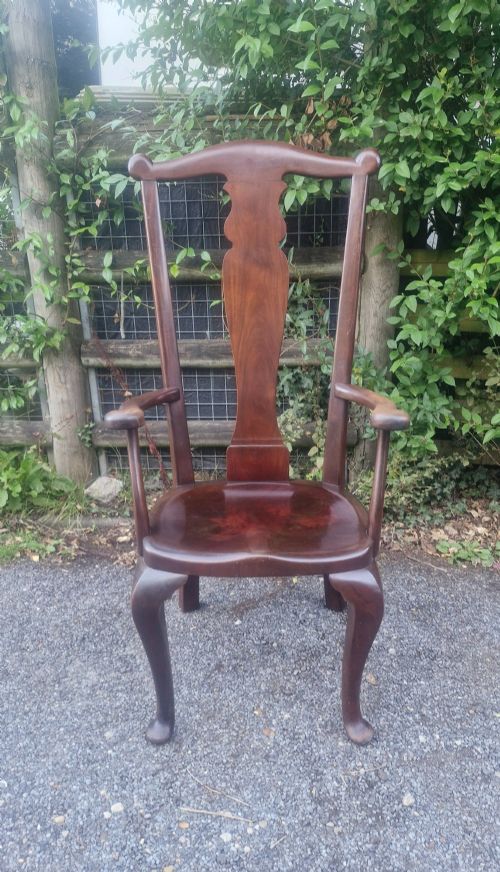
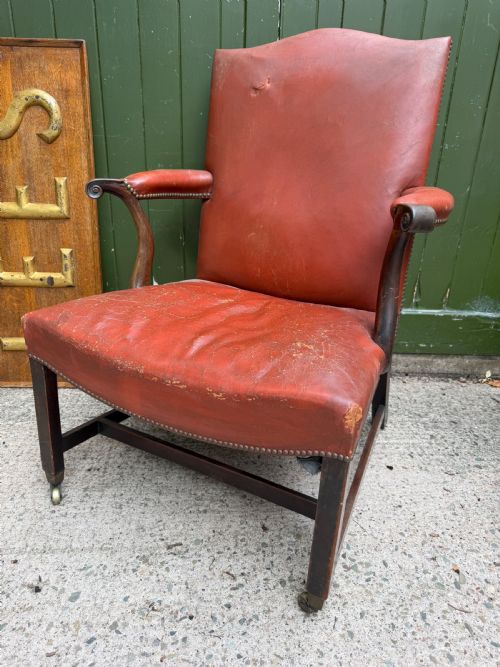

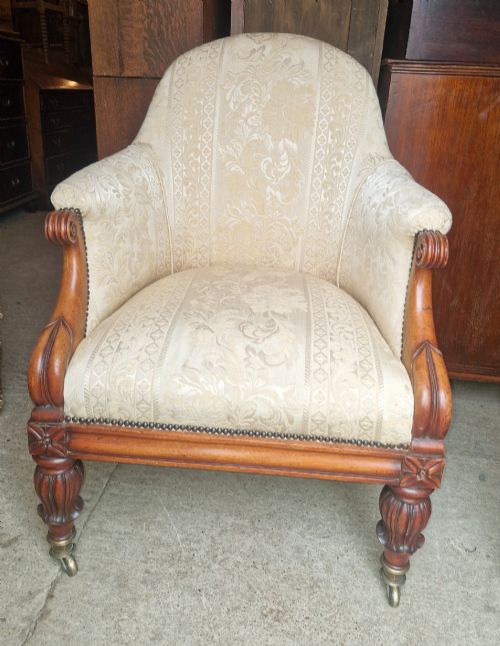
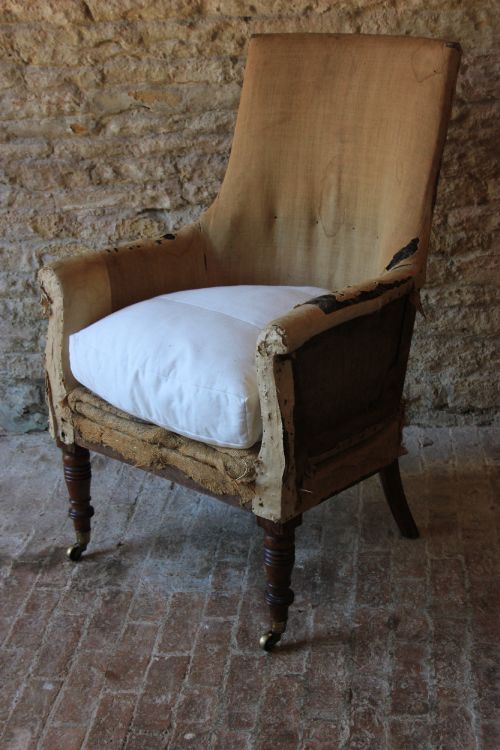
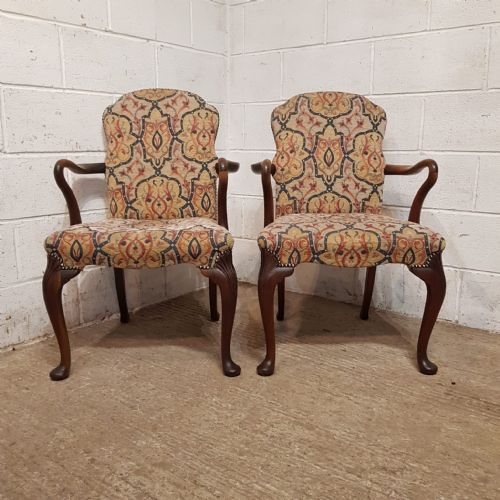
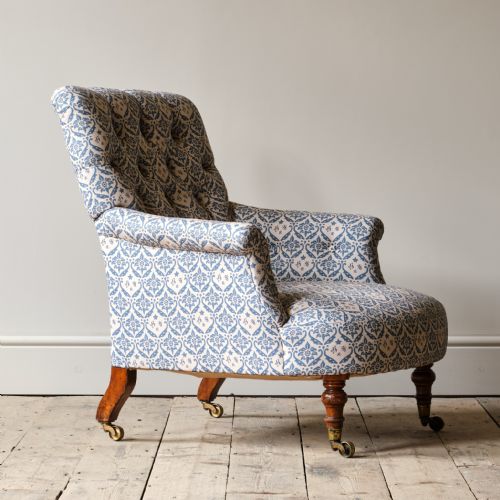
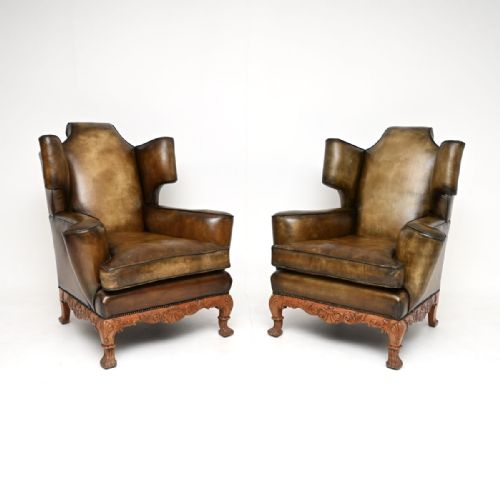
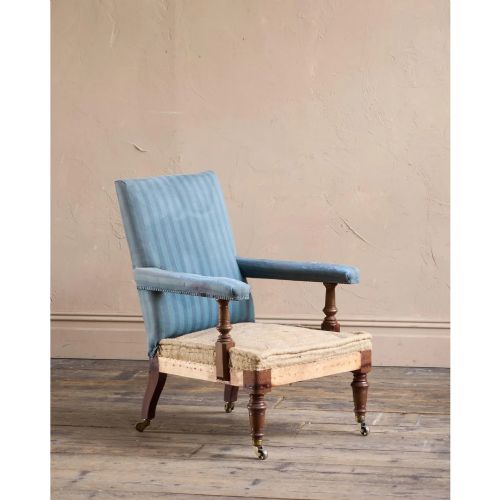

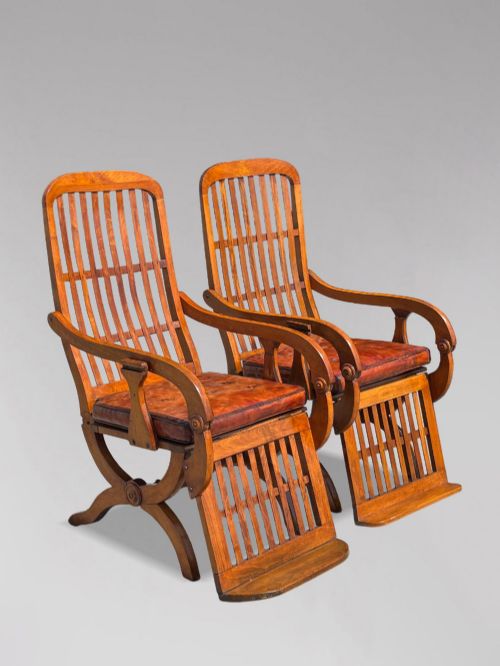
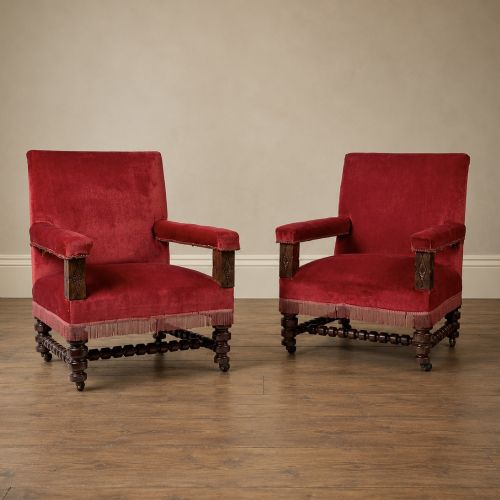
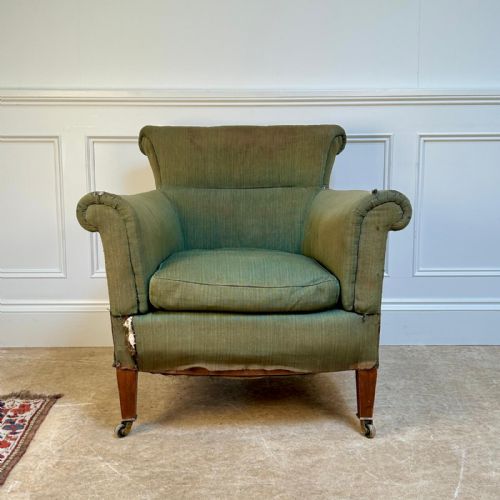
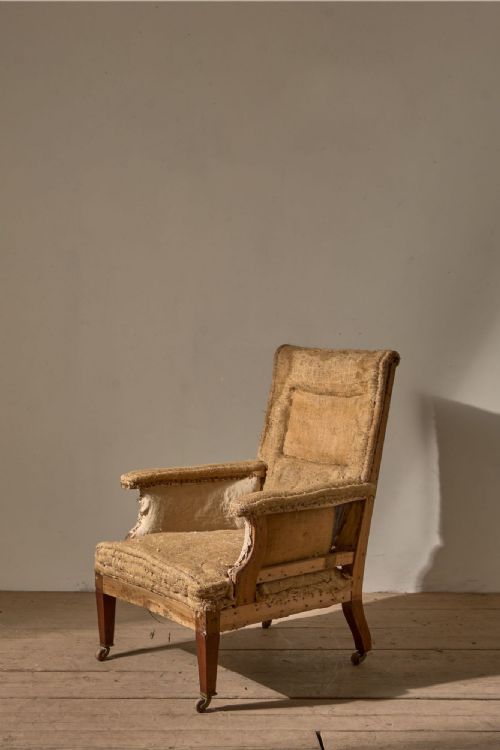
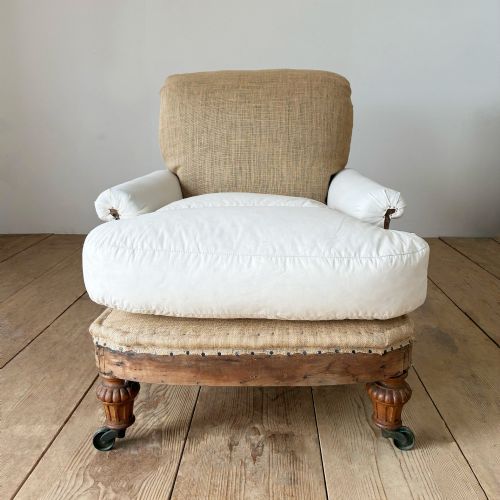
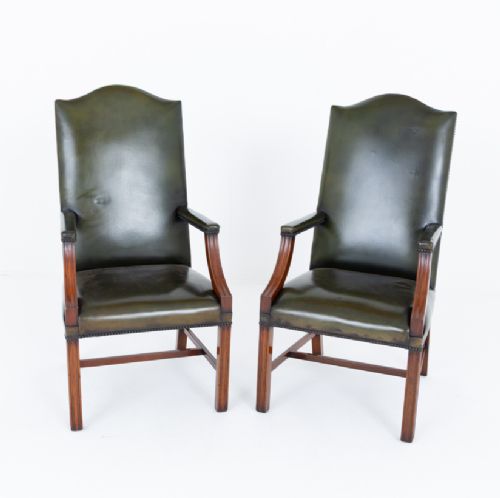
Antique Library Chair Frame
An antique library chair frame is the sturdy skeletal structure of a reading seat, stripped back or ready for new upholstery to anchor a study.

How they were made
Cabinetmakers constructed these skeletons primarily using solid mahogany, walnut, and oak, often shaping the exposed woodwork through careful carving and turning. Structural integrity relied on traditional joinery techniques, ensuring the heavy timber could withstand decades of use.
Internal support systems incorporated webbing and hessian to bear weight, whilst brass castors frequently aided mobility on heavy carpets. Show frames displayed polished timber surfaces, leaving arms and legs visible while concealing internal stuffing materials.
What varies in quality
Quality rests principally in the selection of timber and the precision of the carving, where denser grains and crisper detail distinguish superior workshops. The weight and substance of the frame dictate its longevity, with over-scaled or exceptionally solid timbers commanding greater authority.
Subtleties in proportion and the elegance of the show frame separate standard production from finer cabinet work. Original brass mounts and integrated castors further elevate the standing of a piece.
Listings feature mahogany, oak, and walnut frames spanning the Georgian, Regency, and Victorian periods.
Howard and Sons·Morison and Co·Gillows·White Allom and Co
The Antique Library Chair Frame Glossary
- Show frame
- A timber structural skeleton designed to remain partially visible outside the upholstery. It highlights the polished grain and carved details of mahogany, walnut, or oak.
- Gainsborough chair
- A type of open-armed, wide-seated armchair dating from the eighteenth century onwards. It is traditionally associated with desk work and library reading.
- X-frame
- A structural chair design featuring intersecting diagonal stretchers or legs. This form offers notable geometric stability and dates across multiple revival periods.
- Bergere
- An enclosed upholstered armchair with a wooden frame, often featuring cane work panels to the sides or back. It provides a lighter appearance within a study.
- Wingback
- An armchair featuring protective side panels attached to the arms and back. This design originally deflected draughts in large, cold rooms.
Antique Library Chair Frame: Frequently Asked Questions
What is a library chair frame?
A library chair frame is the exposed or partially covered wooden skeleton of a historic reading seat. These structures provide the heavy duty foundation required for daily study use.
Buyers acquire these frames either to preserve their exposed timber aesthetic or to commission traditional reupholstery. They represent the architectural core of traditional seating.
How do I identify the period?
Period identification relies upon timber choice, carving styles, and structural proportions. Regency and George III pieces exhibit distinct classical lines, whereas Victorian frames tend to be heavier and more carved.
Matching the turning style and secondary woods helps narrow down the decade of manufacture. Consulting historical design revivals provides further clues to dating.
Were these chairs used at desks?
Many library chair frames served dual purposes as desk chairs and fireside seating. Their open arms and sturdy proportions allowed for comfortable writing and reading.
Desk variants often incorporated castors to facilitate movement across study floors. Their robust construction suited the demands of professional spaces.
How should I care for exposed timber?
Exposed wood frames require minimal maintenance using appropriate furniture wax and soft cloths. Avoiding direct sunlight prevents the mahogany and walnut from drying out.
Regular dusting preserves the finish without damaging the original patina. Gentle cleaning maintains the historic character of the timber.