
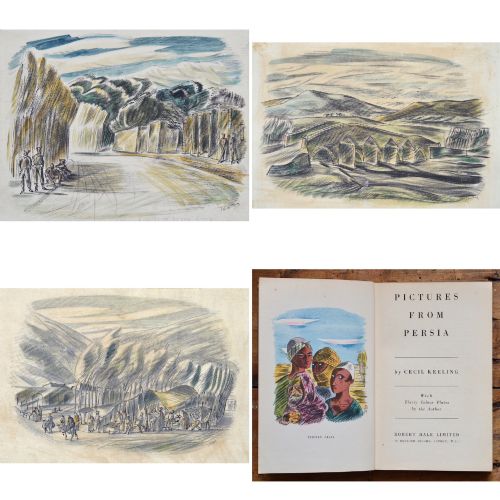
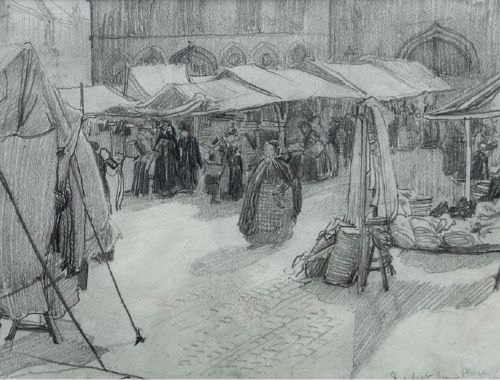
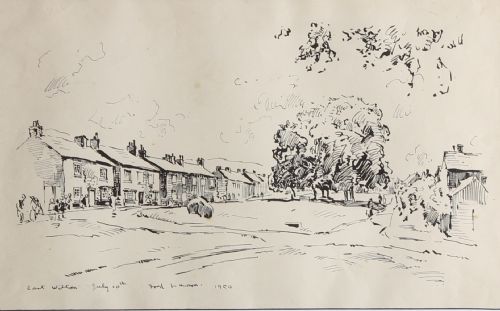
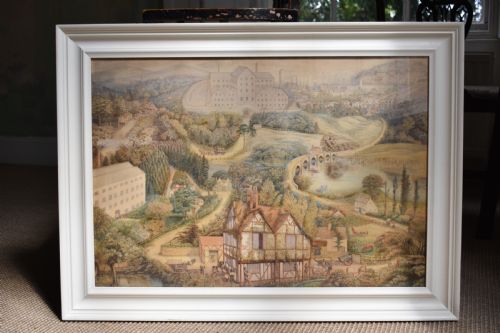


Antique Landscape Illustration
An antique landscape illustration captures natural and architectural views through watercolours, ink, and pencil, offering a direct window into past topographical and pastoral traditions.
Antique Landscape Illustration
When you search for antique landscape illustration, you encounter original works on paper spanning several centuries. The selection includes delicate wash techniques, pen-and-ink drawings, and mixed-media paintings.
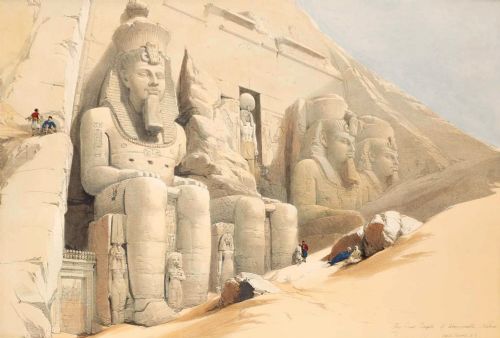
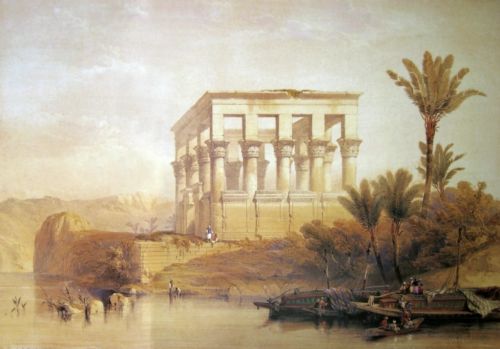
Most pieces date from the eighteenth century through to the mid-twentieth century. You will frequently meet architectural prints, pastoral scenes, and topographical studies framed under glass.
The subjects range from British lake districts and castles to continental buildings and classical temples. These works encompass diverse regional schools, including Scottish and Victorian traditions.
How They Were Made
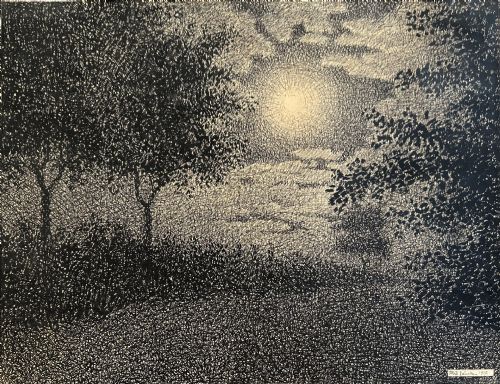
Artists utilised graphite, pencil, and ink to lay down preliminary sketches and structural outlines. Pen-and-ink drawings often rely on precise line work combined with subtle washes to build depth.
Watercolour pigments applied to paper create luminous effects, particularly when painters employ wash techniques for skies and foliage. Mixed-media compositions incorporate gold leaf or bodycolour to highlight specific architectural details.
Framed artwork is typically preserved behind glass within wood or gilt frames. Paper supports range from lightweight sheets to heavier cardstock suited to heavier pigment applications.
Several artists preferred documenting mundane agricultural labour and local sheepfolds over grand palaces, immortalising everyday rural grit in delicate wash.
What Varies in Quality
The sophistication of the draughtsmanship marks the distinction between standard topographical recording and accomplished artistic execution. Skilled handling of perspective and light transforms a simple architectural study into a compelling composition.
The integration of medium components influences the visual impact of the piece. Confident wash application and precise pen control elevate works on paper, whereas hesitant brushwork diminishes the overall presence of the scene.
Provenance and attribution add historical weight to individual sheets. Signed works or those linked to documented artists and specific schools carry greater clarity regarding their origin.
David Roberts·Edward Dayes·Fred Lawson·Peter Tillemans·Sir Francis Leggatt Chantrey
The Antique Landscape Illustration Glossary
- Wash
- A technique where diluted watercolour or ink is applied evenly across paper to create smooth backgrounds and atmospheric skies. This method forms the foundation of many topographical watercolours.
- Gouache
- An opaque watercolour paint containing a binding agent that produces a heavier, more solid finish than traditional transparent watercolours. Artists use it to add highlights to mixed-media pieces.
- Topography
- The detailed mapping and artistic representation of specific places, buildings, or local landscapes. Such drawings served as accurate visual records before the widespread adoption of photography.
- Graphite
- A form of carbon used in pencils for sketching and detailed monochromatic drawing. It allows for fine tonal gradations in early studies.
- Mixed-media
- An artwork combining two or more distinct artistic materials, such as watercolour, ink, and pencil on paper. This approach offers varied textural contrast within a single composition.
Antique Landscape Illustration: Frequently Asked Questions
How should I frame antique landscape illustration pieces?
Protect works on paper behind glass to shield them from airborne dust and moisture. Use acid-free mounts to prevent the paper from yellowing over time.
Keep framed artwork away from direct sunlight to preserve the fugitive pigments found in older watercolours and inks.
What periods do these illustrations cover?
The works span from the eighteenth century through the Victorian era and into the early twentieth century. Georgian and Victorian examples sit alongside pieces from the 1920s and 1930s.
Stylistic shifts reflect changing artistic priorities, moving from formal topographical studies towards more expressive early modern interpretations.
How are pencil and ink drawings different from watercolours?
Pencil and ink drawings rely primarily on line, contour, and monochromatic tone to define architectural forms and landscapes. They showcase the raw draughtsmanship of the artist.
Watercolours introduce pigment and fluid washes to convey colour, light, and atmosphere. Many pieces combine both methods through ink outlining and watercolour infill.
Are these works signed by the artists?
Some pieces feature legible signatures, artist monographs, or contemporary inscriptions noting the depicted location. Others are attributed to specific schools or makers based on stylistic evidence.
Unsigned works often rely on period framing, inscriptions on the reverse, or paper characteristics to indicate their origin.