
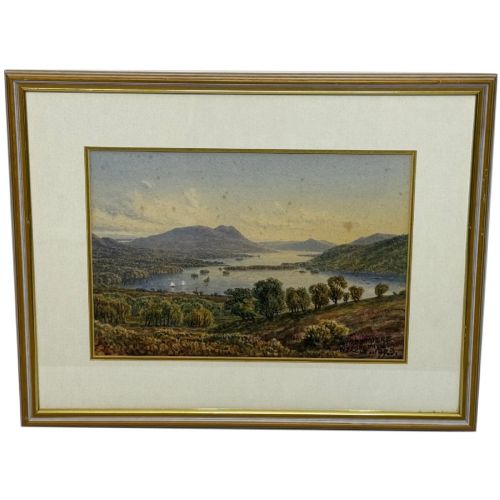
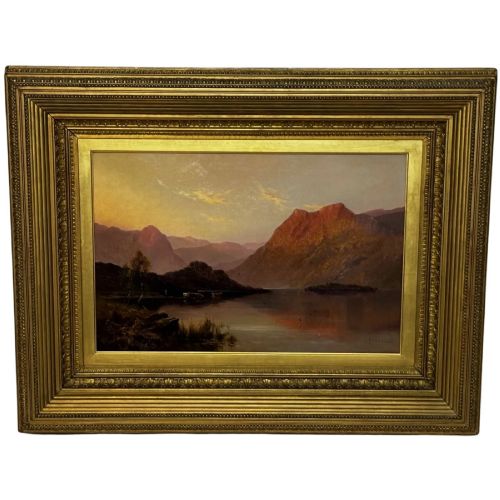
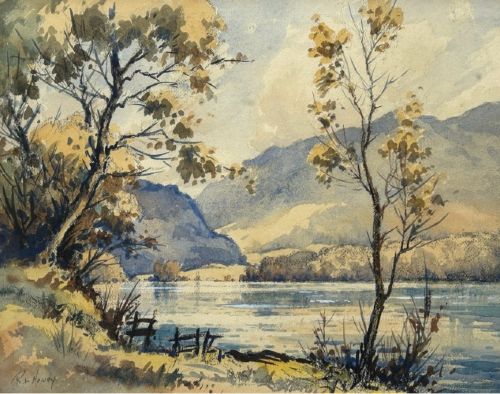
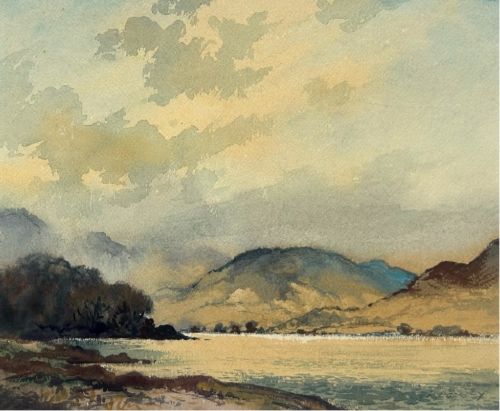
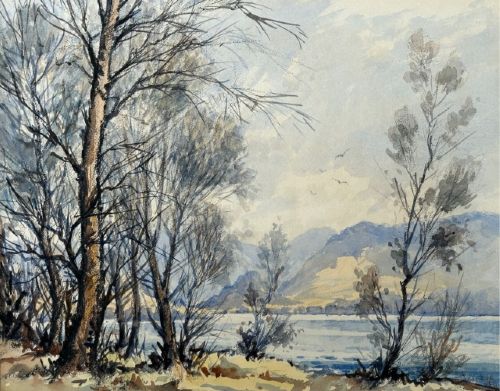


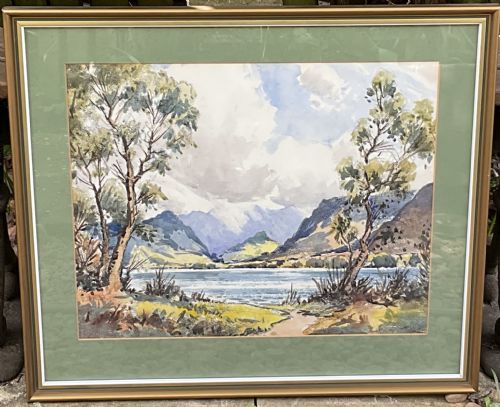


Vintage Lake District Painting
These vintage lake district painting examples capture northern topography through watercolour and oil, offering buyers authentic regional atmosphere.
Vintage Lake District Painting
A vintage lake district painting captures the topography, water, and fells of Cumbria through the eyes of artists working across the eighteenth, nineteenth, and twentieth centuries. These works record specific local landmarks such as Windermere, Derwentwater, Grasmere, and Skiddaw in varied climatic conditions.
Buyers will most frequently encounter mid-twentieth-century watercolours and oils on this page, particularly works produced during the nineteen-sixties by regional artists. These pieces often arrive framed and glazed behind glass to protect the paper or canvas from atmospheric moisture.
The selections range from topographical ink and wash sketches of the Georgian era through to post-impressionist interpretations and impasto oils of the mid-twentieth century. Each period brings a distinct palette and handling of northern light to the subject.
Materials and methods in regional landscape art
Watercolour pigment on paper dominates the selection, frequently augmented with ink lines to define architectural elements like old houses or craggy rock faces. Artists applied fluid washes to build up skies and fells, capturing the translucent atmospheric conditions typical of the northern counties.
Oil paint on canvas or wood provides a heavier, more textured alternative, allowing for impasto application where thick pigment creates physical depth on the surface. Gilt frames often accompany these oil paintings, providing a traditional border that enhances the depth of the landscape.
Several watercolours preserve tiny specks of Cumbrian dust trapped beneath the glass during early twentieth-century framing sessions in provincial workshops.
Distinguishing quality in regional landscapes
Topographical accuracy and confident brushwork separate the finest examples from standard topographical records, showing an artist's ability to render light across water and fell. The strength of the composition and the handling of atmospheric perspective determine whether a landscape feels flat or possesses genuine spatial depth.
The integrity of the materials, including stable paper without heavy toning and well-preserved pigments retaining their original vibrancy, marks out superior works. Original framing and signed provenance further distinguish works executed by noted regional practitioners from anonymous topographical sketches.
William Taylor Longmire·Alfred Fontville de Breanski Jr·Robert Leslie Howey·Helen Layfield Bradley·Edward Dayes·Edward Horace Thompson·Claude Muncaster·Frederick Tucker·Percy Lancaster·Bernard Eyre Walker
The Vintage Lake District Painting Glossary
- Impasto
- Paint applied thickly to a canvas or panel, standing out in relief from the surface. This technique allows the artist to capture physical texture in foliage or rocky crags.
- Topographical
- Representing specific places accurately rather than inventing an imaginary scene. These works serve as visual records of identifiable Cumbrian locations.
- Wash
- A thin, fluid layer of watercolour pigment spread evenly across paper to create transparent areas of sky or water. It forms the atmospheric background of many landscape paintings.
- Gilt
- A thin layer of gold leaf or gold-coloured paint applied to a wooden frame. It creates a reflective border that isolates the painting from its surroundings.
Vintage Lake District Painting: Frequently Asked Questions
How do I identify a twentieth-century watercolour?
Twentieth-century watercolours generally employ machine-made paper and modern pigments alongside traditional gum arabic binders. Signatures, framing materials, and stylistic cues often point to this period of production.
Examining the reverse of the backing board may reveal framing stamps, artist addresses, or exhibition labels that confirm the date of execution.
Were these works intended for domestic display?
Artists created these regional landscapes for collectors and tourists who visited the northern fells during the nineteenth and twentieth centuries. They served as personal mementos of holidays or as decorative domestic views.
Framed behind glass or varnished in the case of oils, they hung in residential interiors to bring natural scenery indoors.
What subjects besides water do these paintings show?
While lakes form the central focus of many compositions, artists frequently painted surrounding fells, mountain passes, and local architecture. Cottages, bridges, and estuary views appear alongside open water.
Skies play a major role, recording changing weather patterns from clear sunlight over estuaries to heavy cloud cover across high peaks.
How should I care for a framed watercolour?
Watercolour pigments on paper remain sensitive to direct sunlight, which can cause fading over extended periods of exposure. Hanging works away from bright windows preserves the intensity of the original washes.
Maintaining stable indoor humidity prevents the paper from warping and protects the wooden frames and glass seals from degradation.