




Ink Wash Landscape Drawing
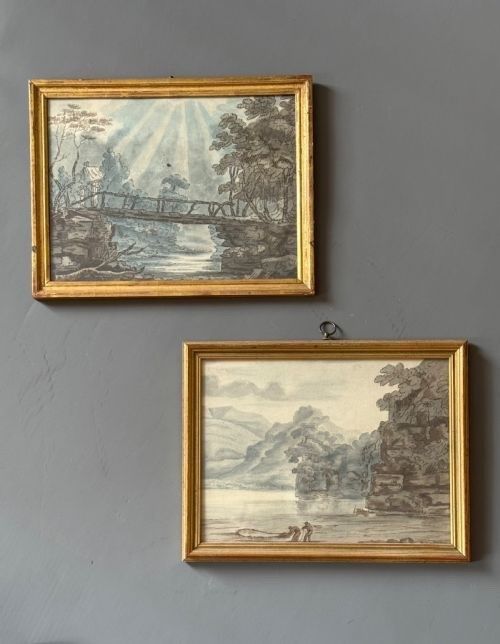
These ink wash landscape drawing works capture scenery through fluid monochrome pigment on paper, offering subtle tonal depths that reward careful study.
Ink Wash Landscape Drawing
When you search for an ink wash landscape drawing, you encounter works on paper spanning from the eighteenth century through the twentieth century. These pieces record rural scenes, townscapes, and distant panoramas using monochrome or limited colour pigments.
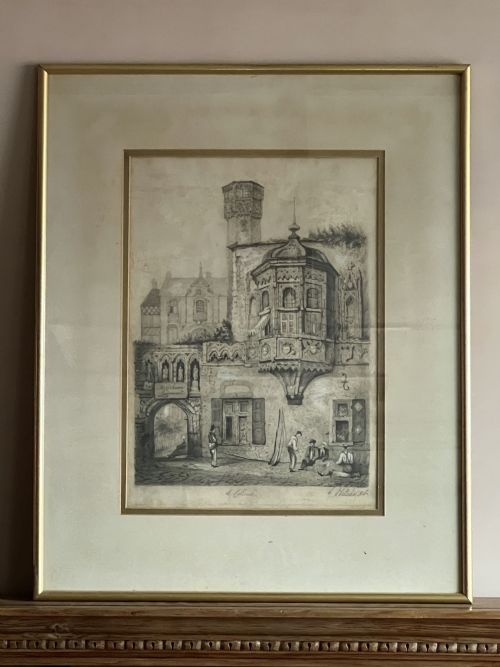
The selections include Georgian sketches alongside mid-twentieth-century British and French compositions. Works range from intimate pastoral studies to framed architectural views.
Most examples combine ink lines with grey or sepia washes to build atmospheric depth. You meet both unsigned attribution pieces and named historical watercolours.
Materials and technique
Makers laid down initial compositions using graphite or pencil before applying fluid ink lines. They used diluted ink or watercolour washes to build shadows and define distant landforms.
Supports consist primarily of paper housed behind glass within wood or gilt wood frames. Selected pieces incorporate two-coloured ink lines or sepia pigments to enrich the tonal range.
Several artists captured distant lakes and timber carts, preserving quiet moments from centuries past in simple sepia ink.
Quality and execution
Excellence rests in the confidence of the handling and the precision of the brushwork. Strong compositions demonstrate a deft balance between fine pen strokes and broad, transparent washes.
Materials contribute significantly to the standing of a piece, particularly the preservation of the paper and the integrity of the original framing. Finer examples retain their intended contrast without excessive fading.
Stanley Orchart·Edward Dayes·Fred Lawson·Peter Tillemans·Thomas Rowlandson·Thomas Lound·Joseph Barber
The Ink Wash Landscape Drawing Glossary
- Wash
- A technique where diluted ink or watercolour is brushed across paper to create smooth areas of tone. It establishes atmospheric depth in a landscape.
- Pen and ink
- A linear drawing method utilising a nib and dark fluid. It provides the sharp outlines that structure the composition before washes are applied.
- Watercolour
- A transparent pigment suspended in water applied to paper. It frequently accompanies ink work in these landscape drawings.
- Works on paper
- A collective term encompassing drawings, sketches, and watercolours. It defines pieces created on a paper support rather than canvas or panel.
- Georgian
- A historical period spanning the eighteenth and early nineteenth centuries. Pieces from this era often display pastoral or topographical subjects.
Ink Wash Landscape Drawing: Frequently Asked Questions
How should I frame these drawings?
Protect works on paper behind glass within suitable wood or gilt wood surrounds. Keep them away from direct sunlight to prevent fading.
Ensure adequate spacing between the paper and the glass to avoid moisture accumulation over time.
What periods do these pieces cover?
The available selection spans from the eighteenth century through to the mid-twentieth century. Examples include Georgian sketches alongside later British and French works.
Each period brings distinct compositional styles and framing traditions to the genre.
Are these works original?
The inventory consists of original artwork, paintings, and drawings executed by hand on paper. You find both signed compositions and attributed historical pieces.
Each item represents a unique historical record created with ink, wash, or graphite.
What materials are typically used?
Artisans utilised paper as the primary support, applying ink, watercolour, and graphite. Many examples feature sepia or coloured washes for tonal variation.
Finished works frequently appear preserved behind glass within traditional wooden frames.