




Grey Paper Watercolour
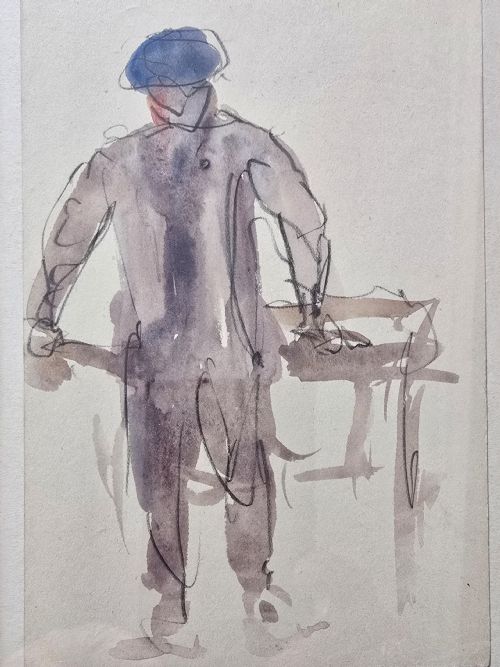
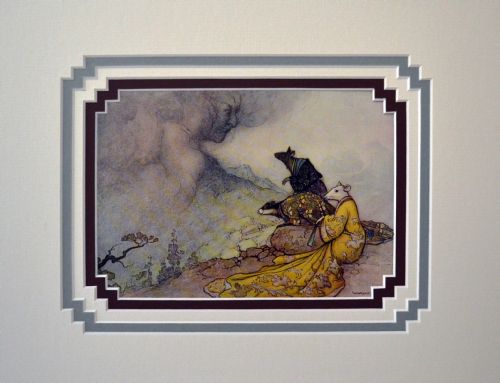
Grey paper watercolour works capture tone and atmosphere through the interplay of pigment against a tinted ground.
Grey Paper Watercolour
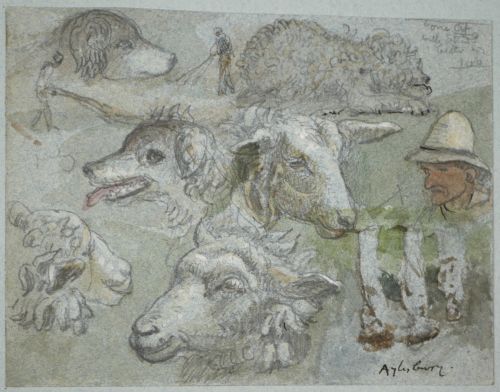
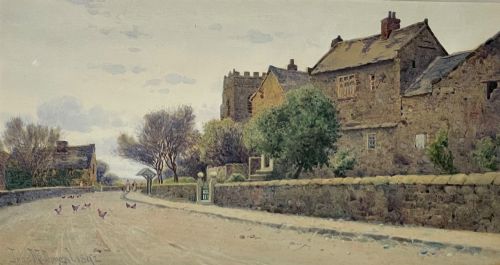
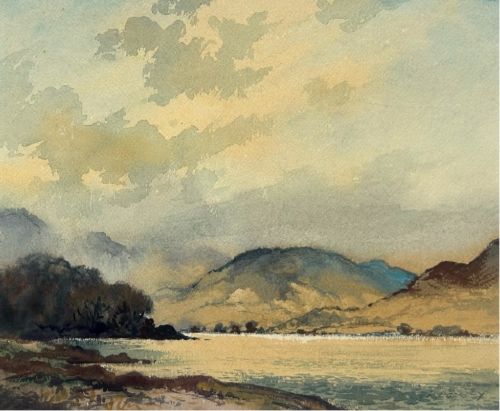
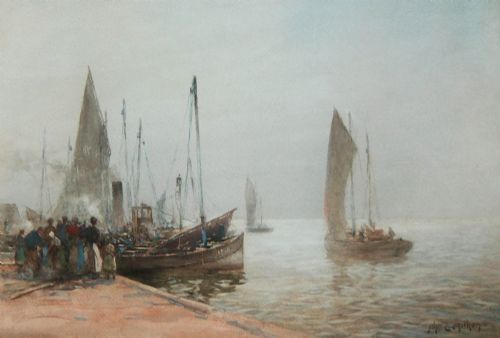
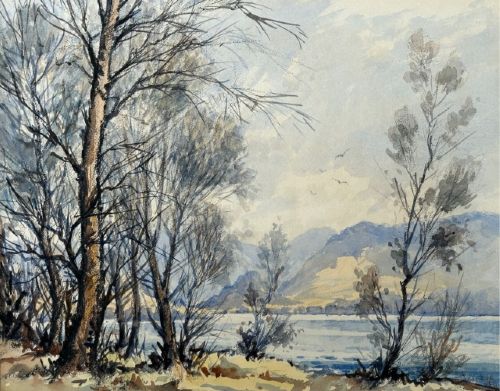
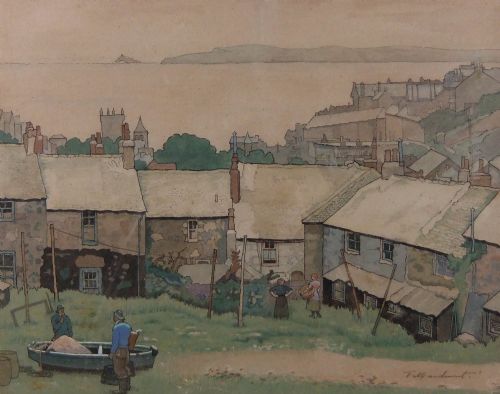
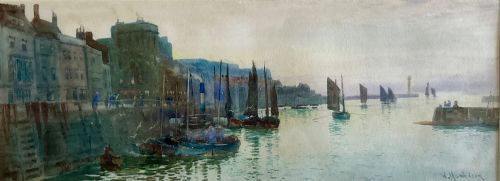
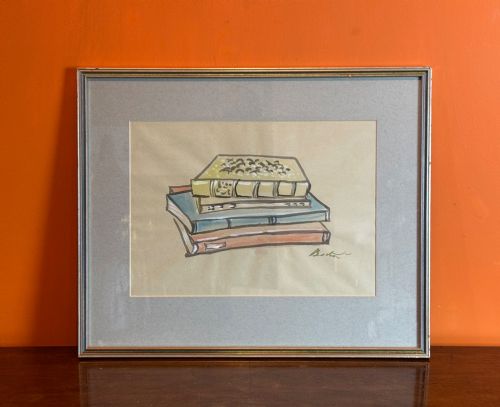
A grey paper watercolour is a fine art painting executed on tinted grey paper, often utilising bodycolour or white highlights to lift the subject from the dark ground. When searching for grey paper watercolour, collectors encounter works ranging from nineteenth-century coastal scenes to mid-century British landscapes.
The selection on this page spans the Victorian era through to the mid-twentieth century, capturing architectural views, maritime subjects, and rural scenes. Artists select tinted paper to establish an immediate middle tone, allowing both shadows and highlights to be applied with economy.
How They Were Made
These works are created using watercolour pigment and ink on paper, occasionally supported by glass and wood framing. The artist applies washes directly to the grey surface, leaving areas of the bare paper to act as clouds, stone, or water.
Bodycolour, which is watercolour mixed with white pigment, is frequently layered alongside fine ink lines to define architectural details and figures. This technique harnesses the paper's natural tone to unify the composition without requiring a full wash of background colour.
The inventory records diverse stylistic movements including British Impressionism, Victorian realism, and mid-century modern art.
What Varies in Quality
Quality rests upon the confidence of the brushwork and the effective deployment of the grey ground as an active tonal element. The strongest examples demonstrate a deft handling where the paper itself breathes through the pigment.
Condition is tied directly to paper preservation, as tinted papers are susceptible to light damage and foxing. Superior works retain their original chromatic balance without excessive fading or discoloration from acidic framing.
James Smetham·John McDougal·Robert Leslie Howey·James E. Aitken·Hector Caffieri·Thomas Maidment·William Matthison·Cecil Beaton·Albert Ludovici Jnr·Michael Healy·Warwick Goble·Commander Eric Tufnell·Fred Lawson·Arthur Reginald Smith·Cuthbert Crossley·Thomas Bush Hardy·Edward Seago·Tom Clough·Rowland Henry Hill·Stanley Orchart·Edward Dayes·Florence Hess·John Augustus Atkinson·Henri Joseph Harpignies·Frank H. Mason
The Grey Paper Watercolour Glossary
- Bodycolour
- Watercolour paint mixed with a white pigment to make it opaque. This allows the artist to paint highlights directly over darker washes.
- Wash
- A thin, fluid application of watercolour pigment spread evenly across the paper. It provides the transparent background tones in a painting.
- Foxing
- Small brownish spots that appear on old paper due to chemical reactions over time. Proper conservation helps stabilise this natural ageing process.
- Monogram
- A set of initials combined into a single mark used by an artist to sign a work. These assist in identifying makers when full signatures are absent.
Grey Paper Watercolour: Frequently Asked Questions
What is grey paper watercolour?
A grey paper watercolour is a painting where the artist uses tinted grey paper as a base rather than traditional white stock. This method allows the natural tone of the sheet to serve as the mid-tones of the composition.
Painters apply transparent pigments alongside opaque white highlights to create rapid atmospheric effects, particularly suited for capturing evening light, stormy seas, and winter landscapes.
How should I frame these watercolours?
These works require professional framing behind conservation-grade glass to filter out ultraviolet light that degrades paper and fades pigments. Acid-free mounts should be used to keep the paper from touching the glass directly.
Keeping the original framing if period-appropriate is sometimes desirable, provided the interior materials do not threaten the long-term stability of the paper.
How do I care for antique watercolours?
Antique watercolours on paper need protection from direct sunlight and excessive humidity to prevent fading and the growth of mould. Hang them on interior walls away from direct heat sources.
Checking the backing boards periodically ensures that dust and insects cannot reach the delicate surface of the paper over the decades.
How can I tell different periods apart?
Victorian and Edwardian examples often feature detailed brushwork and narrative subject matter, while twentieth-century pieces tend towards looser impressionistic strokes and simplified forms. Paper weights and watermark evidence also provide clues to the era of manufacture.
Signatures, framing styles, and artist inscriptions on the reverse offer further context for dating an individual painting accurately.