




Antique Lake District Art
Antique lake district art captures the solemn topography and luminous weather of northern England through canvas and paper.
Antique Lake District Art
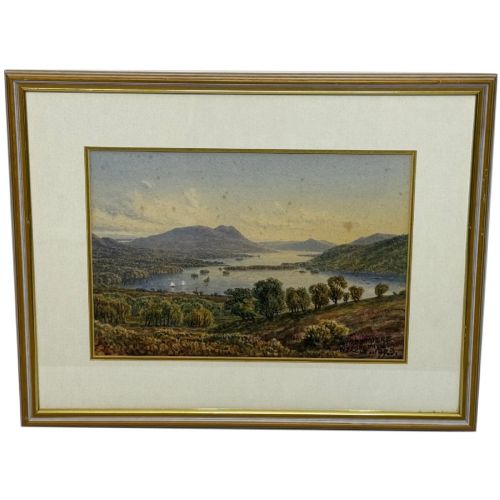
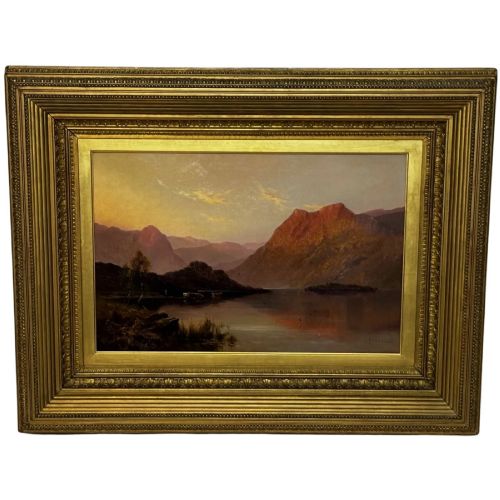
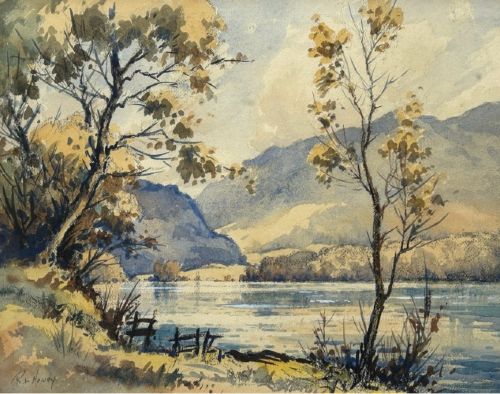
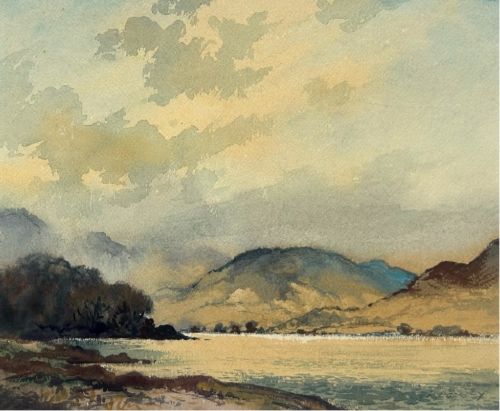
When searching for antique lake district art, buyers encounter topographical watercolours and oil paintings depicting familiar northern fells and meres. These works span from eighteenth-century topographical sketches to mid-twentieth-century watercolours and oils.
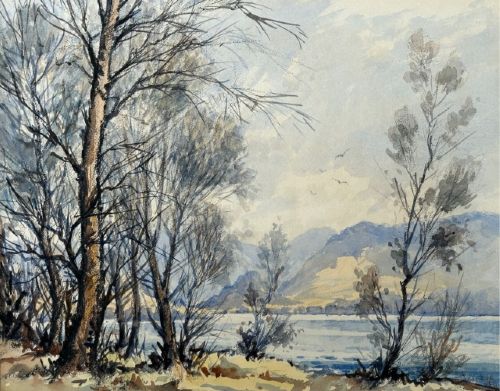
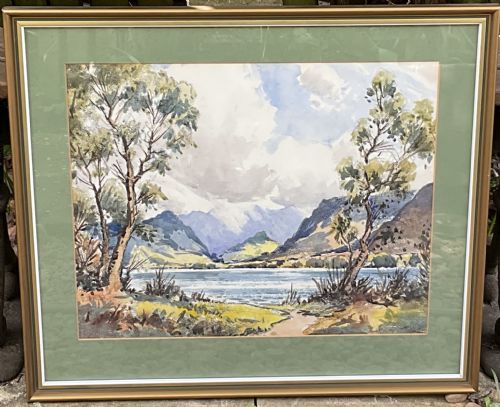
The most common form on this page is the framed landscape watercolour, often capturing specific waters such as Windermere, Grasmere or Derwentwater. Works range from intimate pen-and-ink drawings to large framed canvases executed by regional and visiting artists.
Subjects frequently centre on recognizable landmarks like the Langdale Pikes, Borrowdale and the River Duddon. Alongside paintings, buyers also find early engraved maps detailing Westmorland and Cumberland topography.
How they were made
Makers utilised traditional mediums including watercolour and oil on canvas or panel, mounted within wooden frames often accented with gesso and glass. Artists applied watercolours over delicate ink sketches on paper, capturing rapid shifts in weather and light across the fells.
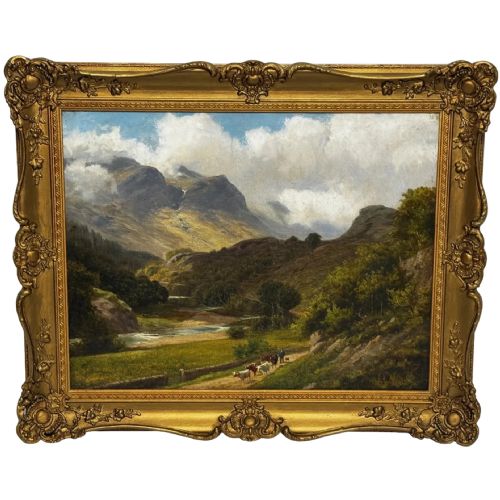
Oil painters worked on canvas or wood boards, building layered compositions that rendered cattle grazing by the water or the deep shadows of mountain passes. Map makers employed engraved copper plates on paper to delineate boundaries and terrain.
The selection includes watercolours, oil paintings, and engraved maps spanning from the 17th century through the mid-20th century.
What varies in quality
Quality rests upon the artist's ability to render the distinct geology and atmospheric light of the northern landscape rather than mere technical neatness. Earlier eighteenth and nineteenth-century works often demonstrate superior topographical precision and handled washes.
The integrity of the framing, the preservation of the paper against foxing, and the original condition of the canvas or oil paint dictate the standing of an individual piece.
William Taylor Longmire·Alfred Fontville de Breanski·Edward Dayes·James Gunson Atkinson·Edward Horace Thompson·Joseph Farrington·Rob't Morden·Stephen Enoch Hogley·Robert Lesley Howey·Claude Muncaster·Frederick Tucker·Sidney Richard Percy·Cornelius Pearson·Tom Dudley·William Mellor·Percy Lancaster·Charles Pettitt·Arthur Tucker·John Arthur Dees
The Antique Lake District Art Glossary
- Gesso
- A plaster-like mixture applied to wooden frames to create a smooth surface for gilding or moulding. It provides the decorative border around many antique paintings.
- Watercolour
- A paint consisting of pigment suspended in a water-soluble vehicle, typically applied to paper. It is the primary medium for delicate landscape sketches.
- Framed and glazed
- A picture secured within a protective wooden housing behind a pane of glass. This method preserves paper works from environmental moisture and dust.
Antique Lake District Art: Frequently Asked Questions
Are watercolours or oils more common?
Watercolours on paper appear with great frequency, often executed outdoors to capture changing mountain weather. Oil paintings on canvas and wood board also feature regularly.
Both mediums were favoured by artists visiting or residing in the northern counties.
How should I hang these paintings?
Position them away from direct sunlight to protect fragile watercolours and pigments on paper from fading. Ensure glazed works hang in stable indoor environments without excessive moisture.
Traditional wooden and gesso frames require secure wall fixings suited to their weight.
What periods do these artworks cover?
The selection spans from seventeenth and eighteenth-century topographical works and maps through Victorian and Edwardian views up to mid-twentieth-century interpretations.
Earlier pieces often use ink and wash, while later twentieth-century works explore broader modernist colour palettes.