




Antique Kneehole Server
An antique kneehole server brings formal dining and hall spaces together with practical surface area and compact drawers, offering timeless storage.
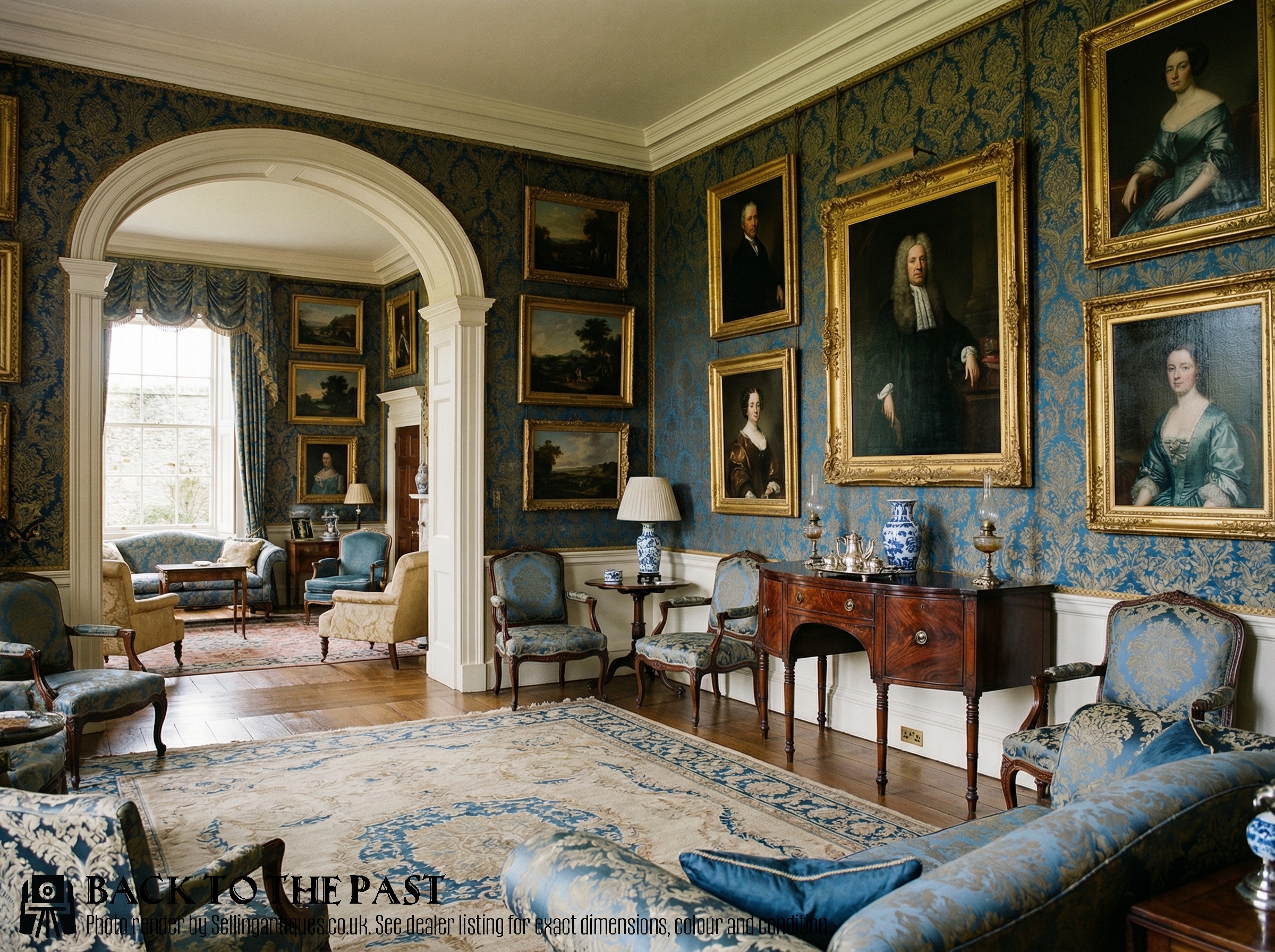
Antique Kneehole Server
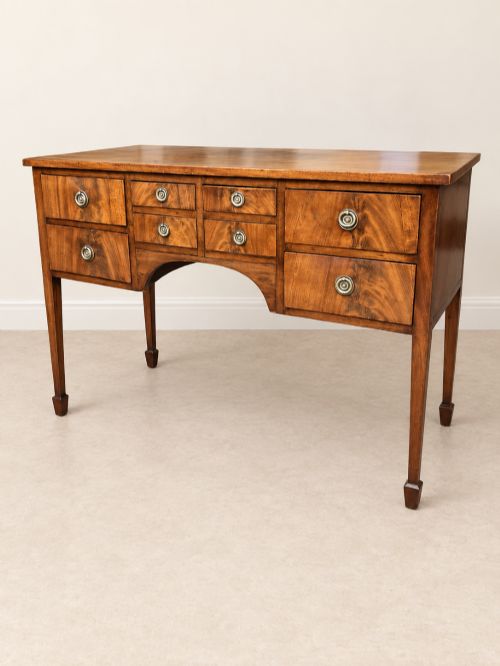
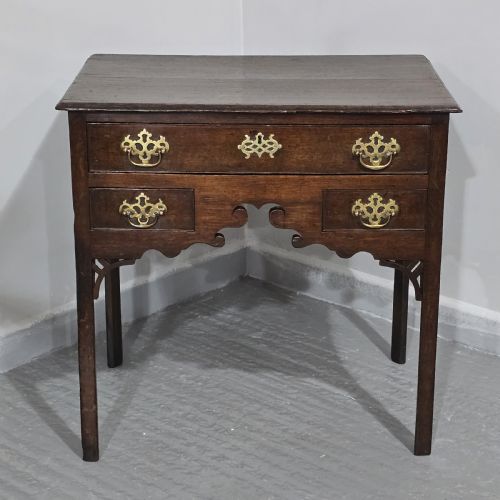
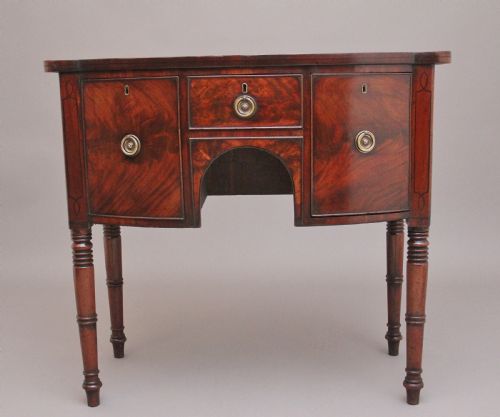
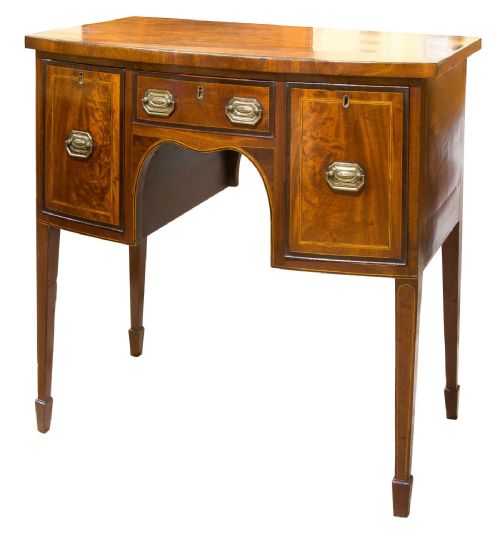
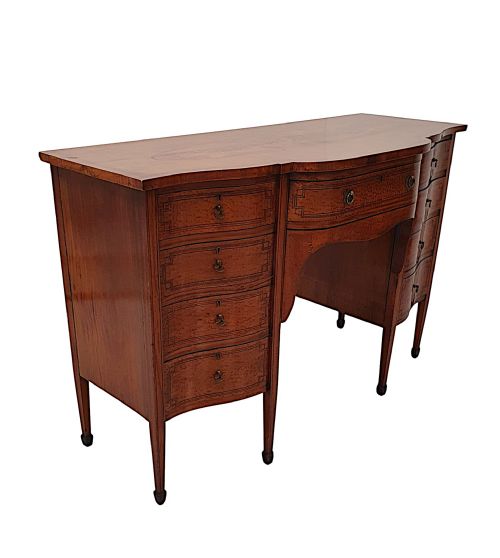
An antique kneehole server encompasses lowboys, sideboards, and side tables that provide central leg clearance beneath a bank of drawers. These pieces appear across Georgian, Regency, Victorian, and Edwardian periods.
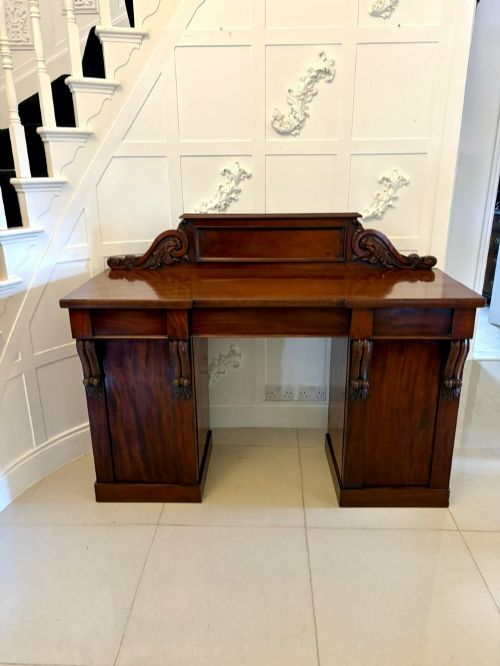
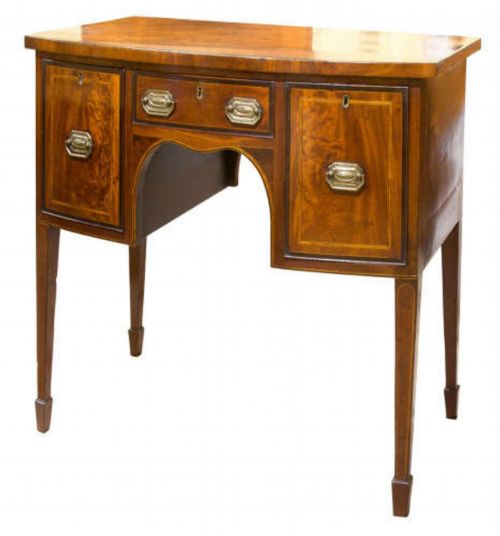
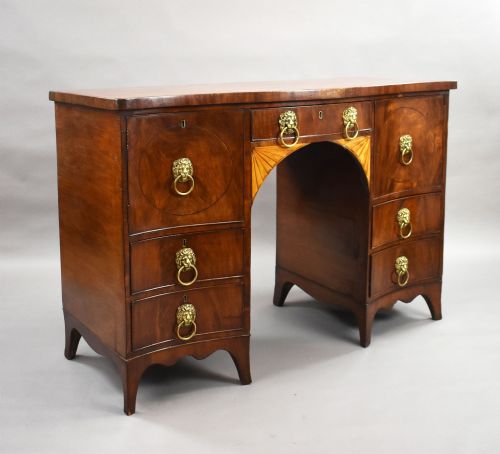
The George III examples demonstrate bow-front and serpentine shapes finished in mahogany, whilst Edwardian variations introduce satinwood and intricate wood inlay. Lowboys from the seventeenth and eighteenth centuries represent the earlier, more compact manifestations of this form.
Buyers will encounter sideboards and side tables functioning as servers in dining rooms and halls. The proportions range from small, intimate lowboys to large carved oak and mahogany sideboards.
Materials and construction
Wood inlay and carved detailing define the decorative vocabulary, ranging from George III banding to Victorian Renaissance Revival carving. Construction methods evolved from seventeenth-century oak framing to sophisticated eighteenth and nineteenth-century veneering techniques.
Secret drawers occasionally hide behind dummy drawer fronts in kneehole servers, offering a discreet spot for secret correspondence.
Judging quality
The refinement of timber selection separates standard pieces from exceptional ones, particularly where highly figured mahogany or contrasting satinwood banding is utilised. Crispness in the execution of carved elements and wood inlay dictates the visual success of a server.
Proportion and scale also govern quality, as smaller bow-front or serpentine forms demand precise geometry from the maker. Original brassware and well-preserved structural integrity complete the markers of a superior piece.
The Antique Kneehole Server Glossary
- Lowboy
- A small dressing table or side table with one or more rows of drawers beneath the work surface. These compact pieces date from the seventeenth century onwards.
- Bow-front
- A convex curved cabinet front that swells outward in the centre. This shape became popular during the Georgian period to soften rigid room corners.
- Serpentine
- A furniture front curving outward at the ends and inward in the middle. This undulating line requires advanced cabinet-making skill.
- Satinwood
- A durable, lustrous yellowish timber native to India and Ceylon. It was frequently utilised for light-coloured stringing and decorative veneer panels.
- Purpleheart
- A dense American hardwood known for its distinct purplish-brown hue when exposed to light. Makers utilised it for contrasting banding on fine cabinetry.
Antique Kneehole Server: Frequently Asked Questions
What is a kneehole server?
A kneehole server is a low table or sideboard featuring a recessed central space for the legs, flanked by drawers. It provides a compact surface for serving food or organising household items.
These versatile pieces suit dining rooms, grand hallways, and drawing rooms alike. They bridge the gap between large sideboards and small side tables.
How do I date an antique server?
Dating relies on identifying the primary timbers, construction methods, and stylistic cues visible in the piece. Georgian pieces often display restrained mahogany veneers, whilst Edwardian examples favour satinwood and fine inlay.
Examining the drawer construction and secondary woods provides further clues to the manufacturing decade. Hardware style and lock mechanisms also help narrow down the period.
Where should I place a server?
Servers sit comfortably against dining room walls to hold serving dishes, cutlery, and linens during meals. They also function effectively in entrance halls as statement tables for keys and correspondence.
Their shallow depth ensures they do not obstruct narrow walkways. The central kneehole space allows the piece to double as a compact desk in a study.
How do I care for mahogany?
Maintain mahogany furniture by dusting regularly with a soft, dry cloth to prevent surface scratching. Avoid placing wooden antiques in direct sunlight or near heat sources, which cause timber to dry and split.
Apply a traditional beeswax polish sparingly to nourish the grain and preserve the lustre. This protective layer guards against minor moisture marks during daily use.