



Antique Khorjin Saddlebag
When you search for an antique khorjin saddlebag, you discover woven tribal luggage that combined practical transport with striking nomadic artistry.
Antique Khorjin Saddlebag
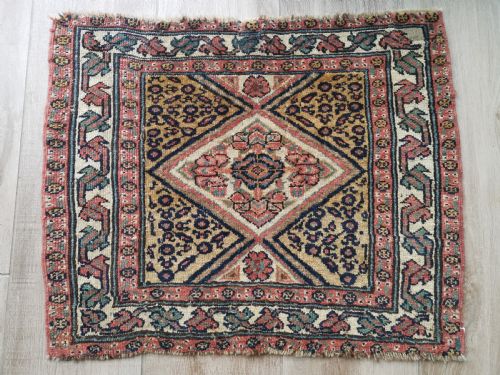
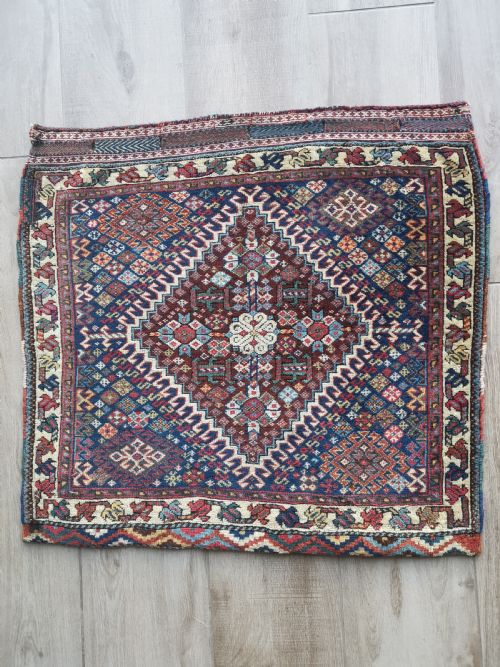
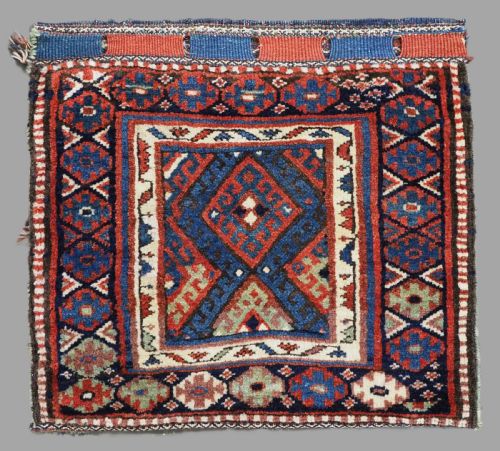
Many examples survive as separated bag faces because the sturdy flatweave backs wore out from years of floor use or detachment. Complete sets featuring both original compartments and plain weave reverses remain less common on the market. Pieces range from compact vanity bags and mini saddle-bags to larger utilitarian storage containers reflecting specific regional weaving traditions from Fars, Kerman, Azerbaijan, and Luristan.
How They Were Made
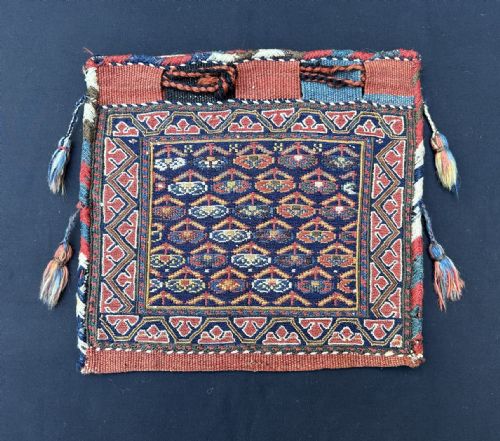
Weavers utilised hand-spun wool and cotton foundations, incorporating natural dyes derived from local plants and minerals to achieve rich hues. The structural execution combined pile-knotted sections with intricate flatweave techniques like soumak, sumac, and kilim structure.
Nomadic makers reinforced stress points with supplementary materials such as leather and metal elements to endure the rigours of seasonal migration and daily camp life.
Nomadic groups represented include Shahsavan, Qashqai, Afshar, and Jaf Kurd weavers.
What Varies In Quality
Quality rests primarily on the handle and lustre of the wool, alongside the precision and complexity of the tribal motifs. Superior examples display deeply saturated natural dyes and exceptionally fine knotting or crisp soumak execution.
The survival of original structural components, such as complete backs, closure loops, and uncompromised side cords, elevates the desirability of a piece within the field of tribal textiles.
The Antique Khorjin Saddlebag Glossary
- Khorjin
- The traditional Persian term for a double-sided saddlebag used by nomadic tribes for transport and storage. These vessels were constructed to be slung over pack animals.
- Bag Face
- The decorative pile-knotted or soumak-woven front of a saddlebag, which is the section most frequently preserved when the plain weave back has perished.
- Soumak
- A wrap-weft flatweave technique that creates a smooth front surface and trailing threads on the reverse, often utilised by Shahsavan and Caucasian weavers.
- Kilm
- A flatwoven textile produced without pile, forming geometric patterns through interlocking or slit-tapestry weave techniques.
- Boteh
- A traditional almond-shaped or paisley motif representing a floral spray or cypress tree, frequently encountered in Afshar and Persian tribal weaving.
Antique Khorjin Saddlebag: Frequently Asked Questions
What is an antique khorjin saddlebag?
An antique khorjin saddlebag is a woven container made by nomadic tribes in Persia and the Caucasus for carrying belongings during migrations. They were constructed as paired pouches joined by a central web.
Today, collectors find them either as complete pairs with their original connecting panels or as single mounted bag faces that display distinct tribal patterns.
How were these bags used originally?
Nomadic families slung these durable containers across horses, camels, or donkeys to transport personal items, grain, and household goods. Inside the tent, they served as upright storage chests for blankets and provisions.
Their robust construction of hand-spun wool and flatweave protected contents from dust and rough travel conditions.
How should I display a saddlebag face?
Many collectors mount single bag faces on fabric-covered panels or hang them directly on walls as textile art. Their compact square or rectangular formats suit domestic interior spaces well.
Ensuring proper support across the textile prevents stretching and distributes the weight evenly during hanging.
How do I identify different tribal groups?
Tribal attribution relies on specific colour palettes, structural choices, and characteristic motifs unique to regions like Fars, Kerman, or Azerbaijan. For instance, Shahsavan pieces often feature crisp soumak work, while Afshar pieces frequently employ boteh designs.
Comparing knotting density and wool quality further clarifies the specific weaving community.