


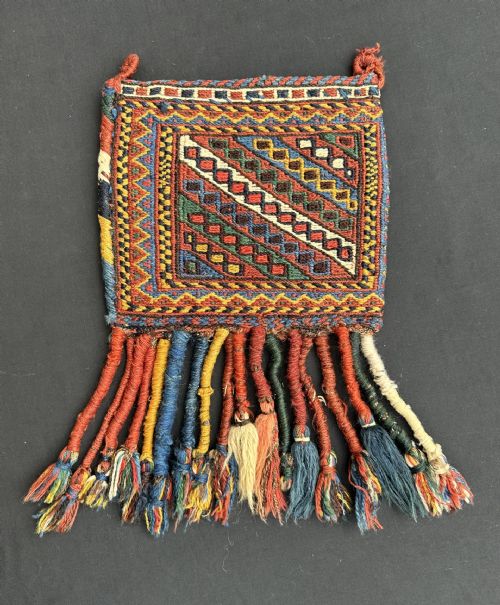

Antique Geometric Wool Bag
An antique geometric wool bag brings nomadic woven art into a room, offering both traditional utility and striking tribal patterns.
Antique Geometric Wool Bag
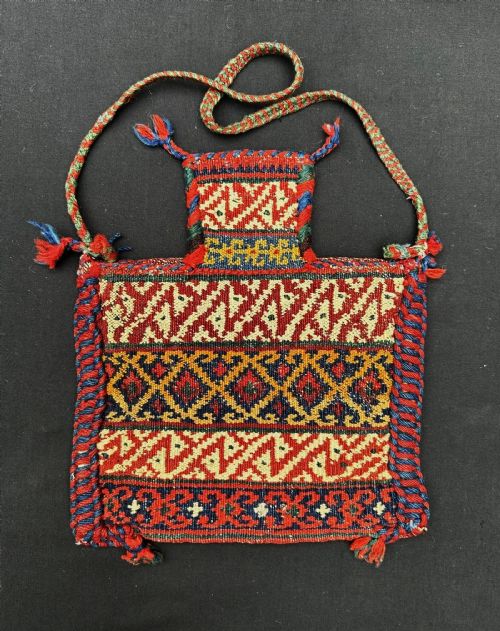
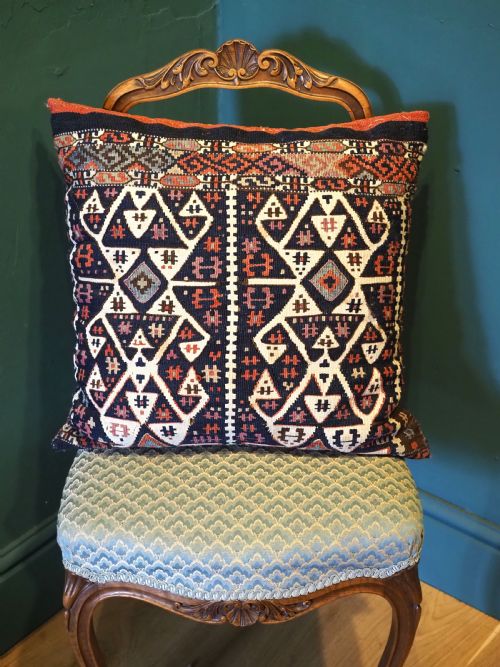
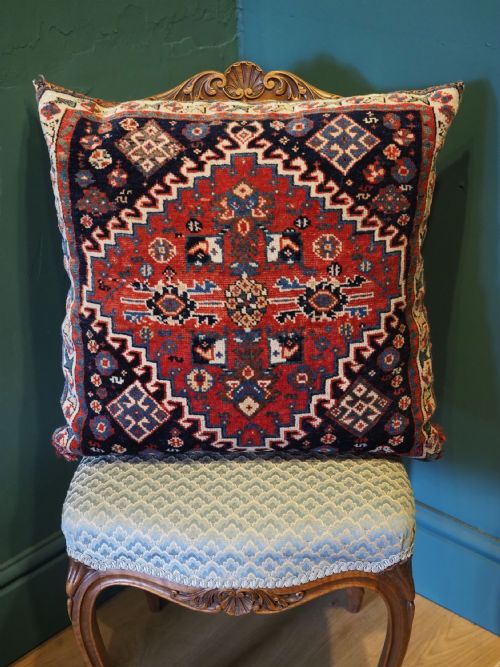
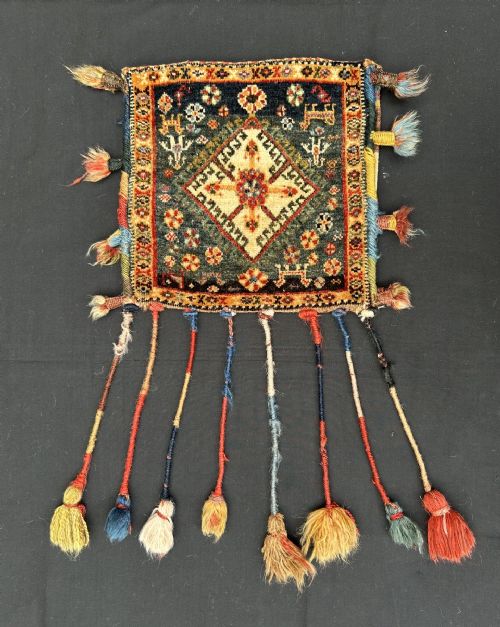
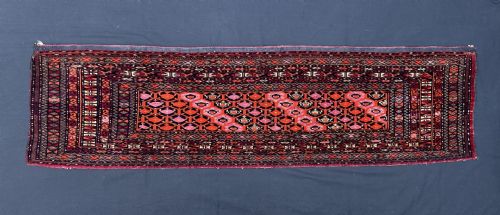
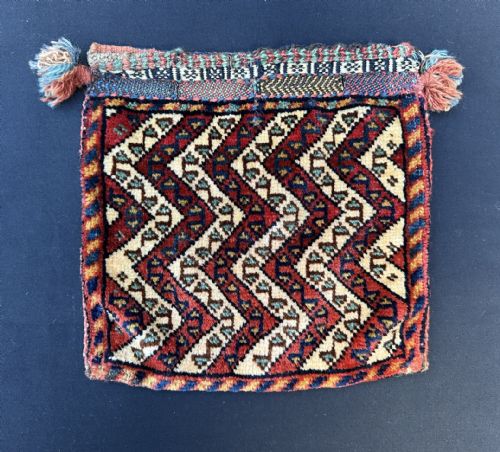
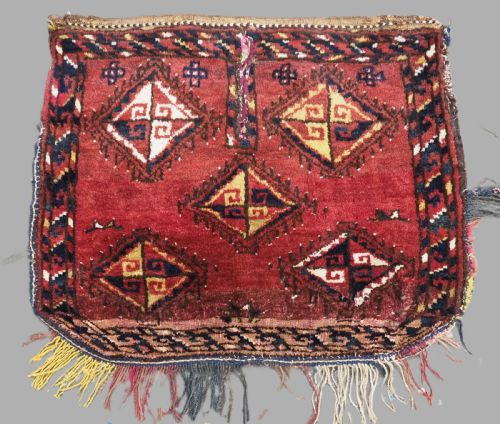
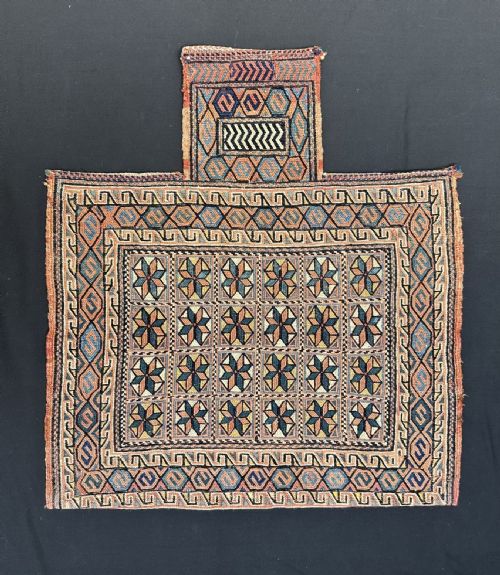
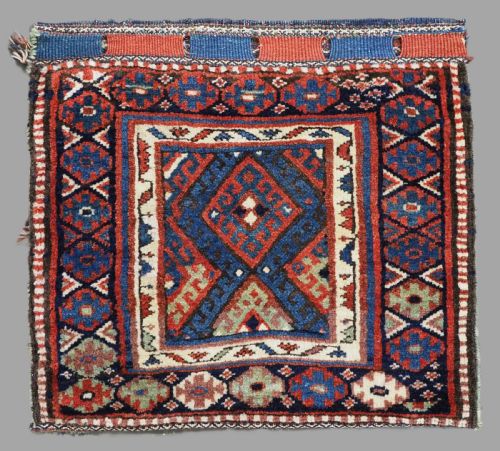
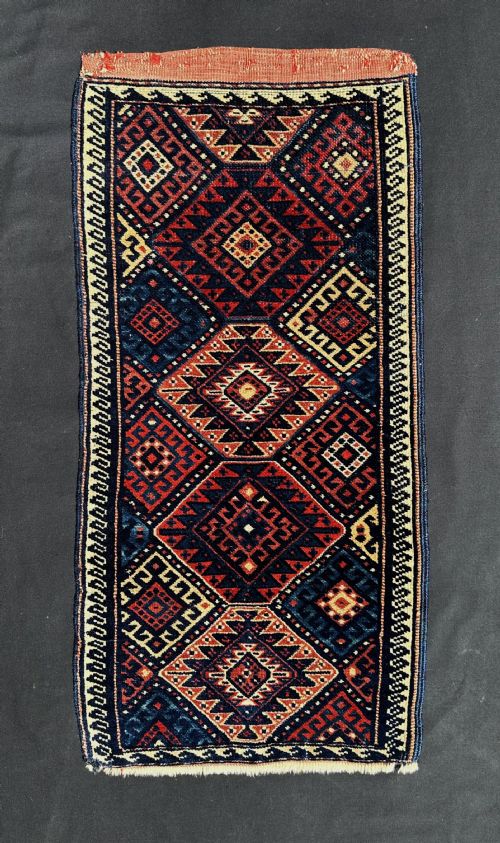
An antique geometric wool bag encompasses utilitarian storage pieces created by nomadic and tribal weavers across Persia, Central Asia, the Caucasus, and Anatolia. These items include vanity bags, salt bags, grain storage sacks, and saddlebags, which were originally produced for daily practical use in camps and villages.
The pieces appearing on this page span the mid-nineteenth century through the early twentieth century, showing distinct regional patterns. Buyers will frequently encounter functional bag faces, complete saddlebags, and smaller utility pouches attributed to groups such as the Qashqa'i, Shahsevan, Afshar, and various Turkmen tribes.
Materials and construction methods
These textiles rely principally on hand-spun wool for both the foundation warps and the patterned pile or flatweave surfaces, sometimes complemented by cotton details. Weavers utilised natural dyes derived from local plants and minerals, producing stable, rich hues that age with deep patination.
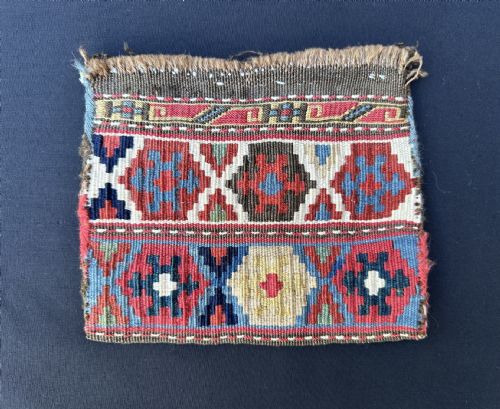
Construction techniques vary between pile knotting and flatweave structures like soumak work or plain weave backings. The structural integrity depends on tight packing of the wefts and durable selvedges designed to endure the physical demands of nomadic travel.
Nomads wove tiny salt bags to keep livestock content on long treks, accidentally making miniature masterpieces for future collectors.
Distinguishing fineness and execution
The distinction between tiers of work lies in the precision of the knotting or flatweave technique and the clarity of the geometric drawing. Superior examples exhibit tightly packed foundations, well-balanced proportions within the medallion or repeat motifs, and complex chromatic variation achieved through expert natural dyeing.
Condition and completeness also govern the standing of a piece, separating intact storage bags complete with their original plain weave backs from isolated bag faces. Furthermore, the crispness of tribal symbols and the complexity of subsidiary borders reflect the weaver's individual skill level and cultural tradition.
The Antique Geometric Wool Bag Glossary
- Soumak
- A supplementary weft-wrapping technique that produces a durable, textured surface without knotting. This method allows for sharp diagonal lines and intricate geometric patterns common in storage containers.
- Torba
- A wide wall-hanging storage bag traditionally used in Turkmen tents for holding domestic items. These pieces often feature tiered gul motifs and characteristic elem panels.
- Khorjin
- The Persian term for a double-sided saddlebag used for transport on animals. Complete examples feature two large pockets joined by a central slit web.
- Jollar
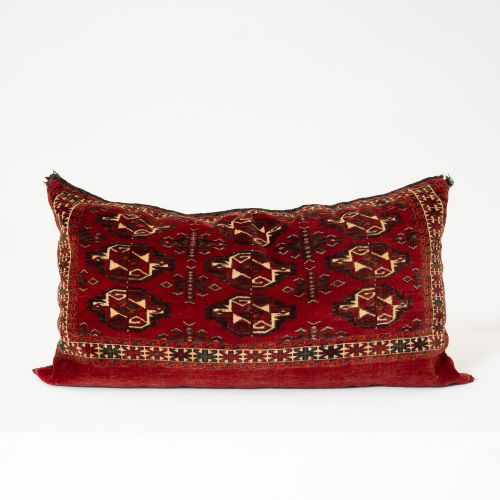
- A Turkmen tent bag utilised for storing bedding and household belongings. They typically display horizontal rows of geometric guls.
- Balisht
- A small pillow or bag-face produced by tribal weavers for domestic lounging and support. They frequently present condensed medallion designs within smaller dimensions.
Antique Geometric Wool Bag: Frequently Asked Questions
What were antique geometric wool bags used for?
Nomadic groups utilised these bags for carrying salt, grain, tobacco, and personal vanity items during seasonal migrations. They also served as durable storage containers inside tents for bedding and household possessions.
Larger double-sided saddlebags hung across pack animals, while smaller pouches stayed inside the domestic living space for everyday organisation and utility.
How do I care for an antique wool bag?
Protect the wool textile from direct, prolonged sunlight to prevent natural dye fading. Gentle vacuuming with a low suction attachment without a rotating brush removes embedded dust effectively.
Keep the piece in a dry environment away from dampness and insect activity. Professional textile conservators should handle any necessary cleaning or structural repairs.
How can I tell different tribal designs apart?
Tribal attribution relies on specific structural formats, wool qualities, and characteristic geometric motifs. For instance, Shahsevan weaving often incorporates fine soumak work with distinctive narrow formats, while Qashqa'i pieces frequently display rich madder reds and medallion structures.
Turkmen weaving is identifiable through repeating octagonal gul motifs and ivory or deep red grounds associated with specific sub-tribes like the Yomut or Ersari.
Can I display these bags on a wall?
Mounting these textiles on a wall offers a secure way to exhibit the intricate patterns without sustaining floor traffic wear. A professional conservator can attach a supportive cotton sleeve along the top edge for hanging.
Weight distribution matters greatly, so ensure the hanging method supports the entire width evenly rather than pulling at isolated suspension points.