


Antique Khorasan Carpet
An antique khorasan carpet brings deep regional character and rich textile history into a room, offering enduring warmth underfoot.
Antique Khorasan Carpet
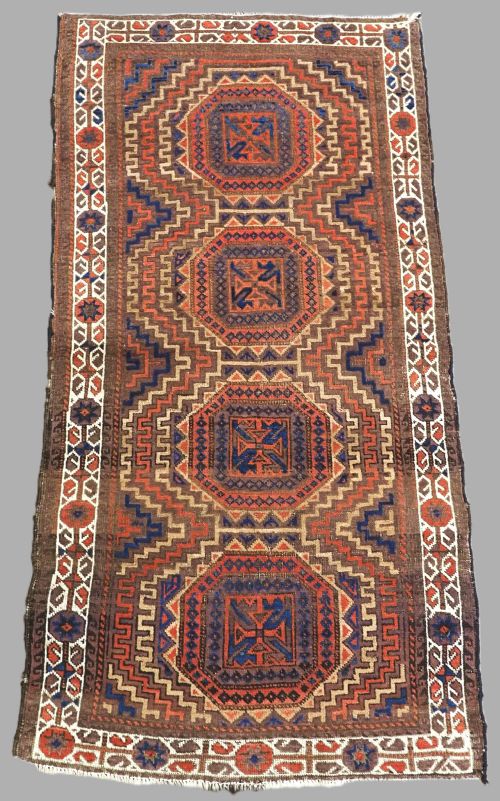
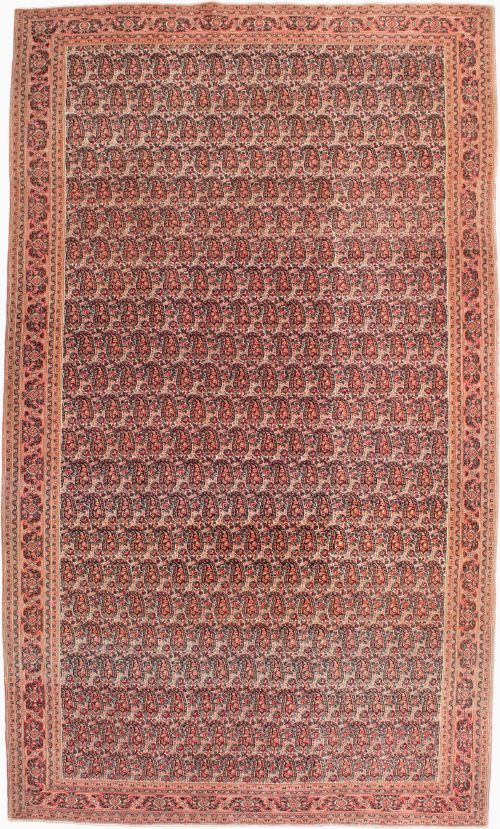
When you search for an antique khorasan carpet, you encounter heavy representation from north east Persia, featuring traditional nomadic and tribal styles. These pieces range from substantial room-sized carpets down to smaller area rugs and runner formats.
The selection frequently includes specialised tribal weaving traditions, notably Baluch and Kurdish work originating from the Khorasan region. Pieces display recurring motifs such as the mina khani design, lattice patterns, and large guls.
Dated examples span the late nineteenth century through to the early decades of the twentieth century. Buyers will find both finely knotted room carpets and more rustic, textured tribal floor coverings.
Materials and construction
Weavers utilised local materials, predominantly building these textiles on a foundation of sturdy cotton or wool. Pile construction relies on hand-spun wool, ensuring resilience and deep absorption of natural dyes.
Certain rustic pieces incorporate camel wool into the pile or foundation for distinct texture and natural coloration. Knotting techniques reflect the regional heritage of Persian, Kurdish, and Baluch makers.
Listings span periods from the nineteenth century up to nineteen-twenty, featuring wool, cotton, and camel wool materials.
Distinguishing quality in weaving
Quality rests in the precision of the knotting and the crispness of execution in complex patterns such as the calyx lattice or mina khani variants. Finer examples maintain structural integrity and exact geometric repetition across large surface areas.
The handling of materials creates a clear division between standard utility items and finer workshop or tribal pieces. Softer wool selection and dense knotting elevate the tactile and visual depth of the textile.
The Antique Khorasan Carpet Glossary
- Gul
- An octagonal medallion or floral motif repeated across tribal rugs. This pattern often identifies specific weaving groups and regional traditions.
- Mina Khani
- An all-over lattice pattern connecting daisy-like flowers and rosettes. It is a classic design frequently found in Persian carpets.
- Khorasan
- A large province in north east Persia known for diverse weaving styles. It encompasses production by Kurdish, Baluch, and settled town workshops.
- Calyx lattice
- A geometric grid design incorporating floral bud motifs. This structured layout appears regularly in regional tribal weaving.
Antique Khorasan Carpet: Frequently Asked Questions
How do I identify a khorasan carpet?
Look for specific regional design markers such as lattice layouts, mina khani motifs, or recurring guls. The attribution often connects to north east Persian production centres and tribal groups.
Examine the materials used in the foundation and pile, noting the presence of cotton, standard wool, or camel wool. Dates generally cluster around the late nineteenth and early twentieth centuries.
Where were these carpets made?
These textiles originate from the Khorasan province in north east Persia. Production includes work by settled communities as well as nomadic and semi-nomadic tribes.
Specific subgroups like the Quchan Kurds and Baluch weavers contributed distinct regional styles to this geographical area.
What is camel wool in rugs?
Camel wool incorporates natural un-dyed fibres derived from camels, noted for a particular soft handle and warm undertone. It appears in rustic tribal pieces to add texture.
This material provides natural variation in colour without relying entirely on processed dyes.
How should I care for an old carpet?
Protect the textile by placing it in areas with moderate foot traffic and avoiding direct, harsh sunlight. Regular gentle vacuuming without a beater bar keeps the wool pile clean.
Rotate the carpet periodically to ensure even wear across the surface over the years.