





Antique Khamseh Carpet
An antique khamseh carpet brings the bold nomadic artistry of South-West Persia into a room through rich tribal motifs and historic hand-woven wool.
Antique Khamseh Carpet
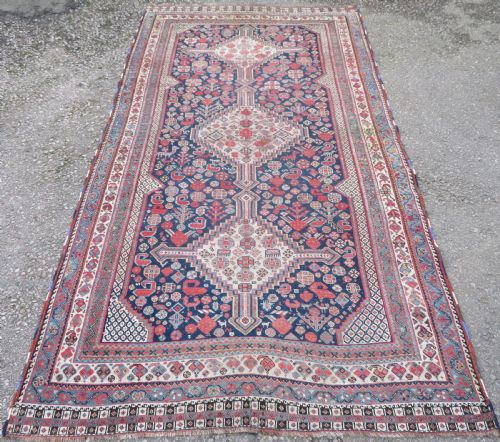
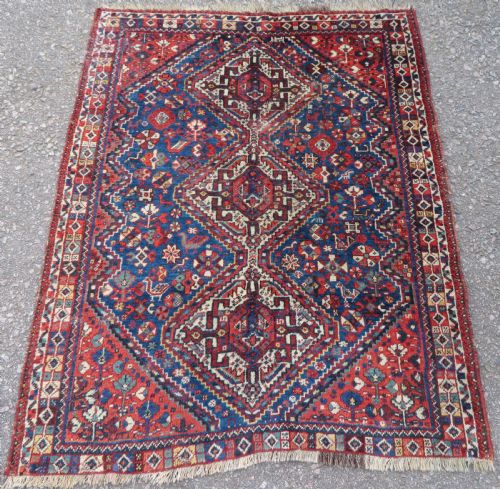
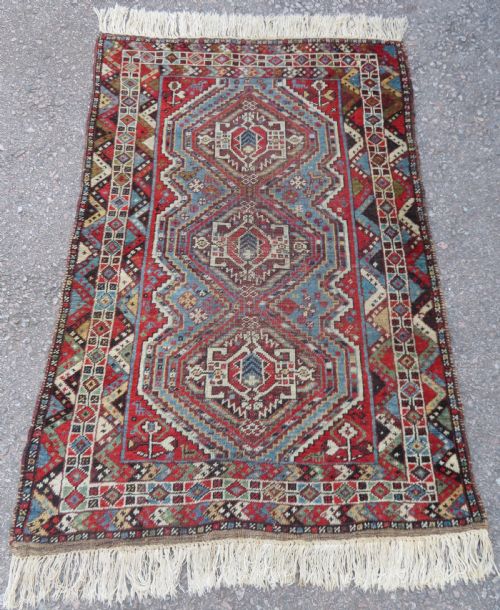
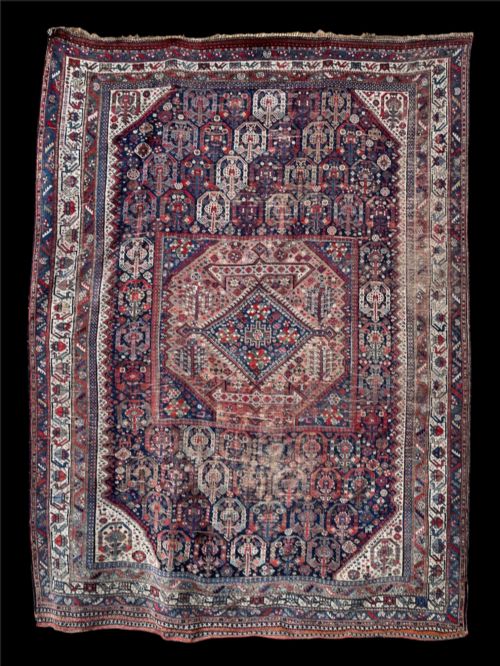
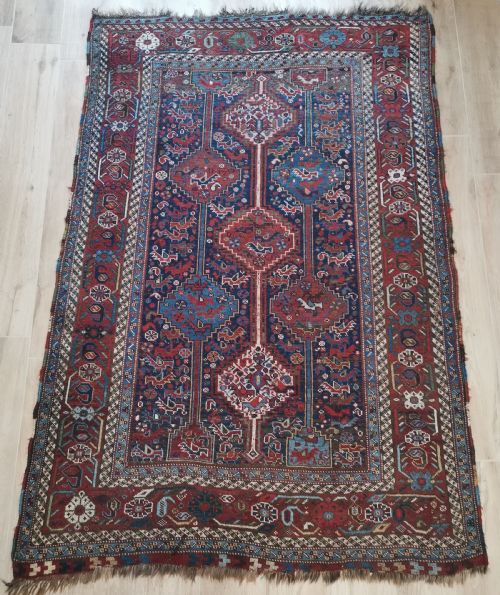
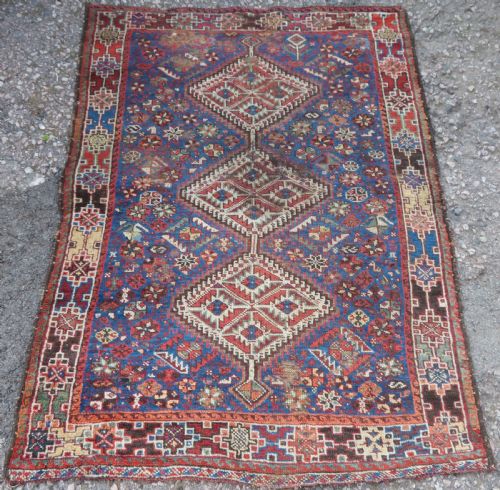
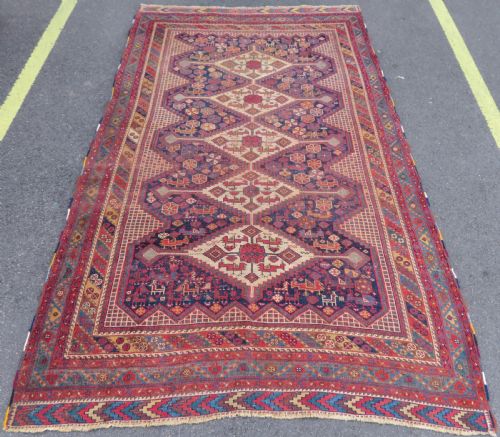
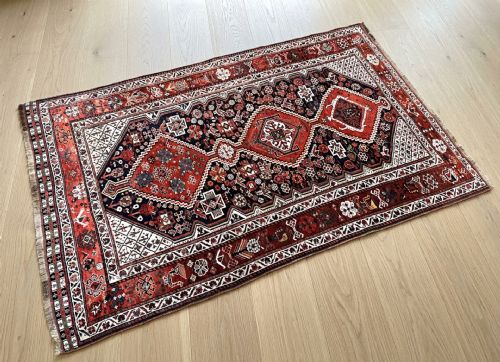
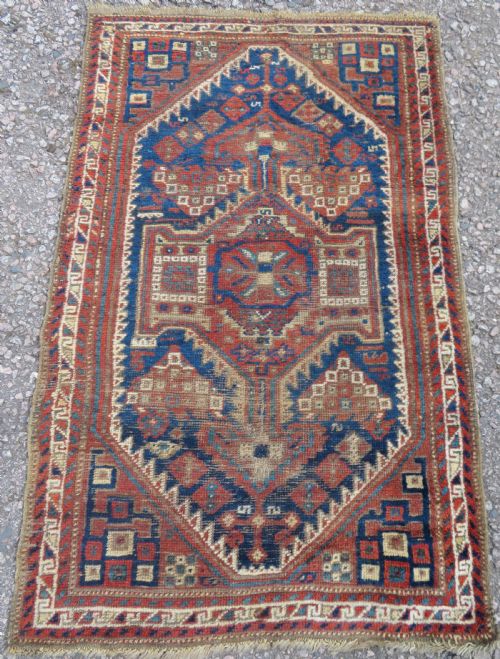
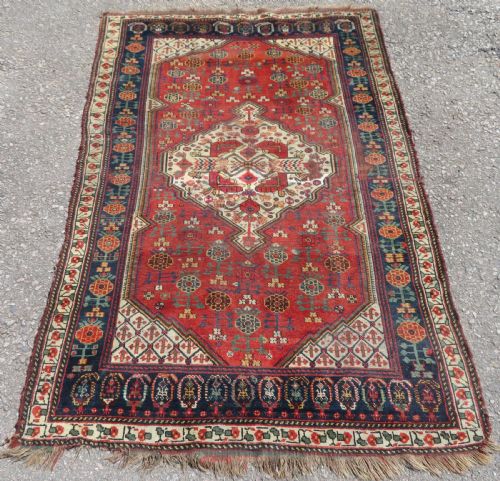
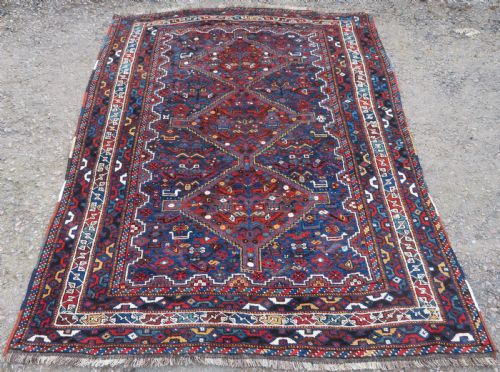
An antique khamseh carpet represents the weaving traditions of the confederation of tribes in the Fars province of South-West Persia, produced primarily from the late nineteenth century into the early twentieth century. These floor coverings range from smaller tribal rugs to substantial main carpets created by sub-tribes including the Baharlu, Arab-Jabbareh, and Basseri.
The aesthetic is rooted in Persian tribal and nomadic styles, often incorporating distinctive pictorial elements like the Morghi chicken design, pomegranate motifs, peacock figures, and tree of life patterns. Pieces span various formats, from square formats to elongated kelleh runners and large khan audience carpets.
Buyers encounter numerous examples attributed to specific regional sub-tribes or associated with neighbouring Luri and Qashqai weaving traditions. These textiles serve as historical documents of nomadic life, reflecting the distinct cultural heritage of the confederacy through geometric frameworks and repeated animal motifs.
How they were made
Weavers utilised hand-spun wool for the pile and foundation yarns, sourced directly from flocks grazing in South-West Persia. This material provides the characteristic durability and tactile weight associated with nomadic production.
Natural dyes impart the deep colour palette found across these carpets, yielding rich tones that age gracefully over time. Artisans tied the wool by hand onto cotton or wool warp and weft foundations using traditional Persian knotting techniques.
Antique Khamseh Carpet Retail Price Guide 2026
Typical asking prices for khamseh carpet among the pieces listed under this phrase on Sellingantiques today, from the lower quarter to the upper quarter. They describe what is for sale here now, not the wider market.
Listings demonstrate production dates spanning the late nineteenth century through to the early twentieth century, utilising hand-spun wool and natural dyes.
What varies in quality
The fineness of the weave and the clarity of the tribal motifs distinguish higher tier pieces from simpler utilitarian examples. A tighter knot count allows intricate designs like pecking chickens and complex border systems to render with sharper definition.
The depth and saturation of the natural dyes influence visual impact, with superior pieces displaying harmonious colour variation across the field. Condition also plays a role, though surface wear often accompanies genuine nomadic antiquity.
The Antique Khamseh Carpet Glossary
- Khamseh Confederacy
- A coalition of five distinct tribes in South-West Persia sharing textile traditions. These groups produced rugs blending Arab, Qashqai, and Luri design elements.
- Kelleh
- A long, rectangular format of carpet traditionally used in Persian domestic spaces. This shape is narrower than a standard main carpet.
- Morghi
- A traditional motif depicting stylized chickens or birds arranged across the carpet field. This design is frequently identified with Khamseh and surrounding tribal weaving.
- Warp
- The stationary longitudinal threads stretched on a loom before weaving begins. The pile knots are tied around these foundational elements.
- Weft
- The horizontal threads passed alternately over and under the warp threads to secure the knot rows. This material stabilizes the structure of the woven textile.
Antique Khamseh Carpet: Frequently Asked Questions
How do I identify a Khamseh carpet?
Look for distinctive tribal motifs such as stylized birds, chickens, and pomegranates woven within geometric formats. South-West Persian origins often show through saturated natural dyes and distinct sub-tribal border arrangements.
Examining the hand-spun wool and regional design vocabulary helps separate these carpets from other Persian nomadic traditions.
Where were these carpets made?
These textiles originate in the Fars province of South-West Persia, produced by nomadic and settled confederated tribes. Groups like the Baharlu and Arab-Jabbareh created these pieces within their traditional migration and settlement areas.
The local environment and inter-tribal cultural exchange directly influenced the materials and patterns utilised in the region.
How should I care for an antique rug?
Protect the hand-spun wool and natural dyes by placing the carpet in a low-traffic area away from direct sunlight. Regular gentle vacuuming without a rotating brush bar prevents dirt accumulation in the foundation.
Professional cleaning suited for antique textiles maintains the integrity of the wool pile over decades of domestic use.
What does tribal attribution mean?
Attribution links a carpet to a specific regional group or confederation based on characteristic design traits and colour use. Sub-tribes within the confederation often maintained distinct visual markers in their borders and field patterns.
These connections help historians and collectors understand the provenance and cultural context of individual woven pieces.