




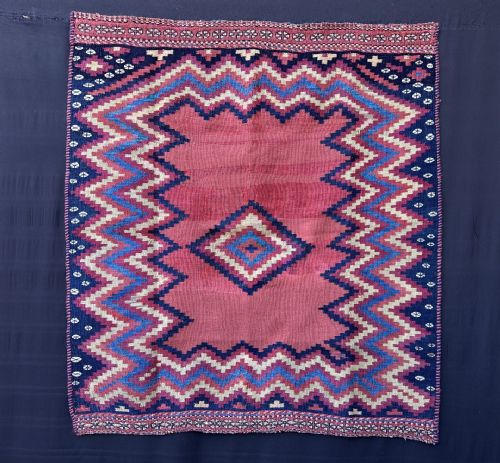


Antique Kerman Textile
An antique kerman textile brings the intricate nomadic heritage of South Persia into your home through finely woven wool and natural dyes.
Antique Kerman Textile
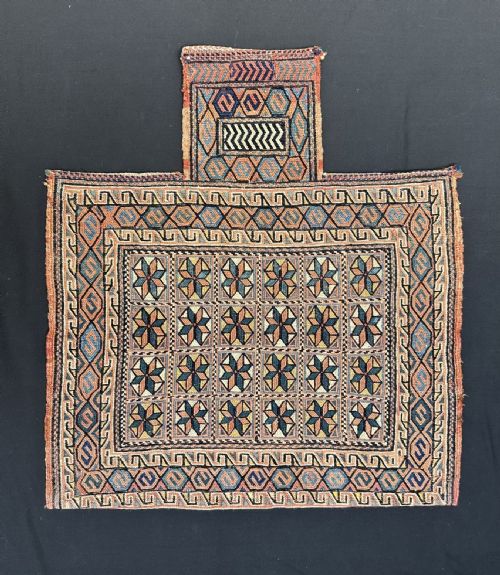
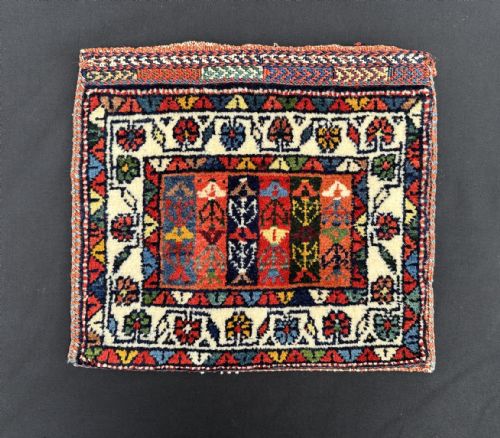
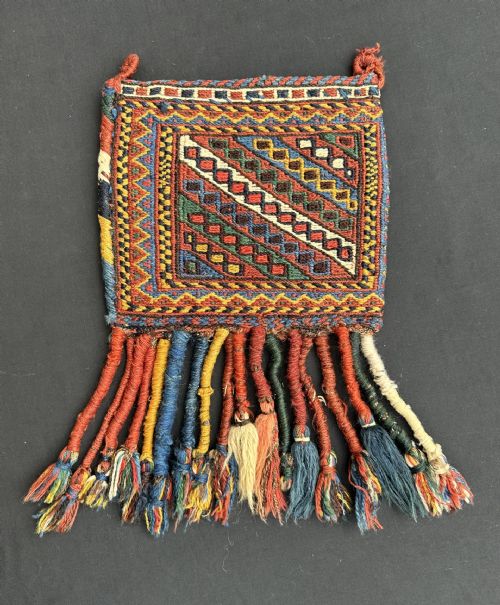
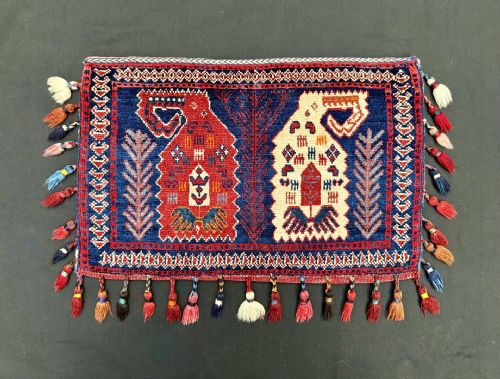
An antique kerman textile represents the nomadic weaving traditions of the Afshar tribes settled across the Kerman Province in South Persia. These functional objects were created for daily nomadic life, ranging from personal storage pouches and vanity bags to larger bread sofreh cloths and saddlebag faces.
The objects seen on this page span from the mid-nineteenth century through the early twentieth century, specifically covering periods such as 1860, 1880, 1900, 1910, and 1920. Collectors encounter forms like tobacco and pipe bags, salt-bags, and dining cloths originating from specific tribal groups including the Kuhi Afshars and the Qorab'i tribe.
These textiles function primarily as expressions of tribal identity and practical utility rather than decorative items made for export. Their survival offers a direct connection to the pastoral communities of the Jebal Barez Mountains and the Bardsir region.
How they were made
Weavers utilised hand-spun wool for the pile and surface designs, combined with cotton foundations to provide structural stability. Natural dyes supply the rich colour palette characteristic of these regional tribal pieces.
Certain utilitarian examples incorporate decorative elements such as cowrie shells, sewn directly onto the textile. The construction techniques reflect traditional nomadic weaving methods passed down through generations in South Persia.
Several vanity bags preserve the tactile charm of genuine cowrie shells stitched directly into the wool.
What varies in quality
The finesse of the knotting and the tightness of the weave separate finer examples from simpler utilitarian pieces. Detail work, such as the intricacy of geometric patterns within a chanteh or vanity bag, determines the upper tier of the range.
The preservation of natural dyes and the integrity of the wool foundation significantly influence the character of each textile. Completeness of original tribal trappings, including surviving bag faces and edge finishes, adds depth to an individual piece.
The Antique Kerman Textile Glossary
- Sofreh
- A flatwoven spread or cloth used for sharing meals or preparing bread within nomadic households. These textiles often feature striking geometric arrangements.
- Chanteh
- A small personal bag or vanity pouch woven by tribal makers for carrying daily possessions. Such items demonstrate fine knotting due to their compact scale.
- Afshar
- A nomadic and semi-nomadic Turkic tribe inhabiting the Kerman Province of South Persia. Their distinct weaving style relies heavily on geometric motifs and rich natural dyes.
- Natural Dyes
- Organic colourants derived from plants, roots, and insects used traditionally before the introduction of synthetic alternatives. They impart a varied, harmonious patina over time.
- Saddlebag
- A paired storage container designed for transport on pack animals during nomadic migrations. Surviving fragments often display only the decorative face of the bag.
Antique Kerman Textile: Frequently Asked Questions
How were these bags used?
Nomadic families utilised these textiles for practical storage during seasonal migrations across the Kerman Province. Items like vanity bags and salt-bags held personal belongings, tobacco, or culinary supplies.
Larger cloths served as surfaces for rolling bread or sharing communal meals within the tent. Every woven piece fulfilled a direct domestic function.
Where do these textiles originate?
The pieces originate from South Persia, specifically within the Kerman Province and surrounding mountainous areas. Tribal groups such as the Afshars produced them in regions like Bardsir and the Jebal Barez Mountains.
Local sheep provided the wool, which weavers dyed using natural materials before working on vertical or horizontal ground looms.
How do I date an antique textile?
Dating relies on stylistic analysis, material composition, and structural characteristics typical of specific decades. Pieces seen here date from the mid-nineteenth century through the early twentieth century, spanning years like 1860, 1880, and 1910.
Natural dye variations and tribal attributions also help historians place individual objects within their historical period.
How should I display a textile?
Many collectors mount smaller bag faces and bread sofreh cloths on walls as textile art. Proper hanging methods distribute the weight evenly across the wool and cotton foundation without causing strain.
Keeping pieces away from direct sunlight preserves the natural dyes used by the nomadic makers.