


Antique Japanned Clock
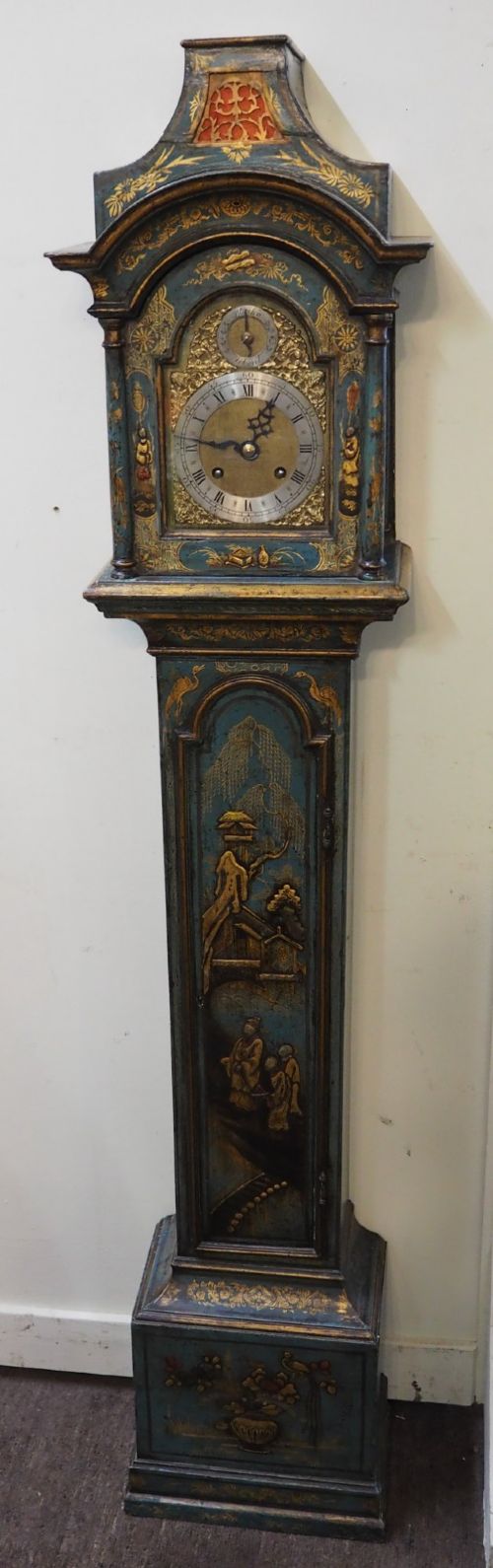
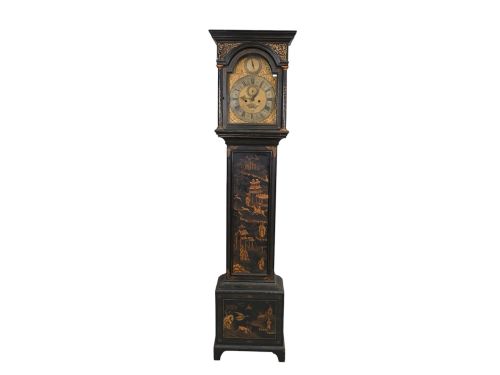
An antique japanned clock brings vibrant chinoiserie decoration and substantial architectural presence into a room.
Antique Japanned Clock
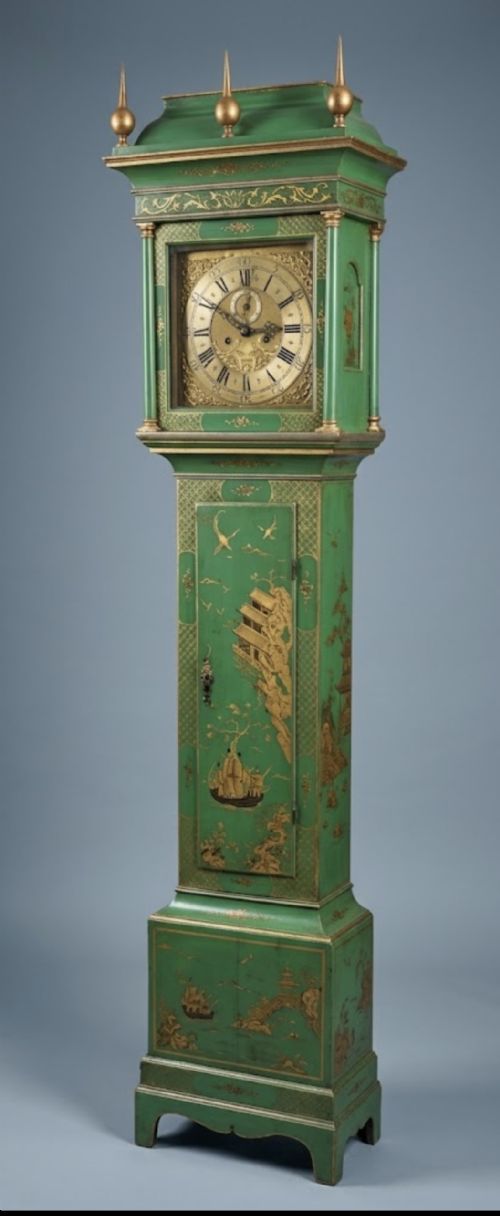
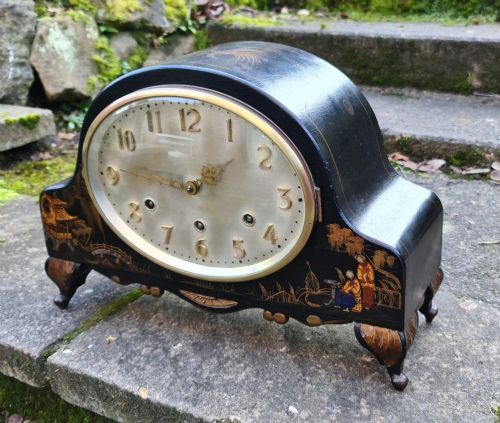
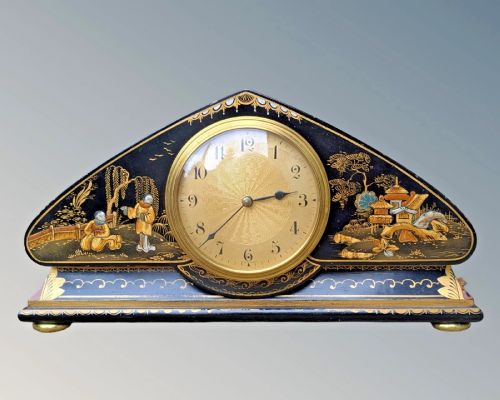
An antique japanned clock combines striking lacquerwork with traditional timekeeping, most frequently appearing as tall longcase clocks from the Georgian period alongside smaller mantel and bracket formats. These pieces showcase elaborate painted decorations depicting figures, landscapes, and architectural motifs in gold and polychrome upon coloured grounds.
The selection ranges from grand 18th century grandfather clocks by regional and London makers to 20th century revival pieces that emulate earlier forms. Green, red, blue, and cream ground colours dominate the finishes, applied to tall floor-standing cases and compact shelf clocks alike.
How they were made
Makers integrated glass panels into the hood doors to protect the dial, while brass dials and mounts added functional contrast to the dark or brightly coloured lacquered surfaces.
Antique Japanned Clock Retail Price Guide 2026
Typical asking prices for japanned clock among the pieces listed under this phrase on Sellingantiques today, from the lower quarter to the upper quarter. They describe what is for sale here now, not the wider market.
Father Time occasionally rocks back and forth above the dial, keeping rhythm with the pendulum below.
What varies in quality
The refinement of the hand-painted chinoiserie detailing dictates much of the distinction between standard and exceptional pieces, with superior examples showing intricate depth and well-preserved gilt work. The complexity of the movement, such as musical chimes or automata like rocking figures, elevates the stature of the clock.
Originality of the lacquered surface and the preservation of the ground colour heavily influence the standing of an individual piece, alongside the documented reputation of the maker inscribed on the dial.
John fielder of Alton·William Kipling London·Wise of Reading·Thomas Utting of Yarmouth·Gardner of London·JAMES SMITH - LONDON·CHATER & SON - LONDON·Robert Berry
The Antique Japanned Clock Glossary
- Japanned
- European imitation of East Asian lacquerwork, created using layered varnishes and decorative painting. This technique produced glossy surfaces adorned with raised metallic motifs.
- Chinoiserie
- European stylistic interpretation of Chinese and East Asian artistic traditions. It appears extensively on furniture and clock cases through whimsical landscape and figural scenes.
- Longcase clock
- A tall freestanding weight-driven timekeeper housed in a wooden case, commonly known as a grandfather clock. These typically stand over six feet tall and accommodate swinging pendulums.
- Bracket clock
- A portable table or shelf clock designed originally to sit on a wall bracket. Many examples feature striking mechanisms and carrying handles on top.
- Automaton
- A mechanical moving figure integrated into the dial or display of a clock. Examples include rocking figures that animate in time with the mechanism.
Antique Japanned Clock: Frequently Asked Questions
Where should I place a longcase clock?
These tall floor-standing timepieces need a stable, plumb wall surface away from direct sunlight and sudden temperature shifts to protect the wooden case and lacquer finish.
Generous hallway spaces, landings, and principal reception rooms suit their imposing height and allow the pendulum to swing without obstruction.
How do I wind an eight day clock?
Eight-day movements require winding every week using the key provided, engaging the winding arbor carefully to raise the internal weights or tension the springs.
Take care not to overwind the movement, and consult specialist guidance if the strike train or chime sequence falls out of synchronization.
What is a grandmother clock?
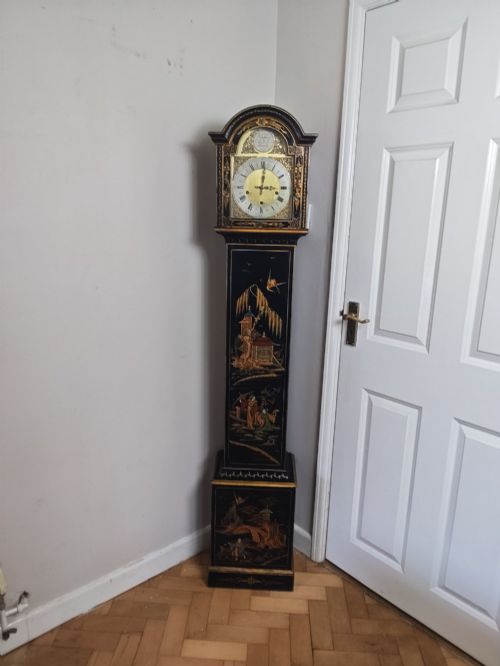
Grandmother clocks are scaled-down versions of traditional longcase clocks, built with shorter and narrower proportions while retaining full mechanical timekeeping functions.
These compact floor clocks emerged during later revival periods to fit rooms with lower ceilings where a standard grandfather clock would overwhelm the space.
How do I identify a revival piece?
Twentieth-century revival pieces often display machine-finished wood surfaces and modern internal components alongside their chinoiserie decoration.
Examining the construction of the case interior, the ageing of the lacquer, and the style of the brass movement helps distinguish 18th-century originals from later interpretations.