



Antique Japanese Table Lamps
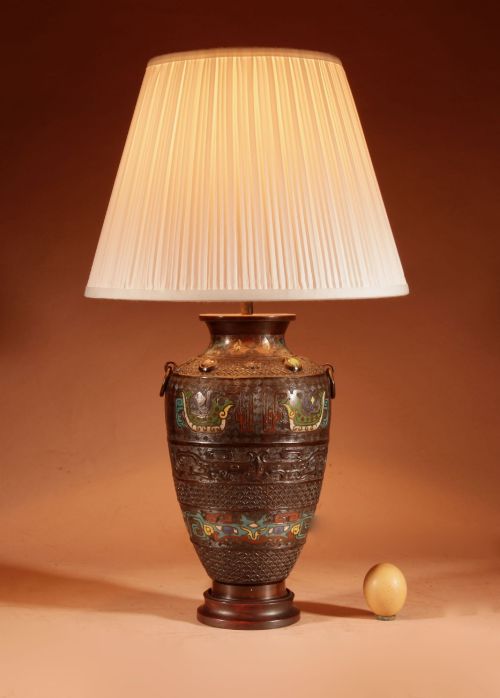
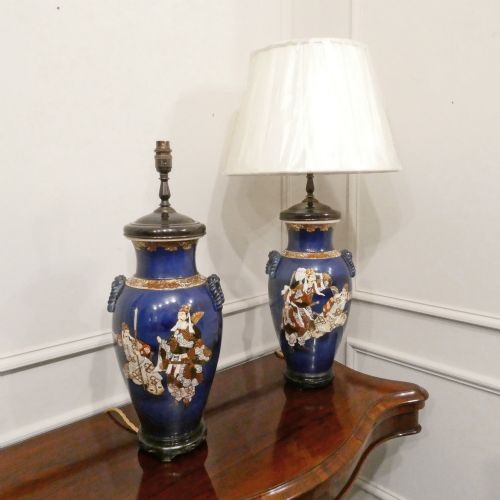
These antique japanese table lamps combine traditional Far Eastern craftsmanship with period European lighting adaptations to illuminate a room with distinct character.
Antique Japanese Table Lamps
When searching for antique japanese table lamps, buyers encounter repurposed temple vases, bronze vessels, and decorative ceramics fitted for electricity during the nineteenth and early twentieth centuries. These objects frequently originate from the Meiji period, alongside occasional pieces drawing on Edo traditions or Anglo-Japanese aesthetics.
The material selection ranges from cast bronze and champlevé enamel to Satsuma, Kutani, and Arita porcelain. Many examples started life as vases, brush pots, or lanterns before conversion into functional lighting fixtures.
How They Were Made
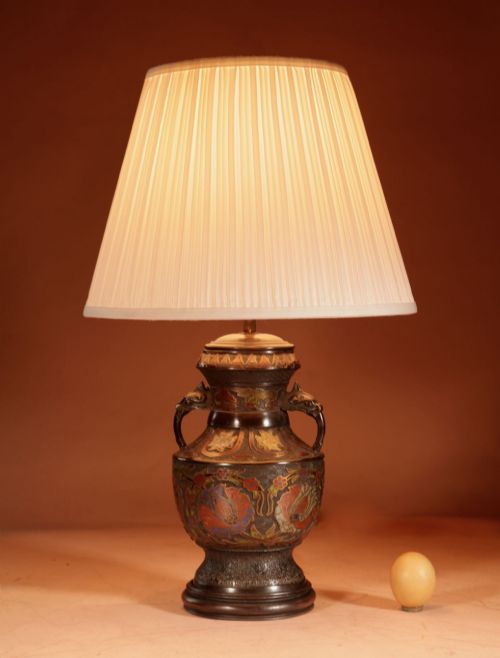
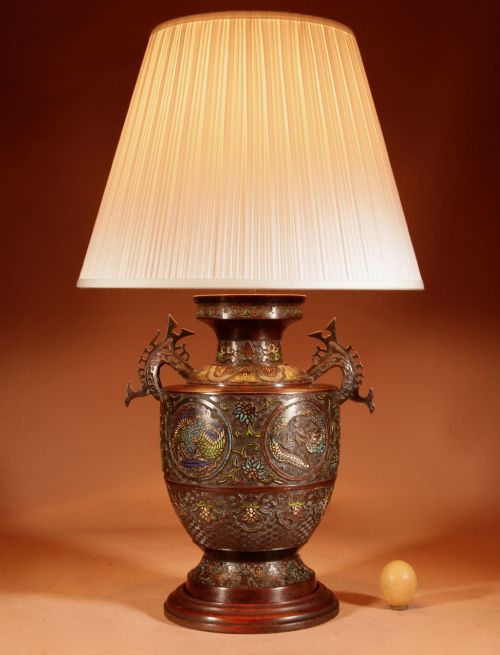
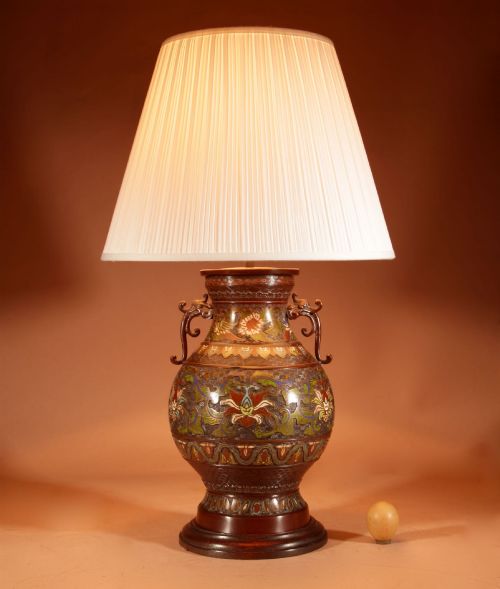
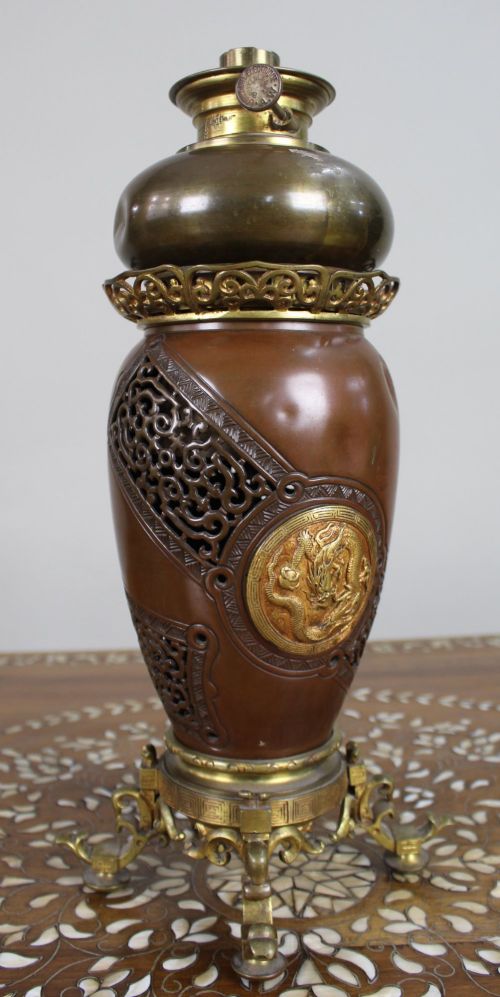
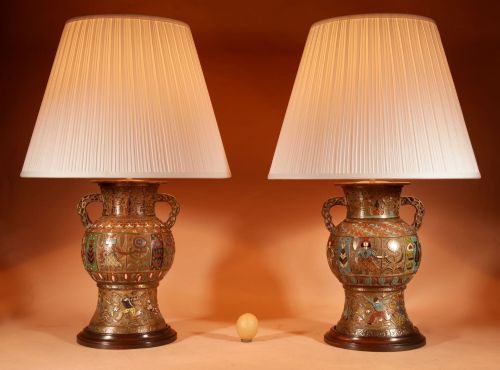
Metal lamps utilise bronze, brass, and copper utilising intricate champlevé and cloisonné techniques where enamel cells are filled and fired on a metallic base. Surface ornamentation often incorporates cast or hand-carved dragons, elephants, and flora.
Ceramic bodies employ traditional earthenware and porcelain painted with complex polychrome glazes, gold gilt, and underglaze blue. These bodies are frequently paired with metal mounts in ormolu or gilt bronze during the conversion process.
Antique Japanese Table Lamps Retail Price Guide 2026
Typical asking prices for japanese table lamps among the pieces listed under this phrase on Sellingantiques today, from the lower quarter to the upper quarter. They describe what is for sale here now, not the wider market.
The listings feature diverse materials including brass, fabric, bronze, porcelain, wood, enamel, silk, and earthenware across multiple centuries.
What Varies in Quality
The standard of a piece rests on the crispness of the bronze casting and the precision of the enamel work, where finer examples display tighter wire cells and richer colour depth. Hand-painted ceramic pieces show divergence in brushwork control and the delicacy of the gilding applied across the surface.
The integrity of the conversion matters significantly, distinguishing lamps that retain their original vessel structure without intrusive alterations from those with heavily modified bases. Matching pairs command particular attention for their symmetry and balanced proportions.
Liberty of London·E W Godwin
The Antique Japanese Table Lamps Glossary
- Champlevé
- An enamel technique where troughs or cells are hollowed out in the metal surface and filled with vitreous enamel before firing. This method creates bold coloured designs bordered by metal lines.
- Cloisonné
- A method of decorating metalware objects with coloured enamel separated by thin strips of metal welded to the upright edges. The piece is fired and polished to achieve a smooth finish.
- Satsuma
- A type of Japanese earthenware originating from Satsuma Province, typically characterised by a ivory-coloured, cracked glaze decorated with detailed polychrome enamels and gilt. It became highly popular for export during the Meiji period.
- Meiji Period
- The era in Japanese history from 1868 to 1912 corresponding with the reign of Emperor Meiji, marked by the opening of trade with the West and the production of decorative arts for export. Pieces from this time show high technical skill in metalwork and ceramics.
- Ormolu
- Gilded bronze mounts used decoratively on furniture and ceramics, providing a polished gold-coloured finish. It frequently frames the base or collar of converted vase lamps.
Antique Japanese Table Lamps: Frequently Asked Questions
What are antique japanese table lamps made from?
These lamps are constructed from bronze, brass, porcelain, and earthenware, often incorporating enamel and mother of pearl details.
Many examples utilise converted vases, lanterns, and brush pots mounted with metal fittings.
How do you date a meiji period lamp?
Dating relies on stylistic markers from the Meiji period between 1868 and 1912, alongside the characteristics of the bronze or ceramic body.
Later Victorian and Edwardian electrical conversions also offer clues through the age of the internal wiring hardware and mounts.
Were these lamps originally made for lighting?
Most of these objects began as decorative vessels, vases, or temple bronzes before being adapted into table lamps in the West.
The conversion process usually occurred during the nineteenth or early twentieth century to suit European interiors.
How do I style an antique japanese lamp?
These pieces function well as focal points on side tables, occasional furniture, or desks where their detailed metalwork and ceramics remain visible.
Parks well with aesthetic movement or eclectic interior schemes that complement the rich patinas and glazes.