


Cobalt Blue Ceramic Lamps
Cobalt blue ceramic lamps bring rich, deep colour and dramatic presence to a room, turning converted jars and vases into striking functional objects.
Cobalt Blue Ceramic Lamps
Cobalt blue ceramic lamps encompass table lamps fashioned from porcelain, glazed ceramic, and converted vessels ranging across the nineteenth and twentieth centuries. Buyers seeking these pieces will frequently encounter converted apothecary jars, tobacco jars, and oriental vases fitted for electrical use.
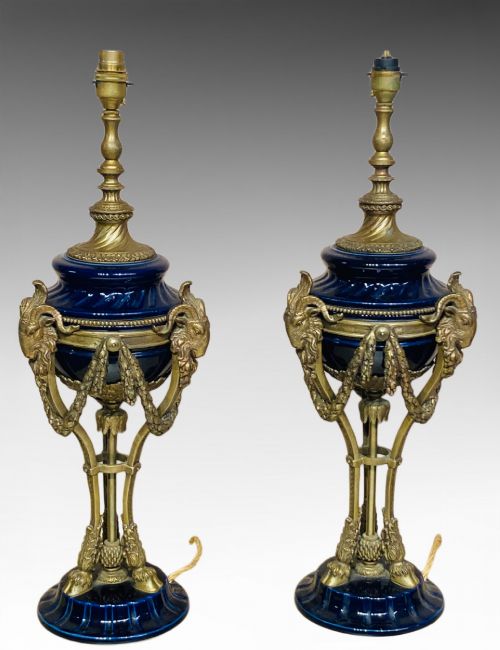
The selection on this page leans heavily toward nineteenth-century origins, featuring Chinese blue and white vases alongside Japanese Imari wares and French Sèvres style porcelain. Pairs appear regularly, often mounted with ormolu or brass fittings that elevate simple ceramic bodies into formal decorative lighting.
How they were made
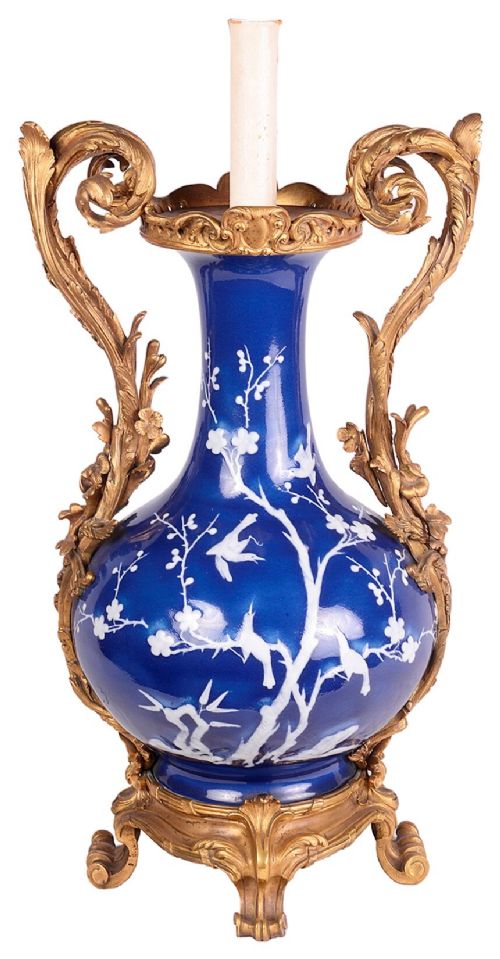
Makers utilised ceramic and porcelain bodies, applying cobalt glazes by hand before firing the pieces to achieve deep, permanent blue tones. Many examples incorporate hand-painted details or intricate prunus blossom motifs beneath transparent glazes.
Metal mounts in ormolu, gilt bronze, and brass were cast and fitted to secure the ceramic vessels and house electrical components. Fabric shades complete the construction, sitting atop bases built from wood, ceramic, and metal.
Tobacco jars once used for keeping pipe leaf fresh now hold reading lights.
What varies in quality
Quality rests in the crispness of the ceramic painting and the weight and precision of the metal mounts. Finer pieces display carefully chased ormolu work and deeply saturated cobalt glazes without cloudiness or blurring.
The integrity of the conversion matters significantly, as professional adaptation preserves the original ceramic body without causing structural damage. Matching pairs with uniform glaze tones command greater attention than mismatched assemblies.
Royal Doulton·Sèvres
The Cobalt Blue Ceramic Lamps Glossary
- Ormolu
- Gilded bronze mounts applied to furniture, ceramics, and lighting to add decorative richness. This technique was widely used in French decorative arts during the eighteenth and nineteenth centuries.
- Imari
- Japanese porcelain decorated in underglaze blue, iron red, and gold. These wares were exported in large quantities to Europe and later converted into decorative lamps.
- Famille Verte
- A Chinese porcelain palette dominated by green enamel overglaze colours. Pieces in this style often incorporate cobalt blue and other contrasting pigments within the overall design.
- Apothecary jar
- A vessel originally used by pharmacists to store medicines and dried herbs. When converted into lamps, these heavy ceramic and glass jars bring utilitarian history into domestic interiors.
- Prunus blossom
- A decorative motif depicting plum blossoms, frequently found on Chinese blue and white porcelain. The pattern symbolises resilience and spring within traditional East Asian art.
Cobalt Blue Ceramic Lamps: Frequently Asked Questions
Are these original lamps?
Most of these pieces started life as vases, apothecary jars, or tobacco jars before being converted into table lamps at a later date.
This method of adaptation repurposes antique ceramics, meaning the bodies are older than the electrical fittings attached to them.
Do they come in pairs?
Many of the listings feature matching pairs, which makes them particularly suitable for flanking a sideboard, mantelpiece, or bedside table.
Single lamps also appear, offering a strong focal point for smaller surfaces or reading desks.
How do I date these lamps?
Dating relies on examining the ceramic body, the painting style, and the manufacturing marks rather than the modern wiring. Nineteenth-century pieces often show specific glaze characteristics and hand-painted variations unique to that era.
Metal mounts like ormolu and brass also help establish the period of the conversion work.
How do I clean the ceramic base?
Dust the ceramic body gently with a dry, soft cloth to prevent any buildup of grime on the glazed surface. Avoid using harsh chemical cleaners or abrasive materials that might damage hand-painted details or ormolu mounts.