
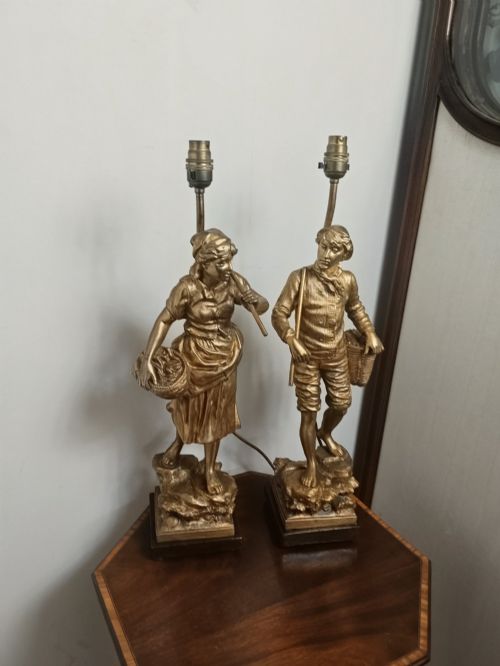
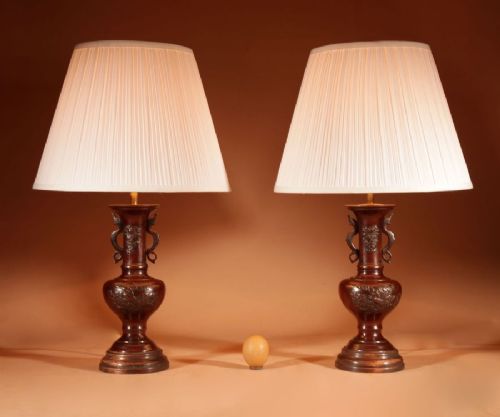
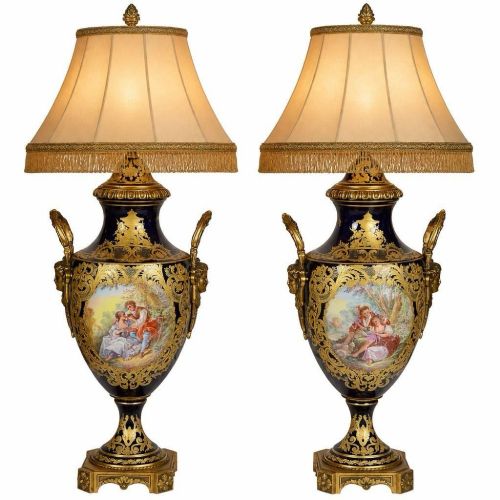
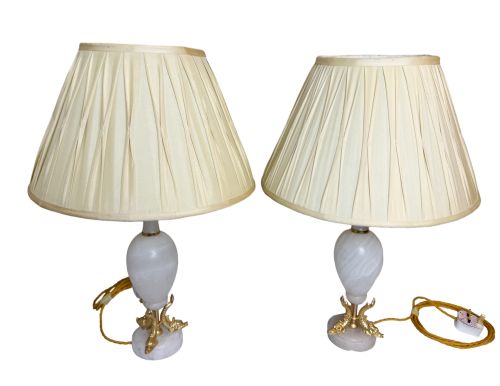
Pair Bronze Table Lamps
Pair bronze table lamps bring classical weight and rich metallic warmth to a room, offering balanced symmetry for side tables or buffets.
Pair Bronze Table Lamps
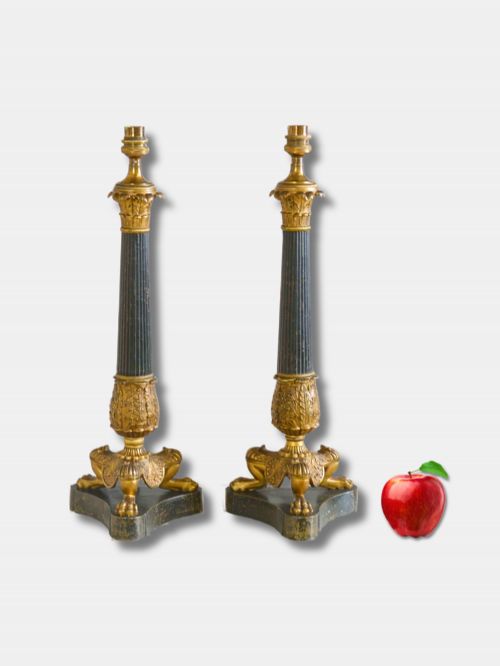
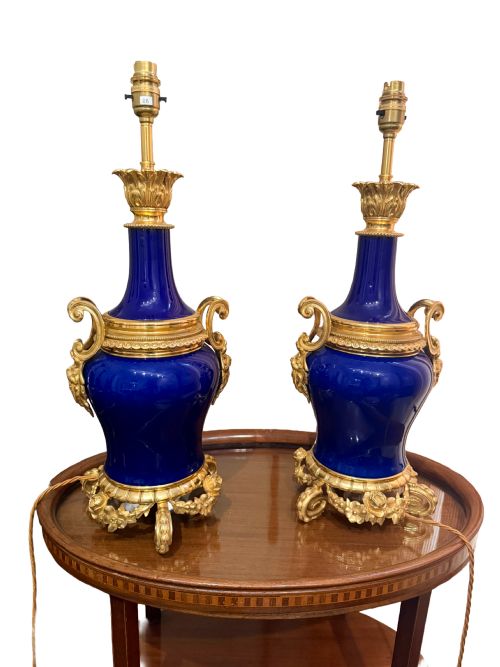
When you search for pair bronze table lamps, you encounter matched sets created primarily in the nineteenth and early twentieth centuries, drawing heavily on French Neoclassical, Louis XVI, and Empire design traditions. These symmetrical lights frequently combine cast bronze with contrasting materials such as marble, porcelain, or crystal.
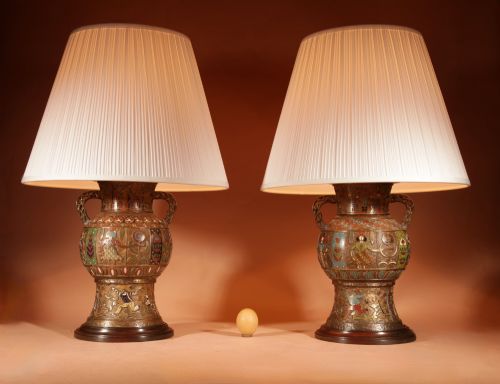
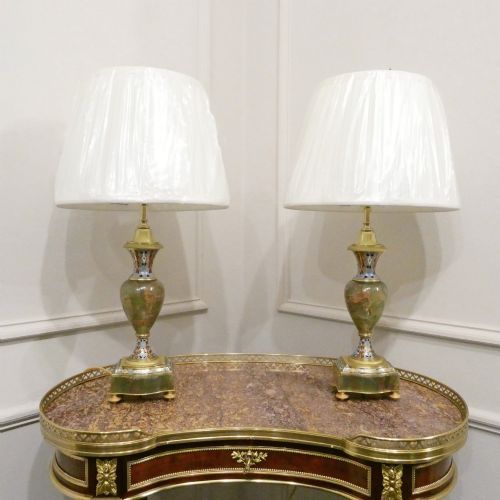
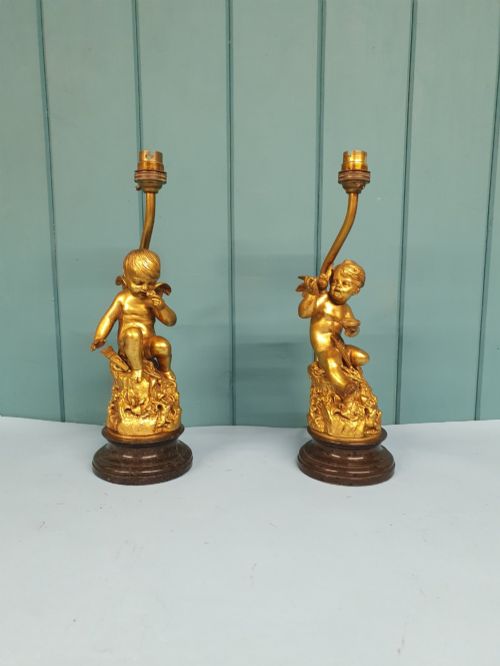
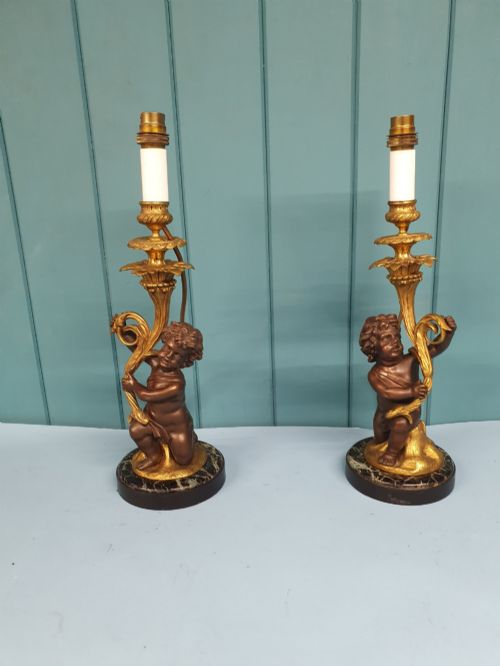
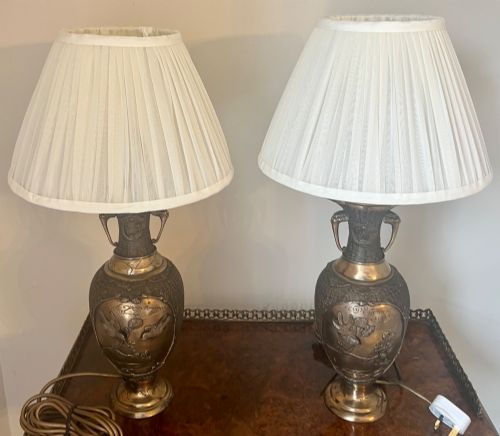
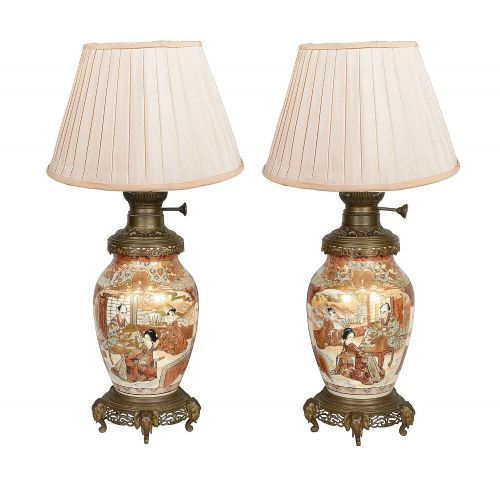
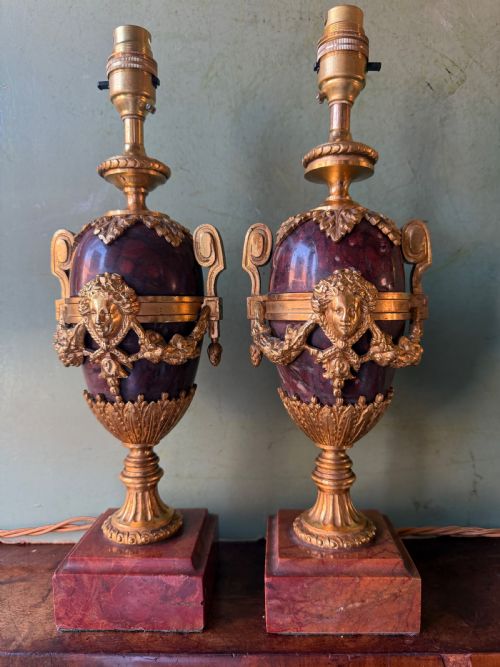
The domestic forms on this page include column bases, figural groups featuring cherubs or putti, and converted cassolettes or urns fitted for electricity. Many items reflect European foundry work, alongside Japanese Meiji period bronze production adapted for Western interiors.
Makers and designers working in Paris and beyond produced these symmetrical pairs for formal drawing rooms and salons, where matching illumination was placed on side tables or mantelpieces. Surviving examples demonstrate how traditional candlesticks and decorative vases were systematically adapted into functional lighting over the decades.
What varies in quality
The precision of the chasing work separates superior metalwork from standard production, as skilled artisans spent hours hand-tooling raw castings to sharpen leaf veins, hair texture, and facial expressions. Castings that lack this secondary hand-finishing appear soft and indistinct in their ornamental details.
The selection of secondary materials dictates overall refinement, with dense natural marble, unblemished porcelain inserts, and heavy fire-gilded ormolu marking out high-workshop output. Lighter composite materials and thin, uniform metal pressings indicate commercial, mass-produced alternatives.
Coherence of the pair remains paramount, ensuring both lamp bodies share identical foundry marks, patination depths, and proportional balance without mismatched replacement components.
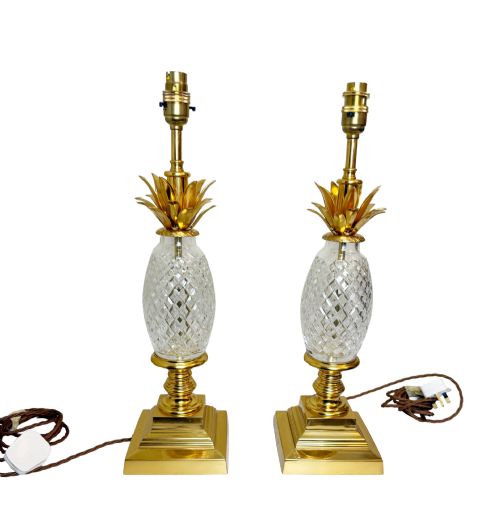
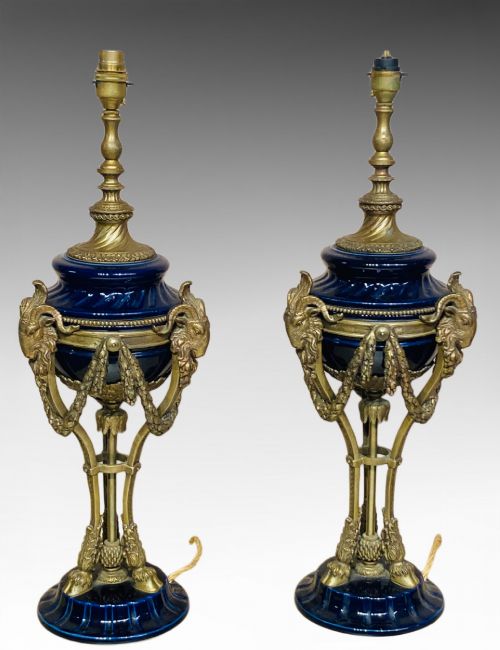
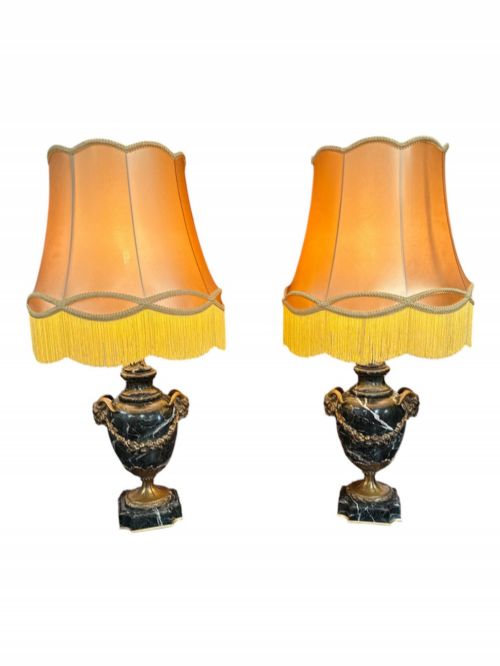
Listings feature items spanning the early nineteenth century through to the 1930s, combining bronze, ormolu, marble, and hand-painted porcelain.
E Rousseau·Barbedienne·Paul Sormani
The Pair Bronze Table Lamps Glossary
- Ormolu
- Gilded bronze, where a finely ground gold-mercury amalgam is applied to a bronze object and heated to bond the gold. This technique imparts a rich, lasting metallic lustre typical of eighteenth and nineteenth-century French luxury goods.
- Champlevé
- An enamelling technique where troughs or cells are hollowed out of the metal surface and filled with vitreous enamel powder before firing. The resulting coloured patterns sit flush with the surrounding bronze framework.
- Cassolette
- A decorative vessel shaped like an urn or vase, often featuring a reversible lid that functions as a candleholder or conceals an interior opening. Many were converted into lamp bases during the nineteenth century.
- Patination
- The surface coloration and texture acquired by metal either naturally through age or artificially through chemical treatments. A controlled dark or greenish patina gives bronze its characteristic antique appearance.
- Meiji Period
- The era in Japanese history spanning from 1868 to 1912, noted for exceptional metalworking expertise. Bronzes from this period exported to the West often display remarkably intricate cast dragons, flora, and avian motifs.
Pair Bronze Table Lamps: Frequently Asked Questions
How do I clean bronze lamp bases?
Dust the metal gently with a soft, dry cloth to prevent accumulation in detailed recesses. Avoid abrasive polishes or chemical cleaning agents that strip away the historical patination or damage gilt surfaces.
For stubborn marks, use a damp cloth with mild soap, drying the metal thoroughly immediately afterward to protect the finish.
Were these always electric lamps?
Most nineteenth-century examples began life as oil lamps, candlesticks, or decorative vases before being converted to electricity later in their lifespan. This conversion process usually involved drilling internal channels for wiring and mounting new lamp holders.
Such alterations are standard for antique lighting and do not diminish the historical integrity of the bronze work.
How do I choose the right shade?
Select shades that complement the proportions and material weight of the heavy metal base, such as pleated silk or neutral fabrics that diffuse light evenly. The colour of the shade should pick up tones from any porcelain panels, marble plinths, or gilt highlights on the bronze.
Ensure the fixing ring matches the bulb fitting supplied with the lamp.
How can I tell French styles apart?
Louis XVI style pieces emphasise straight architectural lines, classical urns, and restrained neoclassical ornamentation. Rococo Revival designs feature asymmetrical scrolls, foliate asymmetry, and naturalistic shell motifs.
Examining the crispness of the chasing and the quality of the supporting marble plinth helps distinguish high-end French production from later revival interpretations.