






Crystal Candelabra Lamps
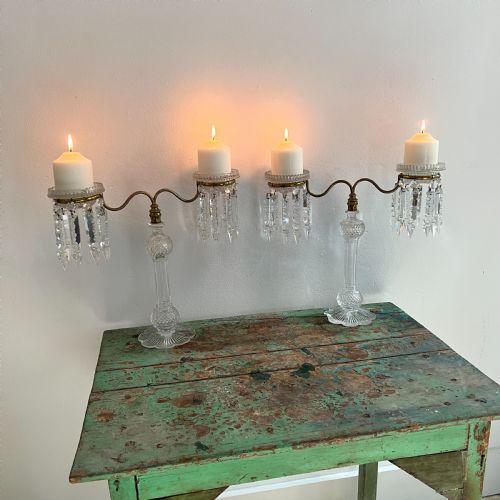
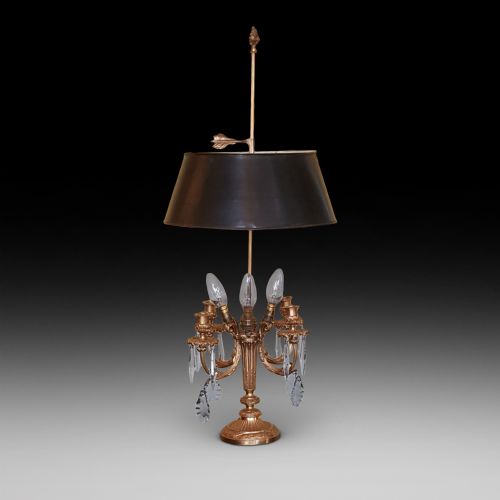
These crystal candelabra lamps combine illumination with sparkling cut glass drops, bringing period charm and ambient light to a room.
Crystal Candelabra Lamps
When you search for crystal candelabra lamps, you are looking at ornate lighting fixtures that combine the branch structure of a candelabrum with electrical wiring or candleholders, often hung with glass prisms. The selection spans French Chateau and English Regency styles, alongside Late Victorian and Napoleon III interpretations.
The versions you are most likely to meet on this page originate from the Victorian, Edwardian, and early twentieth-century periods. They take forms such as table lamps, girandoles, and multi-light table chandeliers featuring brass, gilded brass, or silvered metal frames.
How they were made
The makers of these pieces built rigid frameworks using cast brass, ormolu, and silvered metal to support multiple branches and heavy glass components. Gilded brass and bronze provided durable structures that could hold numerous cut crystal drops.
Cut crystal and glass elements were shaped and polished by hand to catch and refract light from candles or early electric bulbs. Fabric shades sometimes accompanied these arrangements, complementing the metalwork and glass pendants.
Listings feature items from the 1870s, Victorian, Edwardian, 1900, 1920, and 1930 periods, utilising brass, crystal, glass, and gilded brass.
What varies in quality
The refinement of the metal casting and the depth of the hand-cut facets on the crystal prisms separate the top of the range from simpler work. Finer examples display crisp detail in the brass or ormolu mounts and retain matching sets of cut glass pendants.
Proportion and structural balance also distinguish better pieces, where the weight of the crystal is harmoniously distributed across twin, triple, or six-branch configurations without appearing cluttered.
The Crystal Candelabra Lamps Glossary
- Candelabrum
- A branched candlestick or lamp designed to hold multiple lights. These pieces often feature two, three, four, or six branches.
- Girandole
- An ornamental branched wall or table light, frequently featuring mirrors or extensive crystal drops to multiply the reflection of the flame.
- Ormolu
- Gilded bronze or brass used for decorative mounts and frames. This technique gives metalwork a rich golden appearance.
- Prism
- A cut glass or crystal pendant hung from the arms or drip pans of a light fixture. They refract light to create colourful optical effects.
Crystal Candelabra Lamps: Frequently Asked Questions
What are crystal candelabra lamps?
These are decorative lighting pieces that merge the multi-branched form of a candelabrum with table lamps or chandeliers. They are adorned with glass drops and cut crystal.
They appear in various period styles including French Chateau, English Regency, and Napoleon III, utilising brass, bronze, and silvered metal frameworks.
How were they used historically?
Historically, such fixtures provided illumination for formal rooms, drawing rooms, and dining tables. Many started as candle-lit candelabra before later conversion to electricity.
Their reflective crystal drops maximised the limited light available from candles or early bulbs, creating a warm and sparkling atmosphere.
How do I live with them?
Placing these lamps on a sideboard, mantelpiece, or side table allows them to act as focal points even when unlit. Their metallic frames and glass pendants complement both traditional and eclectic interiors.
Care involves gentle dusting of the crystal drops and metal branches to maintain their reflective quality without disturbing delicate wiring or drops.
How do I tell periods apart?
Victorian and Edwardian pieces often exhibit distinct casting details, while French styles from the nineteenth and early twentieth centuries lean towards ornate ormolu and classical motifs. Examining the metal alloys and the cut of the glass helps indicate the era.
Dates range from the 1870s Napoleon III style up to 1930s table chandeliers and girandoles, showing subtle shifts in manufacturing techniques over time.