
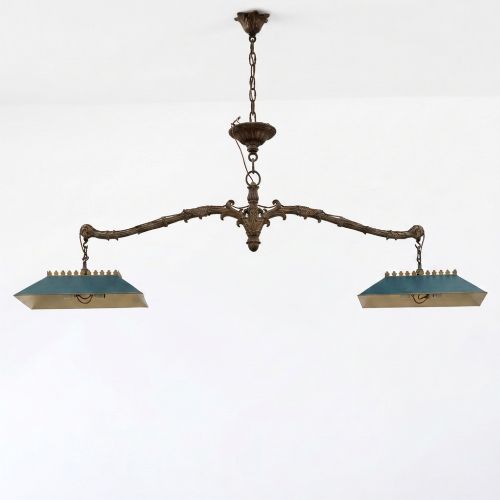


Brass Table Chandeliers
Brass table chandeliers combine illumination and formal display, bringing height and metallic reflection to surfaces.
Brass Table Chandeliers
These items comprise upright or multi-branched lighting fixtures designed for surface placement rather than ceiling suspension. The listings show a strong presence of French forms, Edwardian creations, and Victorian examples.
Forms span from multi-branch candelabras and table lamps to converted chandeliers and billiard lights. Buyers encounter variations featuring six branches, three branches, or paired arrangements suited for sideboards and tables.
Origins stretch from the nineteenth century into the decades of the early twentieth century. Makers and designers utilised varied aesthetic streams, including Gothic style, French Louis XV, Napoleon III style, and French Chateau influences.
Materials and construction
Construction relies primarily on brass, gilt brass, and bronze, providing a sturdy metallic armature for the branching arms. Metal components often work alongside elements of silver plate to achieve contrasting surface textures.
Decorative detailing incorporates cut glass drops, fabric components, glass globes, and crystal elements. These translucent additions are suspended from or integrated into the metallic framework to refract light across the room.
Several pieces described as billiard lights suggest nineteenth-century players required serious illumination to sink the black.
Factors in quality
The degree of refinement in cast metalwork and hand-cut crystal sets superior examples apart from simpler productions. Better pieces display crisp chasing on the brass or bronze alongside balanced proportions across multiple branches.
The completeness and integrity of hanging glass drops and crystal components influence the overall impression of a piece. Original matching pairs demonstrate greater consistency in patination and structural execution than assembled sets.
The Brass Table Chandeliers Glossary
- Girandole
- An ornamental branched candlestick or light fixture designed to hold multiple candles or bulbs. These pieces often incorporate mirrors or crystal drops to multiply the ambient reflection.
- Table lustre
- A type of candelabra or ornamental stand adorned with cut glass pendants. The glass drops hang from the upper rim to catch and scatter light.
- Gilt brass
- Brass coated with a thin layer of gold or gold-coloured wash to impart a richer finish. This treatment protects the underlying metal while offering a bright, reflective surface.
- Napoleon III style
- A nineteenth-century French design movement characterised by eclectic revivals of earlier historic periods. Pieces from this aesthetic frequently combine ornate bronze casting with abundant crystal ornamentation.
- Candelabra
- A branched candlestick holder designed to support several candles or light fittings simultaneously. They provide a symmetrical arrangement of arms radiating from a central stem.
Brass Table Chandeliers: Frequently Asked Questions
What are brass table chandeliers?
These pieces are portable lighting fixtures featuring multiple arms or branches designed to sit upon furniture rather than hang from ceilings. They typically combine a metal armature with crystal or glass elements.
They emerged across the nineteenth and early twentieth centuries in various regional styles, notably French and English designs. Their primary function was to provide elevated illumination for dining rooms and parlours.
How do you use them?
They suit placement on sideboards, large tables, and mantelpieces where their height and reflective qualities can enhance the room. Many historical pieces have been adapted for modern electrical use while retaining their original form.
Positioning them away from heavy foot traffic protects delicate hanging crystals and fabric components from accidental knocks. They function effectively as decorative focal points during evening gatherings.
How do you tell periods apart?
Victorian and nineteenth-century examples often display heavier casting and distinct revival motifs such as Gothic details or ornate scrolling arms. Edwardian and 1920s pieces frequently lean towards lighter proportions and French aesthetic influences.
Examining the construction methods of the brass frame and the cut of the crystal drops helps indicate the era of manufacture. Fasteners, patination, and wiring adaptations also offer clues to a piece's age.
What styles are common?
Common aesthetics include French Louis XV, Napoleon III, Gothic Revival, and Edwardian designs. These styles dictate the curve of the branches and the complexity of the cast ornamentation.
Some pieces draw on French Chateau traditions, featuring elaborate gilt-brass frames hung with cut glass drops. Others present simpler architectural lines suited to early twentieth-century interiors.