
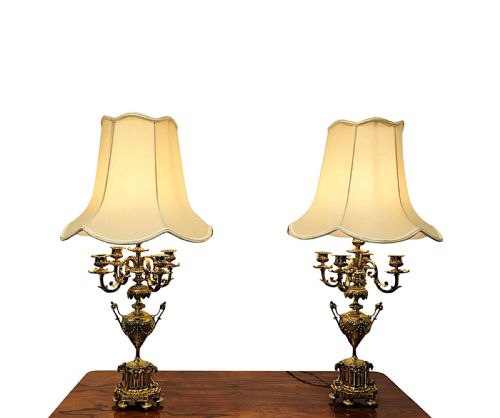


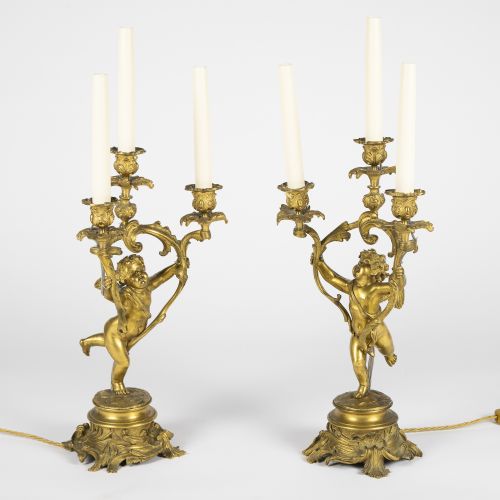


Electric Candelabra Pair
These electric candelabra pair selections bring together nineteenth century casting and crystal work to light a room with period weight.
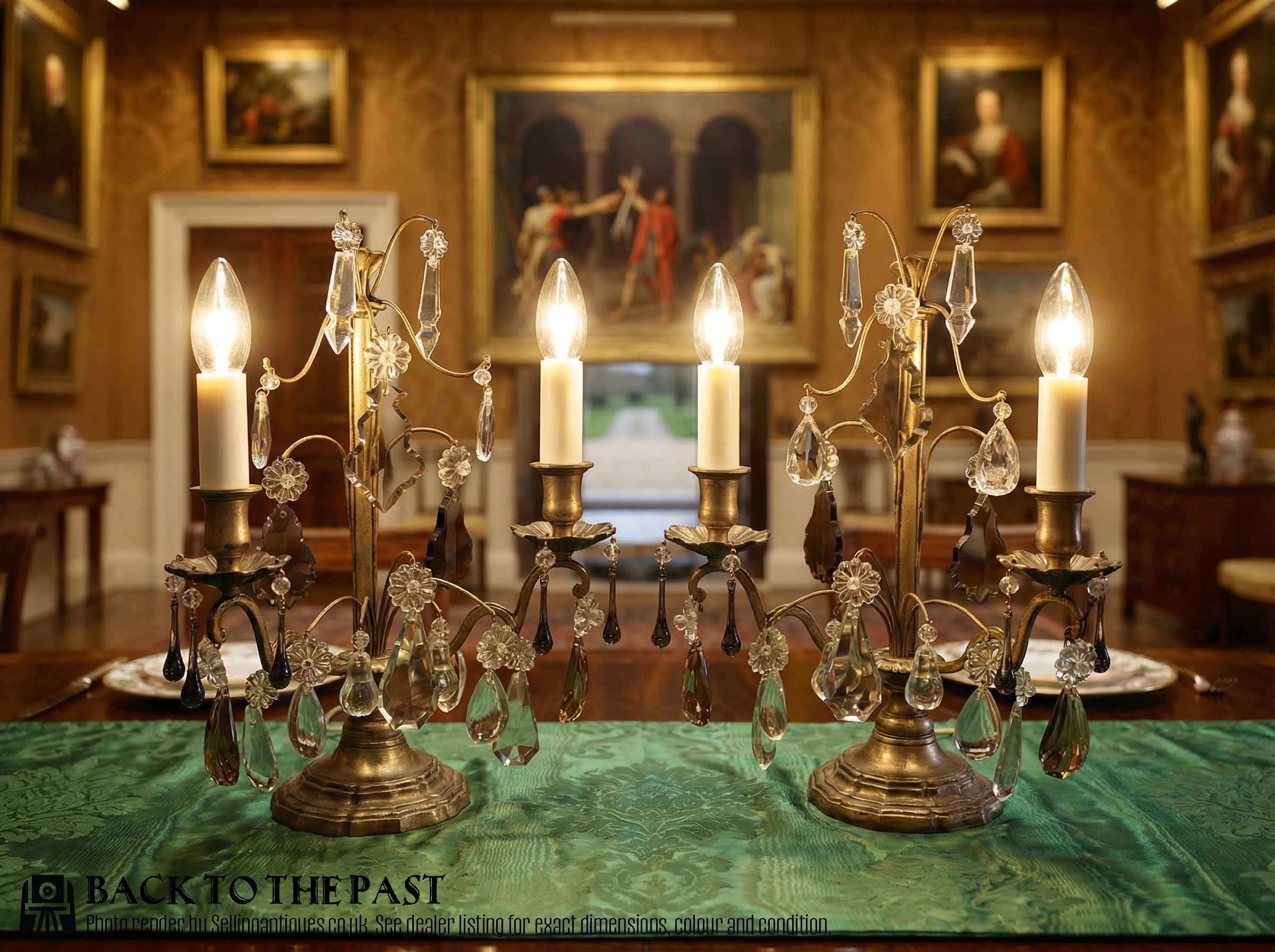
Electric Candelabra Pair
An electric candelabra pair consists of matched twin or triple light fixtures built from nineteenth century or nineteen twenty foundations, often converted from earlier lighting forms to serve modern interiors.
The objects on this page bridge the nineteenth century and the nineteen twenties, ranging from heavy brass and gilt bronze to silvered metal and carved giltwood.
Buyers meet forms that span wall sconces and table lamps, drawing heavily on French Rococo Revival, Napoleon III, and Neoclassical vocabularies.
How they were made
Foundations rely on cast brass, bronze, and gilt ormolu, shaped through traditional foundry work before being adapted for electrical wiring.
Crystal drops and glass components catch the light, paired with giltwood and fabric elements to build layered decorative surfaces.
Listings span three distinct periods: eighteen seventy, the nineteenth century broadly, and nineteen twenty.
What varies in quality
Quality rests in the crispness of the bronze or brass casting and the depth of the original gilding or silvering across the arms and bases.
Heavier mounts, substantial marble bases, and intact crystal arrangements distinguish the finer examples from simpler conversions.
The Electric Candelabra Pair Glossary
- Ormolu
- Gilded bronze used extensively for decorative mounts on nineteenth century lighting and furniture. The technique involves applying a finely ground high-carat gold mercury amalgam to a bronze base.
- Candelabra
- A branched candlestick designed to hold multiple candles, frequently found converted to electricity in these listings. They often feature two, three, or more arms branching from a central stem.
- Napoleon III Style
- A nineteenth century revival aesthetic drawing on French Rococo and Renaissance opulence. It is characterised by rich gilding, heavy cast bronze, and exuberant ornamentation.
- Giltwood
- Timber carved and coated with gold leaf or a gold-coloured finish. This material appears on wall lights and decorative frames to add reflective warmth.
Electric Candelabra Pair: Frequently Asked Questions
What is an electric candelabra pair?
These pieces are matched lighting fixtures designed to sit on tables or mount to walls, combining period metalwork with electrical fittings.
They originate from the nineteenth century up through the nineteen twenties, often taking the form of converted candelabra or purpose-built table chandeliers.
How were they used originally?
Before conversion, such pieces held wax candles to illuminate grand rooms, drawing rooms, and dining tables in period homes.
Their dual or triple branch layouts distributed light evenly across a space while acting as sculptural decorative objects.
How do I live with them?
These fixtures suit side tables, mantels, or console surfaces where their height and metallic finish can anchor a room's lighting scheme.
Pairing them with appropriate shades or exposed decorative bulbs lets the brass, bronze, and crystal elements take centre stage.
How do I tell periods apart?
Nineteenth century pieces often display heavier cast bronze, gilt ormolu, and marble components associated with Rococo Revival and Napoleon III aesthetics.
Nineteen twenties examples lean towards lighter brass structures, silvered finishes, and carved giltwood wall lights.