


Gilt Brass Table Lights
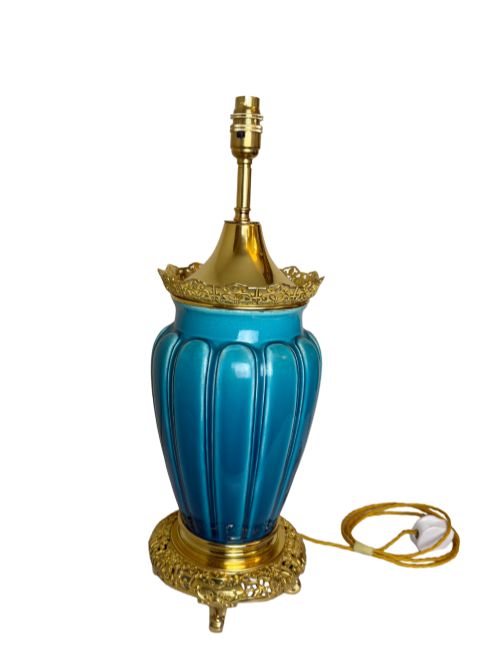
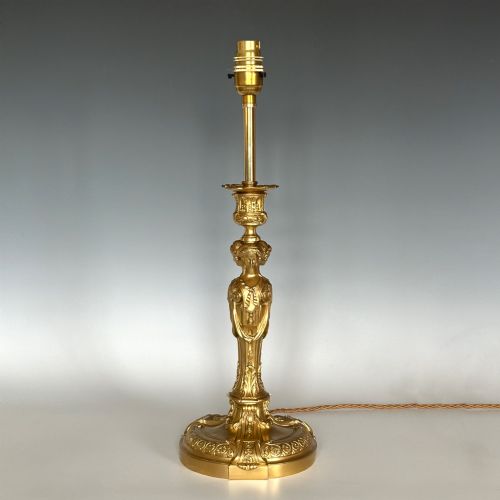
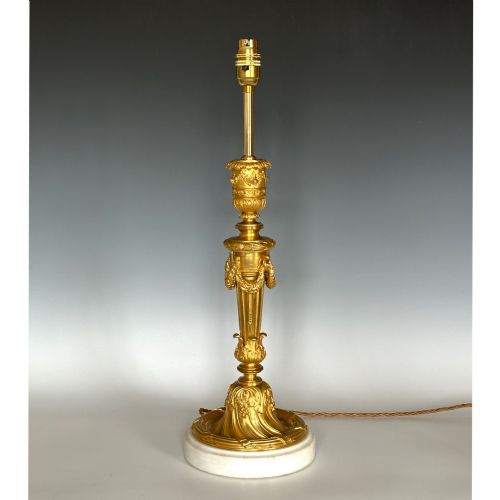
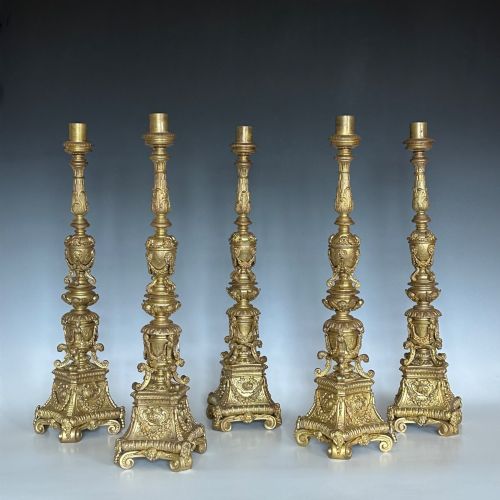
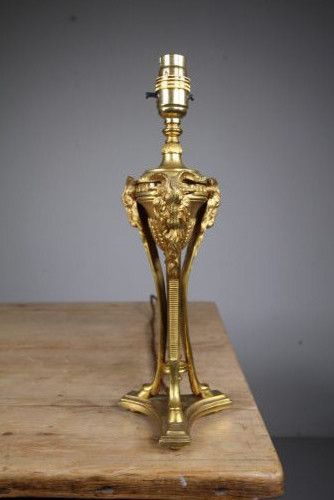
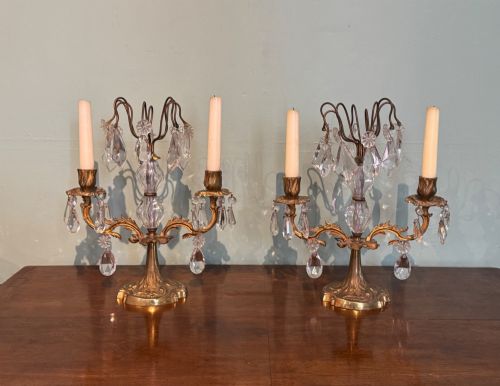
These gilt brass table lights bring heavy cast metal and golden lustre into a room.
Gilt Brass Table Lights
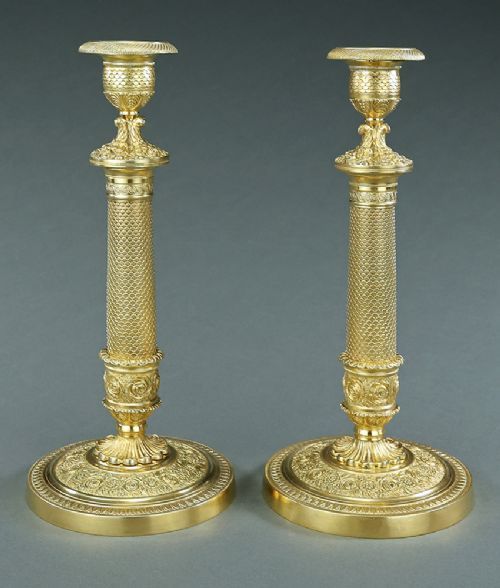
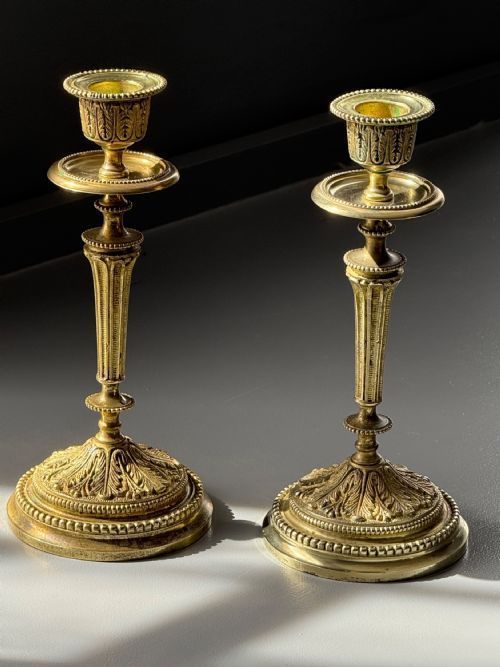
When you search for gilt brass table lights, you encounter a varied collection of electrified lamps, oil lamps, candelabras, and converted candlesticks that span multiple centuries. The selection on this page relies heavily on French and English design, with nineteenth-century examples dominating the inventory alongside earlier eighteenth-century survivals and twentieth-century adaptations.
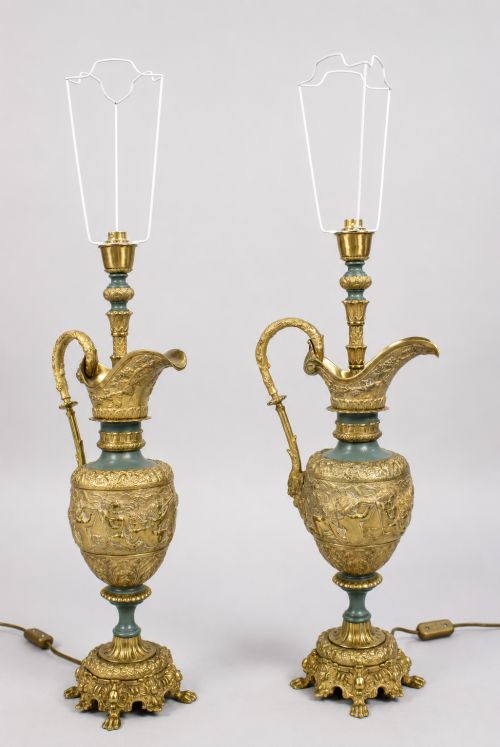
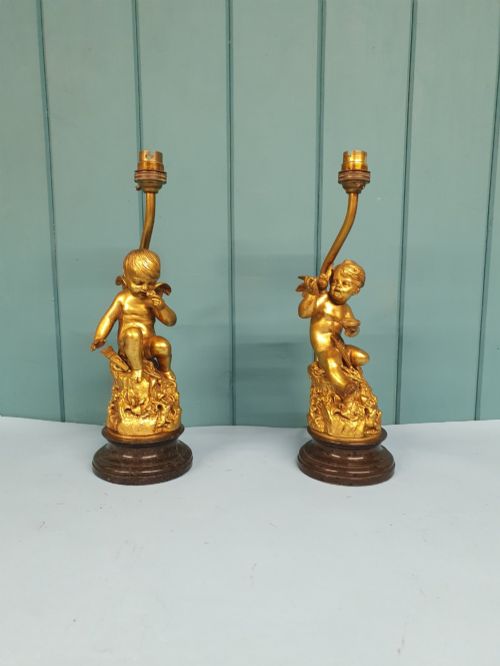
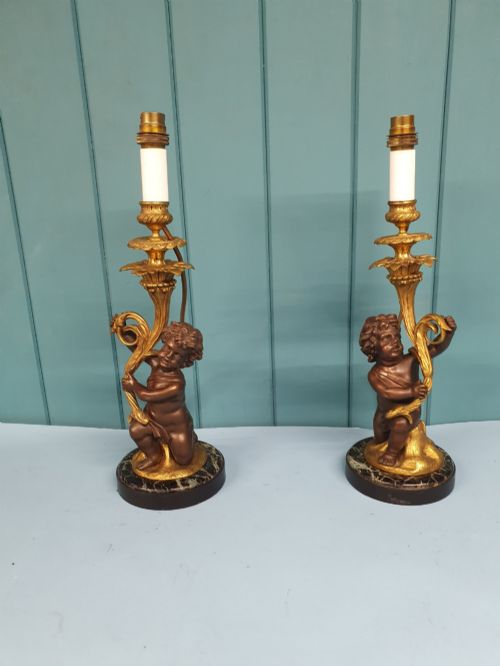
The forms range from simple columnar standards to elaborate figurative pieces involving cherubs, rams heads, and lions paw feet. Many items combine polished golden-toned metal with contrasting materials such as marble, onyx, porcelain, and cut glass to create decorative illumination.
Louis XVI, Regency, and Empire styles appear frequently, showing classical symmetry, urn motifs, and ornate foliage. Buyers most often meet paired items suited for mantelpieces or sideboards, reflecting how period lighting was originally arranged in domestic interiors.
Materials and construction methods
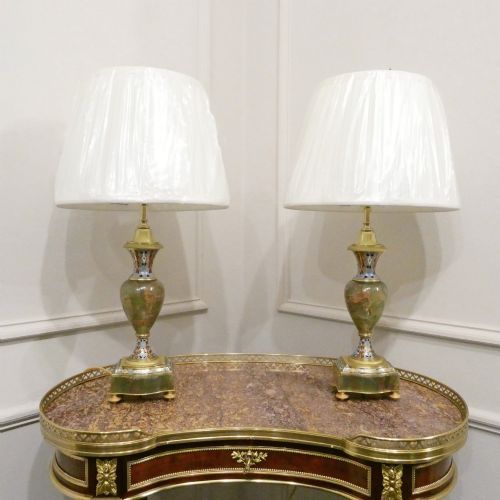
The manufacturing process typically involves casting brass, bronze, or white metal into detailed moulds before applying a layer of gilding, whether through traditional mercury-gilding methods for ormolu or through modern electroplating techniques. These metal bases are frequently combined with carved stone elements like rouge marble and onyx, or accented with champleve enamel and porcelain body sections.
Many items incorporate glass components such as cut crystals, opaline glass reservoirs, or crystal drops that refract the glow from candles or early electric bulbs. Joinery relies on threaded metal rods, bolts, and pins to secure the heavy stone plinths and decorative mounts together securely.
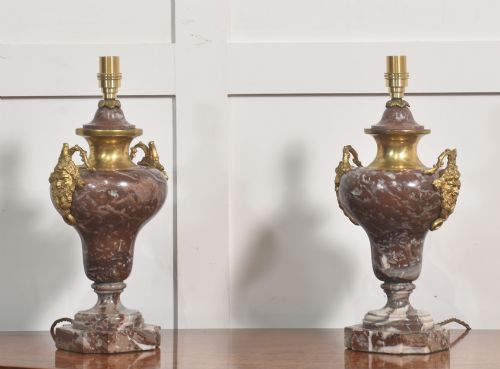
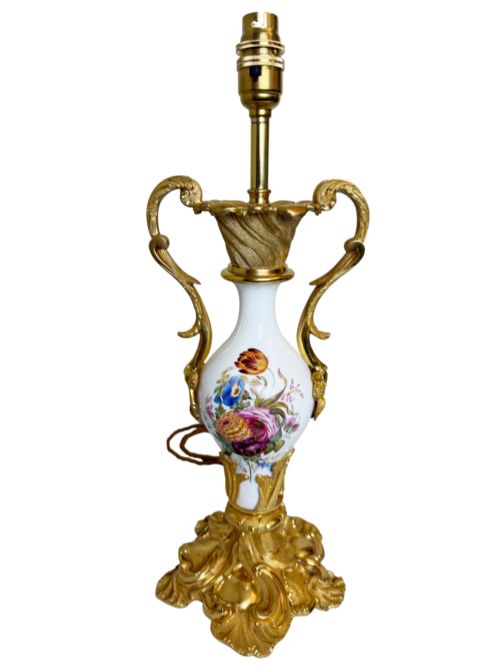
Materials paired with the metal work across these listings include rouge marble, onyx, opaline glass, cut crystal, and hand-painted Japanese porcelain.
Distinctions in quality and finish
The division between standard production and superior craftsmanship rests upon the crispness of the metal chasing and the depth of the original gilding. Finer pieces exhibit sharp, hand-finished botanical and figurative details rather than the softer edges found in mass-produced or later reproduction castings.
Weight and structural integrity also determine standard, as higher-quality examples utilise heavy bronze or thick brass foundations paired with solid marble or dense porcelain inserts that prevent tipping. The integration of secondary materials, such as finely polished hardstones and hand-cut glass, elevates the overall execution of the piece.
Dugourc·Mc Gary·Messenger·Corby Castle
The Gilt Brass Table Lights Glossary
- Ormolu
- Gilt bronze produced by applying a mixture of gold and mercury to a bronze base, then firing it to drive off the mercury. This technique creates a durable, warm golden finish seen on eighteenth and nineteenth-century French lighting.
- Champleve
- An enamelling technique where troughs or cells are hollowed out of the metal surface and filled with vitreous enamel before firing. It appears on nineteenth-century decorative metalwork and table lamps.
- Candelabra
- A branched candlestick designed to hold multiple candles or light sources simultaneously. They often feature central shafts surrounded by removable arms.
- Tole-peinte
- Painted sheet metal used for lamp shades and bodies, particularly popular in French nineteenth-century lighting designs. The painted surfaces often mimic japanning or botanical scenes.
- Opaline
- A type of semi-translucent glass, frequently white or pale blue, used for lamp bodies and oil founts during the Victorian period. It diffuses light softly.
Gilt Brass Table Lights: Frequently Asked Questions
How do I wire vintage lights?
Older lamps often require rewiring to meet modern safety standards while preserving the original metal body. A qualified electrician can thread modern flex through the central channel without altering the exterior finish.
Original burners and fittings can sometimes be retained as decorative sleeves while housing updated internal lamp holders. This approach keeps the antique character intact while ensuring daily usability.
Were these originally oil lamps?
Many nineteenth-century examples started life as oil or paraffin lamps before being converted to electricity later in their lifespan. You can often identify the original fuel reservoir or burner gallery beneath the current lamp fitting.
Candlesticks and candelabras were similarly adapted by drilling bases or inserting hidden wiring channels. These conversions represent standard practices in the continuous use of antique lighting.
How do I clean gilt metal?
Dusting with a soft, dry microfibre cloth removes everyday accumulation without harming fragile gilded surfaces. Avoid abrasive commercial metal polishes, which strip away thin gold layers.
If the metal requires deeper cleaning, use a damp cloth with mild soapy water followed by immediate drying. Preserving the remaining patina ensures the piece maintains its historical appearance.
How do I date these lights?
Dating relies on stylistic clues, construction techniques, and assembly methods visible at the base or interior joins. Hand-cut threads on screws and heavy sand-cast bronze components typically indicate earlier nineteenth-century manufacture.
Patent stamps, maker signatures, and stylistic markers such as Empire or Louis XVI revival motifs help narrow down the decade. Comparing the mounting style of porcelain and marble sections further clarifies the period of production.