


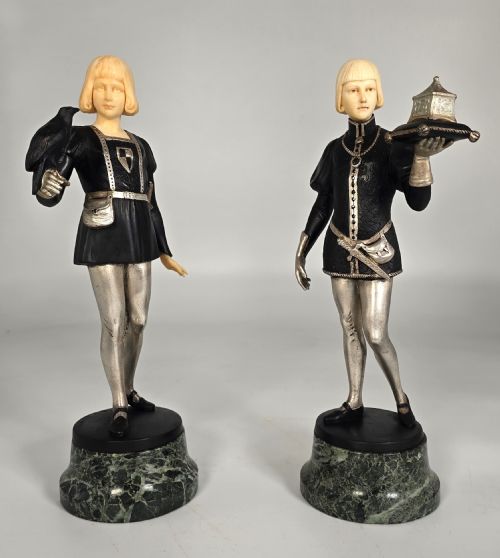


Antique Ivory Figure
An antique ivory figure combines organic material with metal, porcelain, or wood to capture human and animal forms across the nineteenth and twentieth centuries.
Antique Ivory Figure
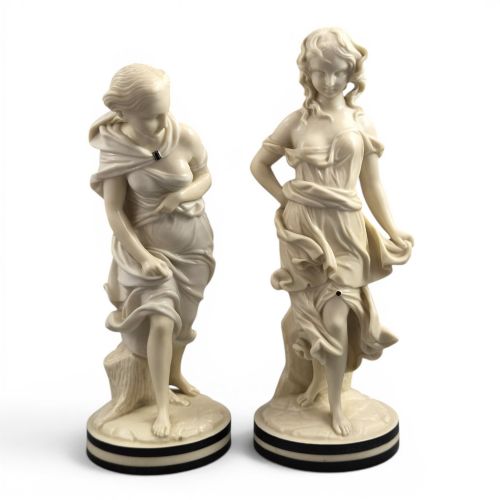
When you search for an antique ivory figure, you encounter sculptural works spanning the Victorian, Edwardian, and Art Deco periods alongside Japanese and German pieces. These pieces take the form of freestanding figurines, candlesticks, and candelabra depicting dancers, maidens, musicians, and animals.
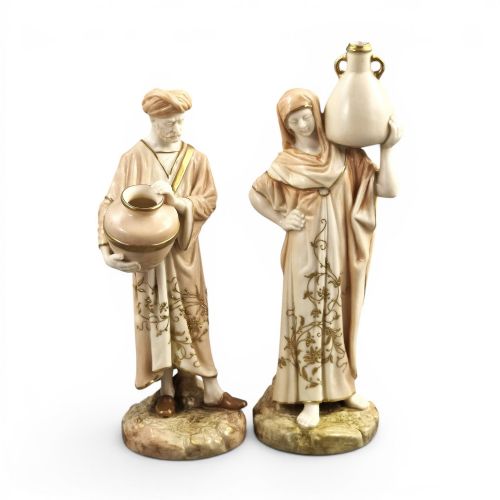
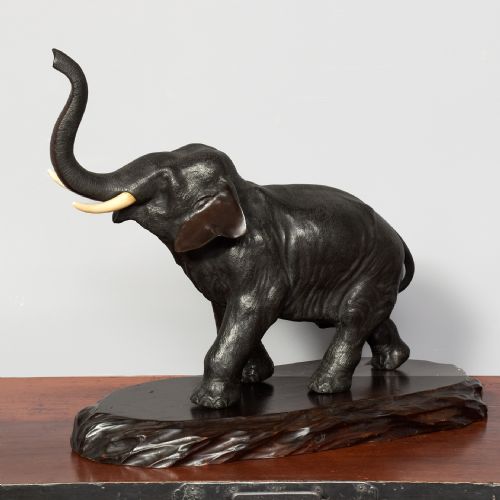
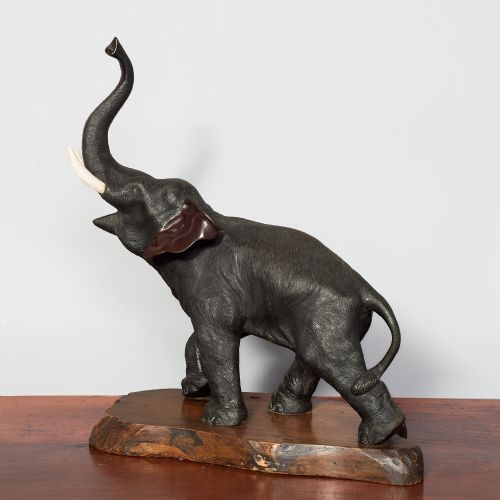
The most common examples on this page are British porcelain figures from Royal Worcester featuring blush ivory glazes, often modelled by James Hadley. Alongside these, buyers find chryselephantine sculptures combining bronze and ivory from the early twentieth century, as well as Japanese bronze animal models with ivory tusks.
How they were made
Makers combined carved elephant ivory with cast bronze, boxwood, and glazed porcelain. Chryselephantine pieces paired cold-painted or patinated bronze bodies with carved ivory faces and hands, sometimes incorporating details such as diamond eyes or gold leaf.
Porcelain works utilised blush ivory grounds, shot enamel, and gilding to simulate skin tones and textiles. Artisans worked within distinct stylistic movements, moving from Victorian Orientalism and classical revival towards sleek Art Deco geometries.
Listings span the eighteenth, nineteenth, and twentieth centuries, featuring materials such as porcelain, enamel, gold leaf, ivory, bronze, and gilt.
What varies in quality
Quality rests in the precision of the carving and the harmony of mixed media. Fine pieces display subtle facial expressions, delicate hand details, and secure joins between dissimilar materials like bronze and ivory or porcelain and gilt mounts.
The sophistication of the modelling determines the tier of the piece. Works designed by known modellers and produced by premier factories exhibit superior proportions, intricate surface detailing, and careful application of enamel or gilding.
James Hadley·Simon Troger·Gotthilf Jaeger·Paul Philippe·Demetre Chiparus·Ferdinand Preiss
The Antique Ivory Figure Glossary
- Chryselephantine
- A sculpture made from a combination of bronze and ivory. The technique gained prominence during the Art Deco period.
- Blush ivory
- A soft, matte cream porcelain finish developed by Royal Worcester. It mimics the warm tone of organic ivory.
- Shot enamel
- A layered glazing technique that produces shifting colour tones under the light. It appears on select twentieth-century porcelain figures.
- Naturalistic base
- A sculptural ground modelled to resemble organic terrain like rock, grass, or stumps. These bases support figures and animal bronzes.
Antique Ivory Figure: Frequently Asked Questions
What materials make up a chryselephantine sculpture?
These sculptures combine carved ivory with cast bronze. Artists used the ivory for exposed flesh like faces and hands.
The bronze formed the garments, hair, and structural elements, often finished with patination or cold-painted colours.
What periods do these figures come from?
The selection spans from the early eighteenth century through the Victorian and Edwardian eras. Pieces from the 1920s often reflect Art Deco design.
Meiji period Japanese bronzes with ivory elements also appear in the record.
Where should I display an ivory figure?
Keep pieces away from direct sunlight and sudden temperature changes. Stable indoor conditions protect organic materials from drying and splitting.
Place them on secure surfaces where handling is minimal.