





Brown Boxwood Sculpture
These brown boxwood sculpture pieces are intricately carved figures and tactile objects spanning centuries of Asian and European craftsmanship.
Brown Boxwood Sculpture
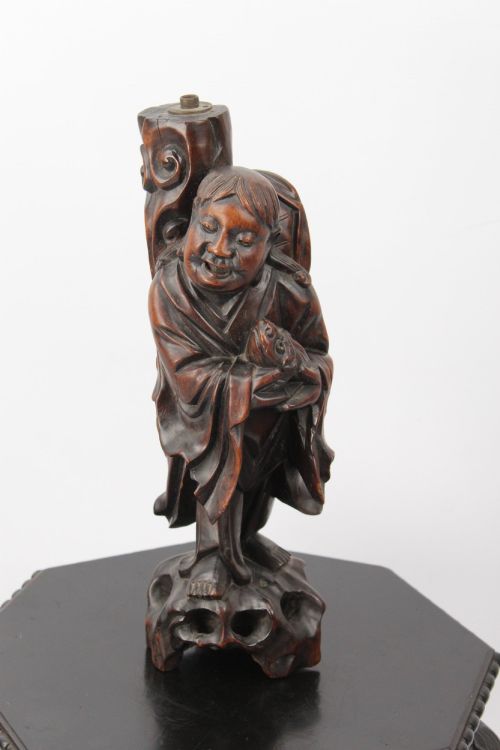
When you search for brown boxwood sculpture, you are looking at small figurative carvings, netsuke, okimono, and religious figures fashioned from dense, pale timber that warms to a deep brown patina over time. The examples on this page range from seventeenth-century European Corpus Christi figures to nineteenth-century Japanese netsuke and Chinese Daoist immortals.
You will most frequently meet Japanese netsuke and okimono depicting animals, deities, and sages from the Edo and Meiji periods alongside Chinese carvings of figures and ritual objects. European works from the seventeenth and eighteenth centuries, such as German Baroque figures by makers like Simon Troger, appear in boxwood often combined with ivory.
The forms span practical paperweights, tactile pocket toggles, and devotional crosses designed for personal use or intimate display. Each piece relies on the tight grain of the boxwood to capture microscopic details of expression, fur, and drapery without splintering.
How they were made
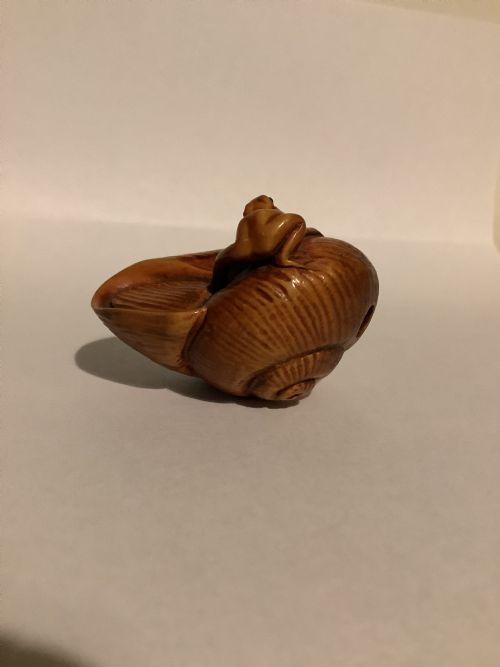
Carvers utilise the dense, homogeneous grain of boxwood and olive wood to execute microscopic undercut details that softer timbers cannot sustain. Artisans deploy specialised micro-chisels and gouges to carve figures like snails, rodents, and deities directly from the solid heartwood.
European workshops combined boxwood with carved ivory for dramatic contrast in religious statuary, while Asian carvers relied entirely on the self-coloured wood, occasionally applying subtle staining or relying purely on natural ageing.
Several boxwood sculptures on this page immortalise humble creatures, including snails, frogs, toads, and rodents.
What varies in quality
The standard of carving distinguishes routine production work from master carvers who exploited the natural grain of the wood to suggest muscle, fur, and expression. Masterworks show deep undercutting and anatomical precision in subjects such as toads, horses, and human figures.
Signatures of period artists add distinction, though unsigned pieces rely entirely on the crispness of the tool marks and the liveliness of the composition. The depth of the warm brown patina reflects how much the object was handled and cared for over the centuries.
Proportion and the preservation of original extremities without replacement parts separate superior historical survivals from heavily restored or dry examples.
Simon Troger·Tomochika·Masayuki
The Brown Boxwood Sculpture Glossary
- Netsuke
- A small carved toggle fastened to the end of a cord on a traditional Japanese container or pouch. These functional items doubled as miniature sculptures tucked into the obi belt.
- Okimono
- A Japanese decorative statue designed for display on a tabletop or in a tokonoma alcove rather than for fastening to clothing. These sculptures depict deities, animals, and genre scenes.
- Corpus Christi
- A representation of the body of Jesus Christ on a cross. These devotional sculptures are frequently carved from boxwood or olive wood for domestic or ecclesiastical shrines.
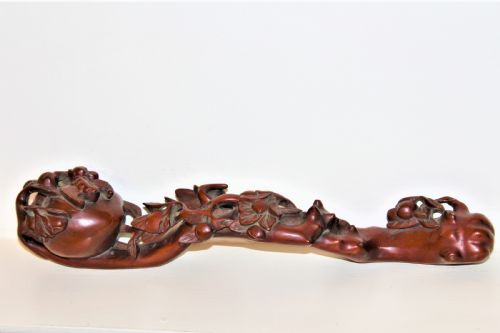
- Ruyi Sceptre
- A curved decorative Chinese talismanic object that signifies power and good fortune. They are often intricately carved from naturalistic wood forms.
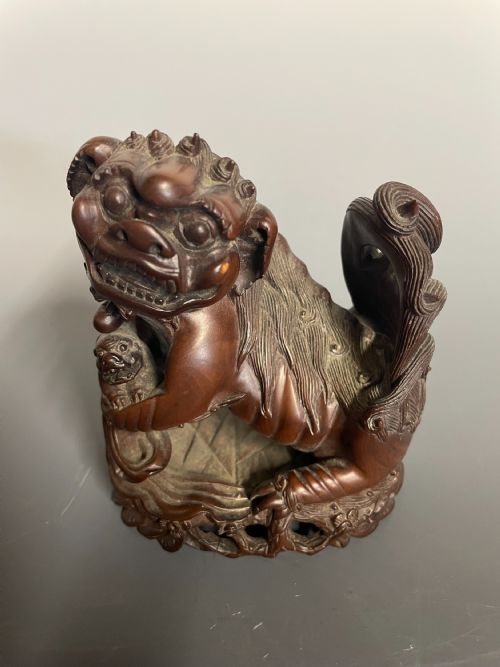
- Foo Dog
- A stylized Chinese guardian lion depicted as a mythical protector. These figures traditionally stand outside temples or domestic thresholds to ward off malevolent spirits.
Brown Boxwood Sculpture: Frequently Asked Questions
What is a netsuke used for?
A netsuke served as a practical toggle in traditional Japanese dress, anchoring small hanging containers or purses to the sash.
Carved with a hole for a cord, these miniature sculptures allowed people to suspend everyday items securely from their clothing.
How do I care for boxwood sculptures?
Boxwood requires stable indoor humidity to prevent the dense timber from splitting as seasonal temperatures shift.
Keep these sculptures away from direct sunlight and radiators, applying occasional gentle dusting with a soft dry brush.
How do I spot a signed piece?
Carvers often inscribed their signatures on the underside of netsuke and okimono within a small recessed rectangular cartouche.
Use a magnifying glass to inspect the base where the artist cut their professional name into the wood.
Why do these sculptures look brown?
Freshly cut boxwood starts as a pale, creamy yellow colour before ageing over decades of exposure to light and air.
Natural skin oils from centuries of human handling soak into the dense grain, deepening the tone to a rich golden brown.