
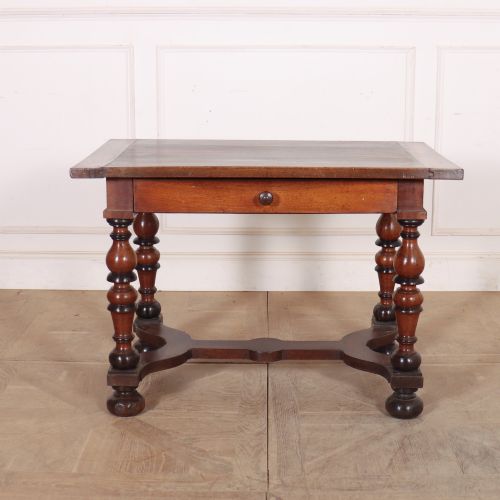

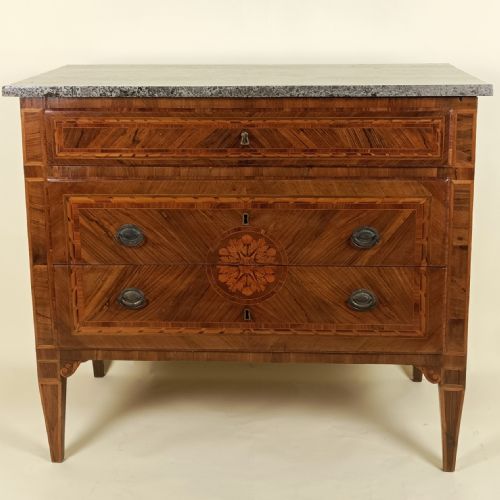
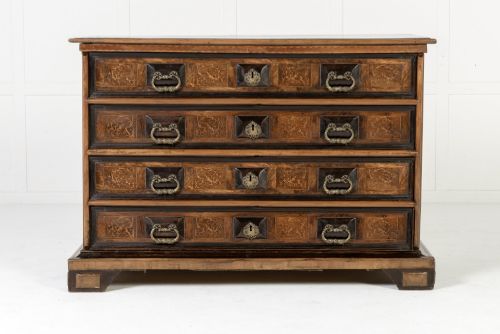


Antique Italian Drawers
These antique italian drawers combine rich walnut and painted finishes with the serpentine lines of regional craftsmanship.
Antique Italian Drawers
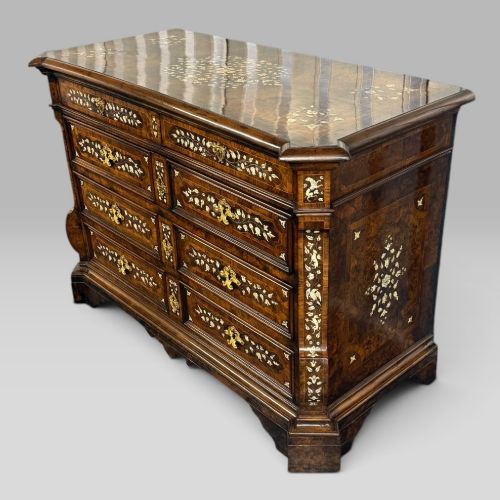
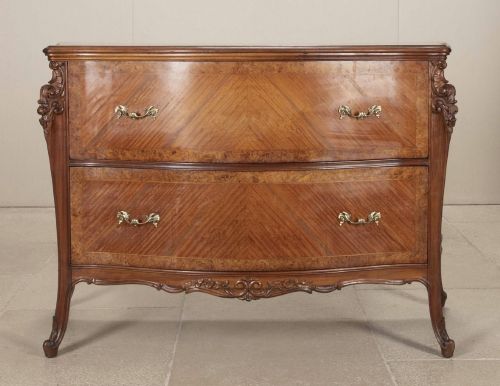
When you search for antique italian drawers, you encounter a selection of commodes, chests of drawers, and bedside cabinets spanning from the seventeenth century through to the early twentieth century. The prevailing form on this page is the commode, frequently shaped with serpentine fronts or bombe contours characteristic of regional workshops.
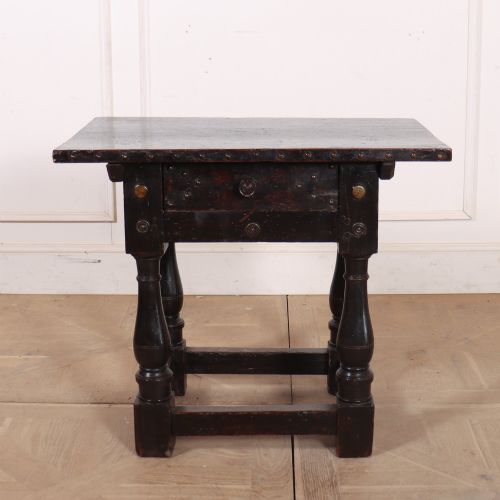
Makers and artisans produced these pieces across various Italian centres, incorporating styles that range from Italian Baroque and Rococo to Neoclassical and Renaissance Revival. Alongside standard chests, the inventory includes related forms such as side tables, desks, and console tables sharing the same cabinet-making traditions.
How they were made
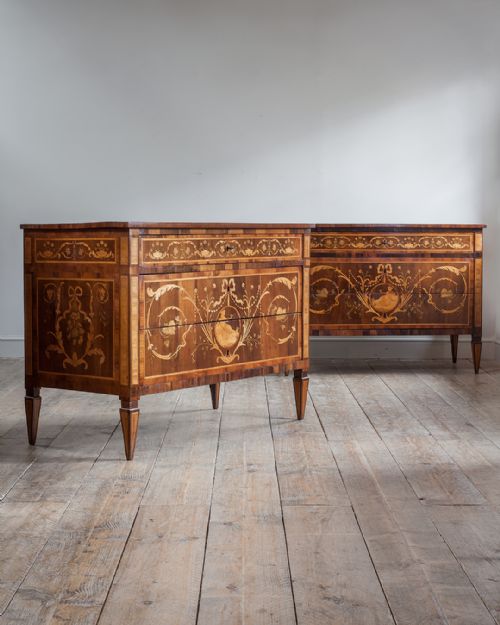
Cabinet-makers relied heavily on walnut and burr walnut, often complemented by secondary timbers like fruitwood, satinwood, and kingwood for marquetry details. Surface enrichment involved intricate inlay work, gesso, gilding, and hand-painted scenes depicting Venetian subjects.
Structural hardware typically featured cast brass handles and escutcheons, while select commodes incorporated marble tops. Construction methods varied from rigid geometric carcases to complex curved serpentine fronts requiring precise timber bending and shaping.
Several pieces feature carved wooden dolphins supporting the structure beneath the drawers.
What varies in quality
The degree of refinement in the timber selection and marquetry execution largely separates standard production from exceptional examples. Finely figured burr walnut and detailed pictorial inlay require superior artisan skill compared to plain painted surfaces.
Proportion and the handling of carved details also distinguish the tier of a piece. Pieces originating from documented workshops or possessing original painted decoration demonstrate a higher level of historical integrity.
The Antique Italian Drawers Glossary
- Commode
- A low chest of drawers or cabinet popular in eighteenth-century interior design. These pieces often feature decorative serpentine or bombe facades.
- Bombe
- A bulging or outward-curving chest profile characteristic of continental cabinet-making. This silhouette demands advanced carpentry techniques to execute successfully.
- Marquetry
- Decorative veneer patterns formed by fitting together small pieces of various coloured woods. Artisans use this technique to create geometric or pictorial designs across drawer fronts.
- Serpentine
- A furniture front shape curved in a wave pattern with a convex centre flanked by concave sides. This contour requires precise shaping of solid timber or thick veneers.
- Giltwood
- Wood that has been coated with gold leaf or a gold-coloured metallic finish. It appears frequently on mirrors, console tables, and decorative commode trim.
Antique Italian Drawers: Frequently Asked Questions
What is an antique italian commode?
An antique italian commode is a decorative chest of drawers designed primarily for reception rooms and bedrooms. These pieces serve both storage and display functions within traditional interiors.
Craftsmen built them using native and exotic woods, often incorporating marble tops and elaborate marquetry. They represent the decorative tastes of periods ranging from the Baroque era to the Neoclassical revival.
Where were these chests of drawers made?
These pieces originated in various Italian regions and stylistic centres, including Lombardy and Venice. Each area developed distinct preferences for wood types and surface ornamentation.
Workshop traditions varied significantly between northern towns and southern provinces. This regional diversity accounts for the range of painted scenes and marquetry patterns found on the furniture.
How should I care for burr walnut?
Burr walnut surfaces require stable indoor humidity levels and protection from direct sunlight to prevent timber drying and veneer splitting. Gentle dusting with a dry cloth maintains the finish.
Avoid placing items with high moisture content or extreme heat directly onto the polished wood. Proper environmental control preserves the intricate grain patterns of the burr sections.