


Renaissance Revival Chest
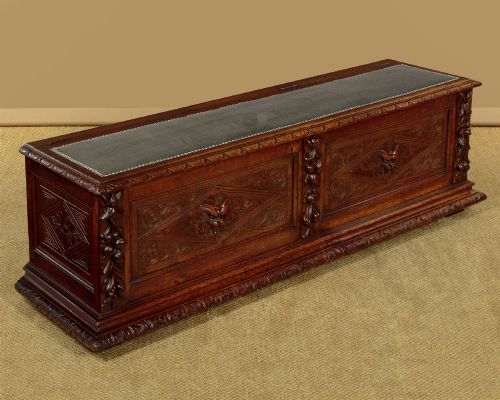
A renaissance revival chest brings dramatic architectural carved detail and substantial storage into a room.
Renaissance Revival Chest
When searching for a renaissance revival chest, a buyer encounters robust storage furniture drawing on historical sixteenth-century motifs. The selection spans sturdy nineteenth-century carved oak boxes, cabinets, and hall seating forms.
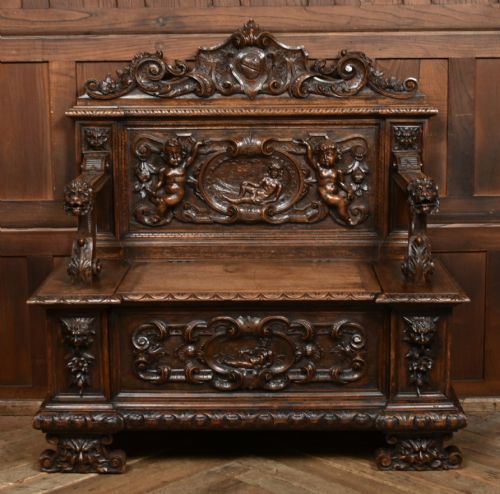
Cassapanca benches and monks benches dominate the larger seating forms seen here. Smaller tabletop storage appears as inlaid caskets and decorative boxes.
Origins stretch across Italian workshops and British Victorian interpretations. Walnut and oak dominate the timber choices across these listings.
How they were made
Cabinetmakers utilised solid oak and walnut for the primary carcases, adding fruitwood and ebony for contrast. Metalwork components such as iron and steel provide structural reinforcement and functional hardware.
Carving forms the central decorative technique, rendered in deep relief across panels and backrests. Bone inlay and marquetry surface work appear on specific Italian export pieces.
Several heavy steel caskets were built to survive medieval sieges, though their nineteenth-century owners mostly used them for petty cash.
What varies in quality
Quality rests upon the crispness of the hand-carved ornamentation and the selection of figured timber veneers. Superior examples display balanced architectural proportions and integrated secondary woods.
The sophistication of surface enrichment distinguishes finer caskets and cabinets from simpler utility boxes. Intricate bone inlay and multi-timber marquetry demand advanced joinery skills.
The Renaissance Revival Chest Glossary
- Cassapanca
- A bench with a built-in chest beneath the seat, historically used in Italian halls. This form combines seating with heavy storage capacity.
- Monks Bench
- A dual-purpose hall seat featuring a hinged back that folds down to form a table top. It offers versatile multi-functional utility in domestic spaces.
- Marquetry
- The art of applying small pieces of veneer to a structure to form decorative patterns. Craftsmen utilise varied timber tones to build pictorial scenes.
- Casket
- A small decorative box designed to hold valuables or documents. These objects frequently incorporate complex metal locks and hinges.
Renaissance Revival Chest: Frequently Asked Questions
What is a cassapanca bench?
A cassapanca is a traditional Italian wooden bench incorporating a large storage compartment beneath the seat. It functions as both a hall seat and a chest.
These pieces typically display substantial carved decoration along the backrest and arm supports, reflecting Renaissance architectural styles.
How were monks benches used?
Monks benches served multiple purposes in historic interiors as both seating and impromptu tables. The hinged backrest flips forward to create a flat surface.
This adaptability made them practical furniture pieces for hallways and smaller reception rooms.
What woods are typical for these chests?
Oak and walnut form the primary structural timbers for the majority of these storage pieces. Cabinetmakers selected these hardwoods for their durability and grain pattern.
Fruitwood, ebony, and bone appear as secondary materials for inlaid decorative highlights.
How to date a revival chest?
Dating relies on examining construction methods, tool marks on interior surfaces, and the specific style of the revival movement. Nineteenth-century makers often reinterpreted earlier sixteenth-century forms.
Material composition and hardware types also offer clear indicators of nineteenth-century manufacture.