


Antique Iron Fireplace Back
An antique iron fireplace back radiates heat into the room while protecting the masonry behind the flames.
Antique Iron Fireplace Back
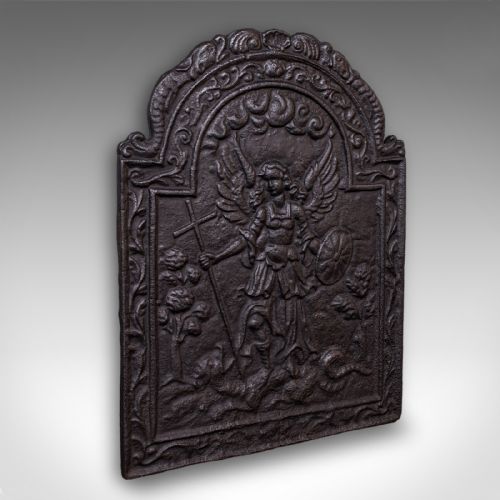
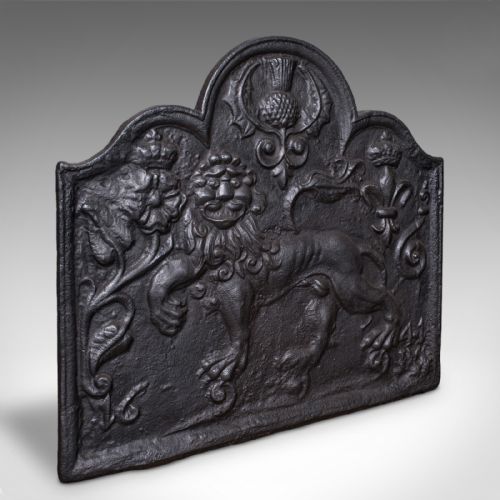
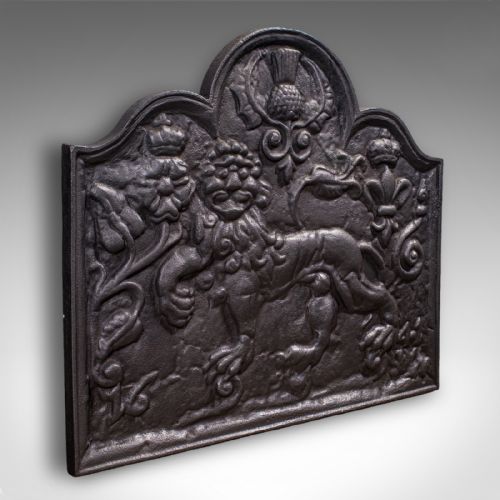
When you search for an antique iron fireplace back, you encounter heavy cast plates designed to sit against the rear wall of a hearth. These items serve both a practical function as heat reflectors and a decorative purpose within the chimney breast.
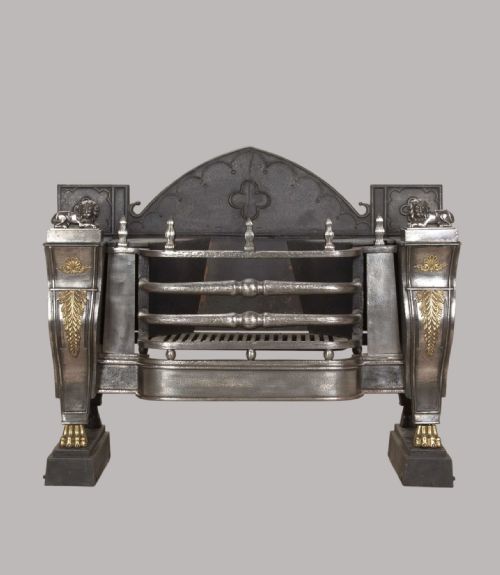
The pieces appearing here predominantly span the Victorian era and the nineteenth century, alongside Georgian examples and twentieth-century castings. Many take the form of flat or arched plates, while others integrate directly with fire baskets, grates, and andirons.
Moulders cast most specimens in English foundries, though continental pieces such as French arch top designs and German Black Forest work also surface. Decorative motifs draw heavily on revival styles, including Neoclassical, Carolean, Gothic, and heraldic themes.
How they were made
Foundries utilised heavy cast iron as the primary medium, pouring molten metal into sand or open-face moulds to achieve deep relief ornamentation. Wrought iron appears alongside cast elements in grates, fenders, and andirons, providing structural reinforcement where needed.
Brass accents occasionally supplement the ironwork on hob grates and fire baskets, adding contrasting metallic highlights to the hearth assembly. Makers worked the iron surfaces with simple finishing tools, leaving tactile textures characteristic of nineteenth-century foundry production.
Listings feature cast iron and wrought iron pieces spanning the Victorian period, nineteenth century, Georgian era, and nineteen-twenty.
What varies in quality
The crispness of the cast relief work determines the visual strength of the piece, separating finely detailed heraldic or figurative panels from simpler utilitarian plates. Deeper castings with well-defined edges display greater artistic ambition in revival styles such as the Carolean or French Baroque.
Substance and scale dictate the physical presence of the item, ranging from small auxiliary plates to very heavy, large fire backs paired with matching grates. The integration of auxiliary components like andirons and fenders elevates a simple heat plate into a complete hearth ensemble.
The Antique Iron Fireplace Back Glossary
- Fireback
- A heavy metal plate placed at the back of a fireplace to protect the wall and reflect heat forward into the room.
- Fire Grate
- An iron basket or frame that holds burning fuel elevated above the hearth floor to allow proper airflow.
- Andirons
- A pair of horizontal metal supports used to hold logs in an open fireplace, often styled to match the fireback.
- Hob Grate
- A fireplace grate featuring flat iron ledges on either side for keeping kettles or pots warm.
- Relief Casting
- A sculptural technique where figures and motifs project from the flat background plane of the iron plate.
Antique Iron Fireplace Back: Frequently Asked Questions
What is an antique iron fireplace back?
An antique iron fireplace back is a heavy cast metal plate designed to stand at the rear of an open hearth. It absorbs and radiates thermal energy back into the room.
Beyond heating utility, these plates shield the masonry brickwork from direct exposure to intense flames over decades of use.
How do I install a fireback?
Most firebacks simply stand upright against the back wall of the fireplace recess, supported by their own substantial weight and angled feet. Some setups incorporate integral legs or lean directly behind a matching fire basket.
Ensure the hearth floor is level and clear of debris before positioning the iron plate securely against the masonry.
Did they use firebacks for cooking?
While primarily intended for heating and wall protection, some period hearth arrangements positioned hooks or brackets near the fireback for culinary tasks. The heavy iron absorbed sustained heat suitable for keeping vessels warm.
Most domestic examples found today, however, focus purely on decorative room heating and architectural adornment.
How do I date a cast iron fireback?
Dating relies on stylistic clues within the relief moulding, such as Victorian heraldic emblems, Georgian symmetry, or Neoclassical revival motifs. Foundry techniques and the thickness of the cast plate also offer chronological indicators.
Many nineteenth-century pieces carry explicit period characteristics, while older examples display simpler, hand-modelled surface textures.