
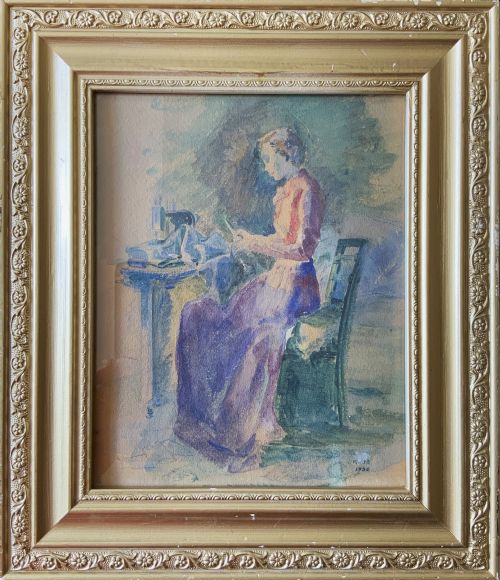


Antique Interior Watercolour
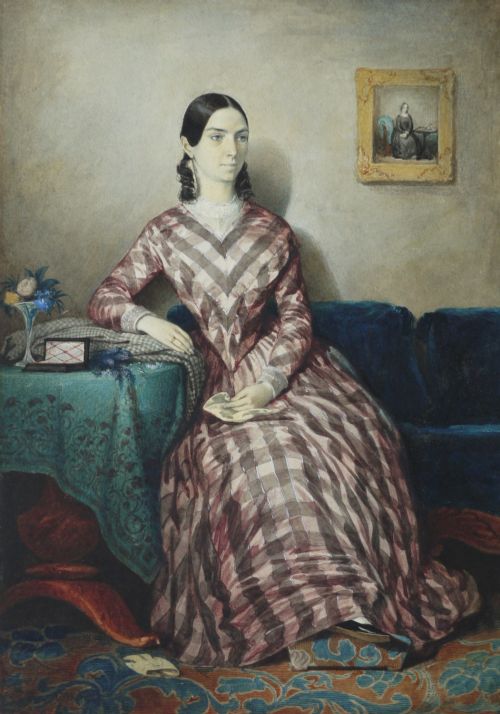
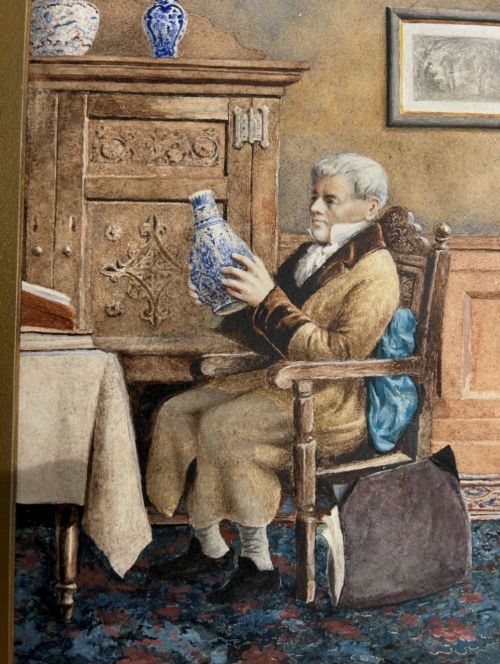
These antique interior watercolour works capture domestic rooms, grand halls and quiet corners with delicate washes on paper.
Antique Interior Watercolour
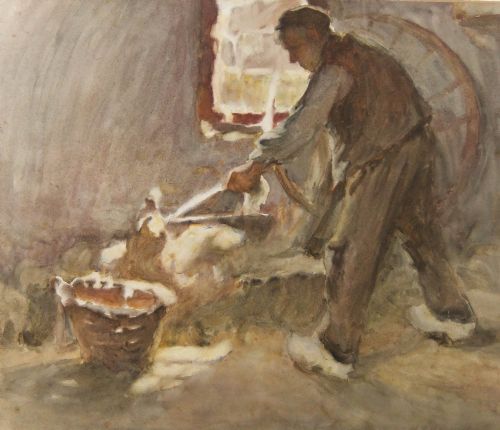
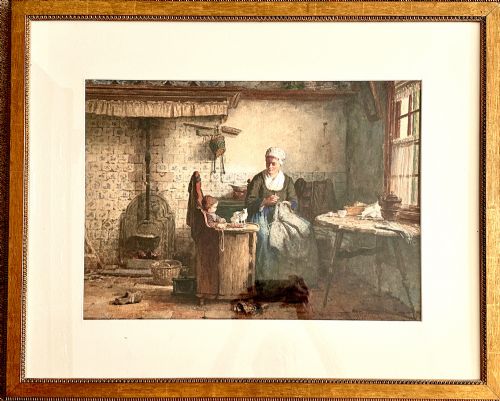
An antique interior watercolour presents domestic scenes, cottage parlours, grand long galleries and cathedral architecture recorded by artists from the nineteenth and early twentieth centuries. These paintings depict figures at ease, musicians, smithies and domestic studies rendered through the British Impressionist, Scottish School and Victorian traditions.
Buyers seeking this style encounter framed works on paper displaying rooms populated by figures or detailed architectural studies of historic interiors. The pieces range from naive depictions of domestic life with goldfish and dogs to large exhibition watercolours signed by recognised artists of the period.
Materials and Technique
Artists executed these works primarily using watercolour paint on paper supports, frequently augmented with ink, graphite and occasionally gold leaf for fine detail. Many pieces remain enclosed behind glass within period wooden frames that preserve the fragile pigment layers from atmospheric moisture.
Techniques varied from loose impressionistic washes characteristic of the Scottish School and British Impressionism to precise architectural draughtsmanship found in cathedral and interior design studies. Painters built up transparent layers of colour to capture natural light falling across furniture, chimneypieces and stone archways.
The archive demonstrates works spanning nineteenth-century Dutch realism to early twentieth-century Scottish schools.
Markers of Quality
Superior examples demonstrate confident brushwork, sophisticated handling of natural light within a room and strong compositional control over complex interior perspectives. The reputation of the artist, particularly members of societies such as the Royal Scottish Watercolourists, elevates the standing of a piece.
The degree of narrative detail and the preservation of the original paper support without significant fading or foxing distinguish finer works. Original framing and documented exhibition provenance further separate standard decorative watercolours from museum-grade collector pieces.
Henry Stacy Marks·Henry Silkstone Hopwood·Hendrik Valkenberg·James Hayllar·George Kilburne·Robert Eadie·Roland Batchelor·Leonardo Morello·Henry Spernon Tozer·John R Houston·Owen Bowen·Margaret Thompson·George Cattermole·K B Curtis·Dorofield Hardy·Charles James Barraud·Ernest Forbes·W H Sweet·James Shaw Crompton·F Stanfield·A McArthur·Arnold Willms
The Antique Interior Watercolour Glossary
- Watercolour
- A painting method in which the paints are made of pigments suspended in a water-based solution. The paper support remains partially visible to allow light to reflect through the transparent washes.
- Graphite
- A form of crystalline carbon used as a drawing material for preliminary sketches beneath the watercolour pigment. Artists utilised it to map out perspective lines and room architecture.
- Gold Leaf
- Gold beaten into extremely thin sheets and applied to a surface for decoration. It appears selectively on finer works to highlight decorative elements within the depicted interior.
- Chinoiserie Revival
- A decorative style reflecting European artistic imitation and appreciation of Chinese cultural traditions. It manifests in listings through specific interior design and lacquer cabinet watercolours.
- Archival
- Relating to the historical record of pieces previously sold and documented. It provides a benchmark for tracking maker attribution and period styles.
Antique Interior Watercolour: Frequently Asked Questions
What periods do these watercolours date from?
The works span the nineteenth and early twentieth centuries, encompassing Victorian, Edwardian and early twentieth-century modernist schools. Dates stretch from the early decades of the eighteen-hundreds through to the interwar period of the nineteen-thirties.
Most pieces align with late Victorian and Edwardian periods when interior genre painting reached widespread popularity among British and European artists.
How were these paintings displayed originally?
Owners typically hung these framed watercolours in drawing rooms, studies and long galleries alongside oil paintings and decorative mirrors. They served as personal records of domestic spaces or grand historic houses visited by the artist.
Because watercolour pigments are sensitive to direct sunlight, owners often placed them in shaded areas of a room or within hallways away from intense windows.
How do I care for an antique watercolour?
Protect the paper and pigments by keeping the artwork away from direct sunlight and damp environments. UV-filtering glass helps prevent the delicate watercolours from fading over time.
Ensure the frame remains properly sealed at the back to prevent dust and insects from reaching the paper surface within the mount.
What subjects appear most frequently in interior watercolours?
Common subjects include domestic family scenes such as mother and daughter interactions, fireside rests, dining table gatherings and musicians playing the piano. Architectural studies of cathedrals, church interiors and historic mansion rooms also feature prominently.
Artists frequently documented specific historic properties like Hatfield House and Dacre Castle, offering a record of period interior decoration.