




Brown Wood Interior Art
Brown wood interior art brings domestic rooms, stables and taverns of past centuries into focus through oil, watercolour and wood furniture.
Brown Wood Interior Art
When searching for brown wood interior art, buyers encounter a mix of oil paintings, watercolours, etchings and wooden furniture such as wardrobes and bureaux. These pieces span from the eighteenth century through the Victorian period and into the Art Deco era.
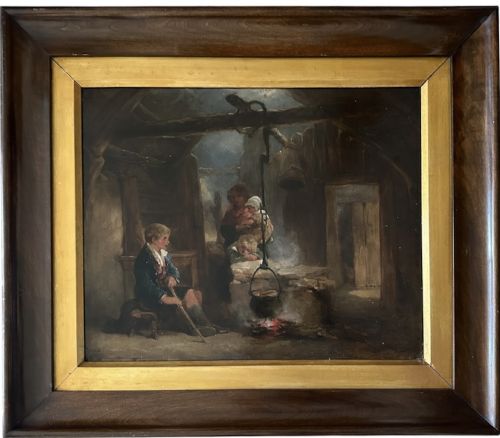
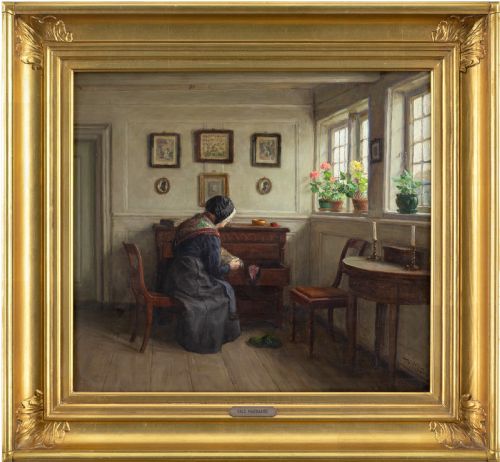
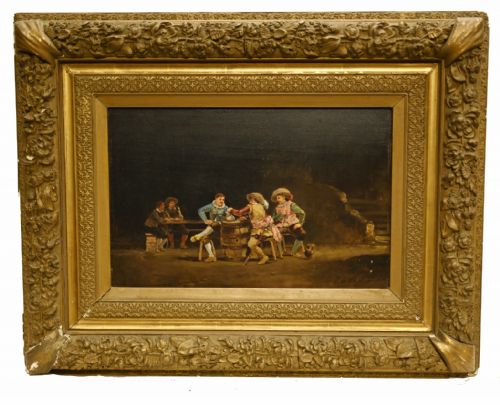
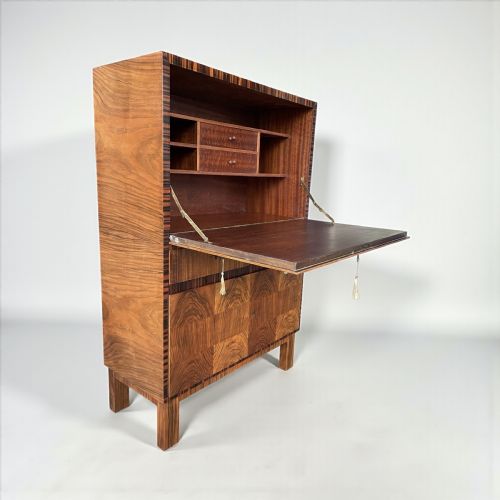
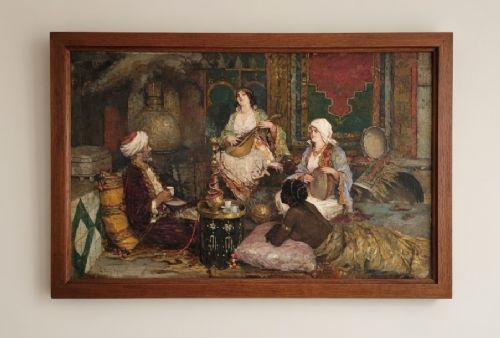
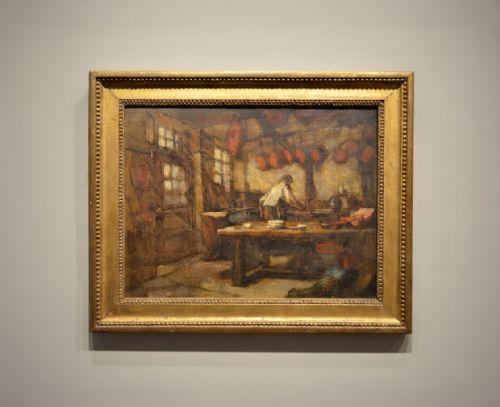
The painted works frequently depict domestic scenes, tavern gatherings and rectory rooms, often rendered by British, French, Dutch and Danish artists. Alongside these fine art paintings, the selection includes fitted wooden furniture featuring walnut and burr surfaces.
Most items on this page lean heavily into nineteenth-century realism, genre scenes and twentieth-century interpretations of interior spaces. Buyers select these artworks and furnishings to anchor a room with historic depth and narrative richness.
What varies in quality
Quality in these artworks rests upon the handling of light, perspective and psychological depth within the depicted interior space. Masterful brushwork and nuanced chiaroscuro separate accomplished realist compositions from simpler decorative sketches.
For furniture and frames, the quality is determined by the selection of timber veneers, such as walnut and burr, and the precision of the fitted joinery. The integrity of the original surface and the clarity of the artist's signature or attribution also govern value.
Listings combine 18th, 19th and early 20th-century periods, uniting oil paintings, watercolours, etchings, wardrobes and bureaux.
George Whitton Johnstone·Hendrik Valkenberg·Valdemar Magaard·Gabriel Puig Roda·Thomas Couture·Hans Temple·Théophile Emmanuel Duverger·Pauline Delacroix Garnier·Margaret Thompson
The Brown Wood Interior Art Glossary
- Chiaroscuro
- An artistic technique using strong contrasts between light and dark to give subjects volume and dramatic atmosphere. This approach frequently defines the tavern and cottage scenes seen in these listings.
- Genre Realism
- A style depicting subjects from everyday life, such as domestic chores, family gatherings or tavern leisure. It forms a cornerstone of the nineteenth-century paintings gathered here.
- Burr
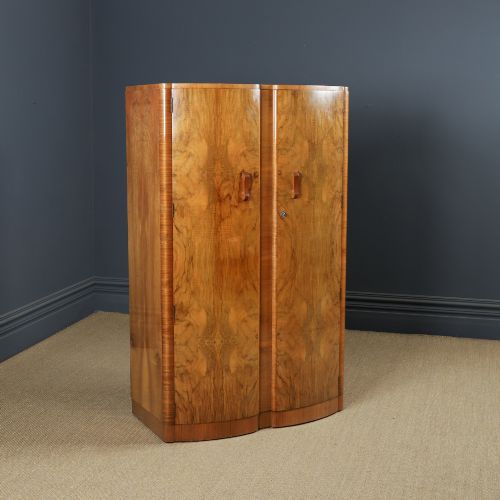
- A tree growth that produces intricate, highly figured wood grain prized for decorative veneer on furniture and picture frames. Walnut burr provides a rich tactile quality to Art Deco wardrobes.
- Etchings
- Prints produced by scratching a design through a protective ground on a metal plate, which is then acid-bit and inked. This method allows for delicate, highly detailed linework.
- Oil on Panel
- A painting created by applying oil pigments directly to a prepared wooden board rather than canvas. This solid support was favoured by Dutch, German and French masters for interior scenes.
Brown Wood Interior Art: Frequently Asked Questions
What periods do these interior artworks cover?
The listings span from the eighteenth century through the Victorian and Edwardian eras, extending into Art Deco pieces from the 1930s. This timeline captures shifting tastes in both domestic furnishing and realist painting.
Earlier works lean towards Dutch and German realism, while later nineteenth-century pieces explore British and French domestic life.
What surfaces were used for these paintings?
Artists painted on a variety of grounds, including canvas, wooden panels, paper, board and tin. Oil and watercolour were the primary mediums chosen to render these interior scenes.
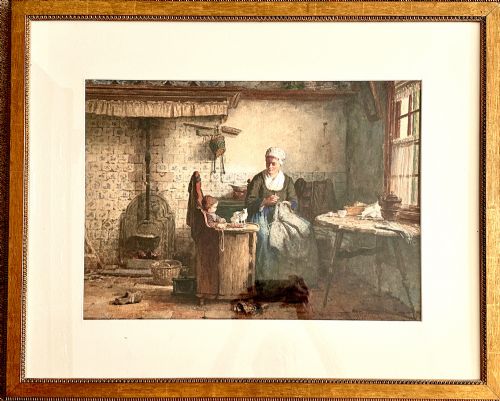
Panel paintings often feature chiaroscuro lighting, whereas watercolours capture lighter domestic moments.
How do I identify Art Deco furniture here?
Art Deco pieces in this selection, such as wardrobes and bureaux, typically date around 1930 and make prominent use of walnut. They combine clean architectural lines with fitted interiors and bow-front designs.
These items reflect a transition towards streamlined modernism while retaining traditional woodworking craftsmanship.
What kind of scenes are depicted?
The artworks showcase a range of interior settings, from quiet rectory rooms and drawing rooms to rustic cottages and lively taverns. Figures include spinners, musketeers, family groups and children.
These compositions serve as windows into historical daily life and social customs across Europe.