


Antique Inlaid Oak Trunk
An antique inlaid oak trunk is a sturdy storage piece combining timber with decorative marquetry, prized for centuries of practical service and craftsmanship.
Antique Inlaid Oak Trunk
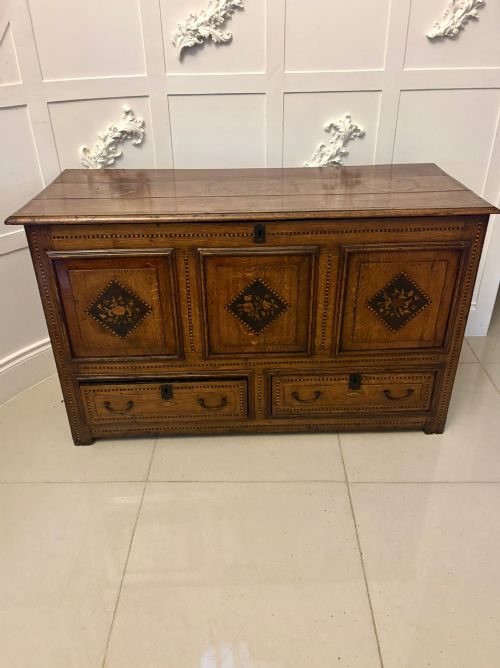
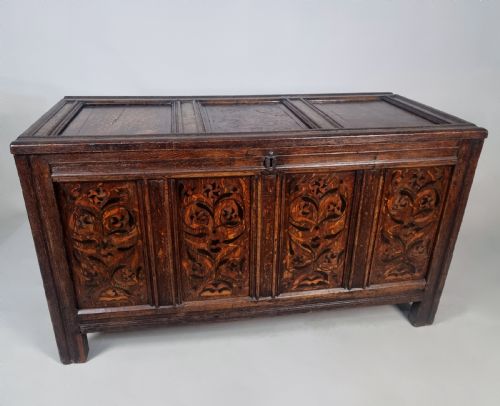
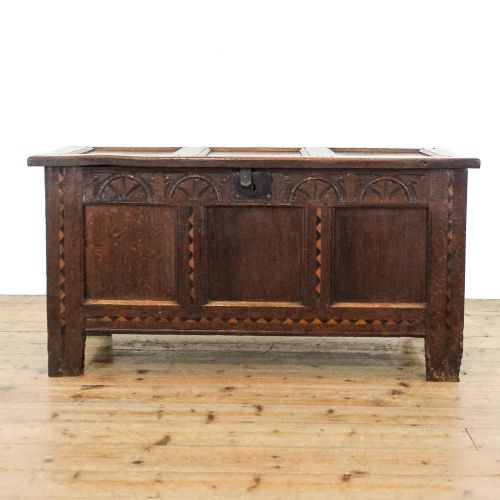
An antique inlaid oak trunk encompasses coffers, mule chests, and storage boxes originating from the sixteenth century through the Victorian era. These sturdy receptacles served households for storing linens, documents, and valuables before modern wardrobes existed.
The selection here draws heavily upon seventeenth century Jacobean examples alongside eighteenth century Georgian and Welsh vernacular pieces. Buyers frequently encounter robust coffers featuring panelled construction and contrasting wood details.
Regional variations appear across the inventory, ranging from Lancashire pieces to Welsh coffer bach miniatures. Each format reflects the domestic storage needs and local cabinet-making traditions of its period.
Materials and construction
Cabinet makers built these trunks using solid oak frames augmented by fruitwood inlay, marquetry, and mahogany details. Iron hinges and brass fittings provided functional reinforcement to lids and locking mechanisms.
Surface decoration combined traditional carving with contrasting wood inlay techniques to accentuate panels and friezes. Artisans utilised natural timber variations to create geometric and floral motifs across the front elevations.
The listings span from the sixteenth century through the Victorian era, utilising oak, mahogany, iron, brass, and fruitwood inlay.
Judging quality and character
Quality rests upon the crispness of the carving, the precision of the wood inlay, and the integrity of the original oak timber. Superior examples retain their early hinges, boarded lids, and minimal structural alterations.
The complexity of the marquetry and the balance of proportions distinguish standard domestic boxes from exceptional workshop commissions. Surface patination accumulated over centuries adds depth that mechanical cleaning diminishes.
The Antique Inlaid Oak Trunk Glossary
- Coffer
- A heavy timber storage chest with a hinged lid, traditionally used for safekeeping valuables. These foundational pieces often display period carving and panel construction.
- Mule chest
- A storage trunk featuring one or more drawers beneath the main lift-top compartment. This form bridges the evolution from simple coffers to modern drawer chests.
- Marquetry
- The art of applying decorative veneer pieces in wood to form intricate patterns. Artisans used contrasting timbers like fruitwood to achieve pictorial designs.
- Jacobean
- The stylistic period spanning the early seventeenth century, characterised by rigid symmetry and geometric panelling. Furniture from this era displays robust oak construction.
Antique Inlaid Oak Trunk: Frequently Asked Questions
What is a coffer bach?
A coffer bach is a traditional Welsh miniature chest designed for storing precious items or documents. These small boxes replicate the exact joinery and inlay work of larger trunks.
Craftsmen built them with the same attention to detail as full-sized furniture, making them desirable decorative objects today.
How do I date an oak trunk?
Dating relies on examining construction methods, tool marks, hinge types, and stylistic motifs. Seventeenth-century examples often display hand-split oak boards and pegged frame joints.
Later pieces from the Georgian and Victorian periods introduce machine-sawn timber and different locking mechanisms that help narrow the timeline.
Were these trunks used for blankets?
Families utilised these sturdy chests for storing household linens, woollen blankets, and valuable clothing. The dense oak construction helped protect textiles from dampness and pests.
Over generations, their role evolved from utilitarian storage to prominent display furniture in domestic hallways and living spaces.
What is the difference between a coffer and a mule chest?
A standard coffer consists of a simple compartment accessed entirely through the top lid. A mule chest incorporates one or more drawers beneath the main storage well.
This addition of drawer space appeared as domestic storage needs shifted toward easier access for folded garments.