
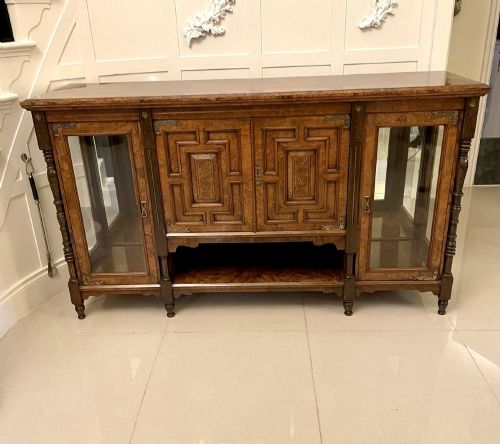
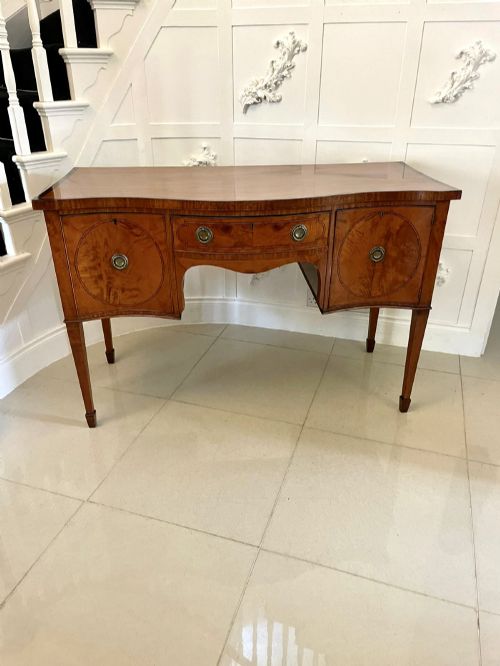
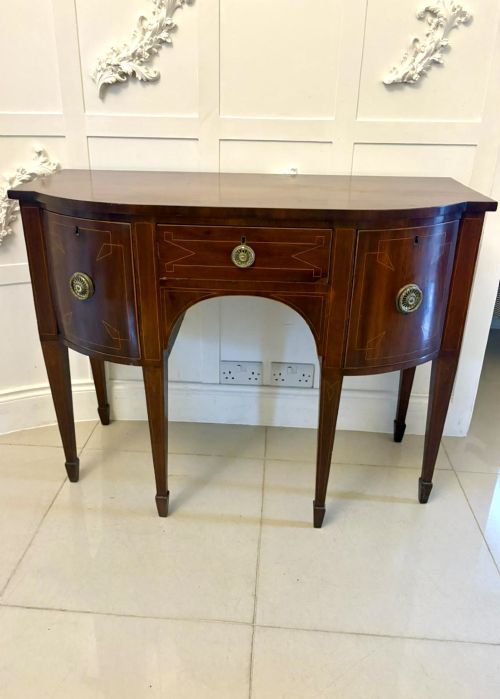
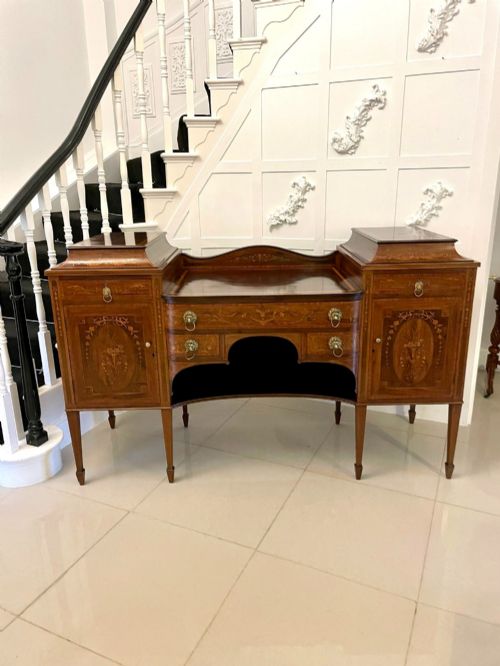
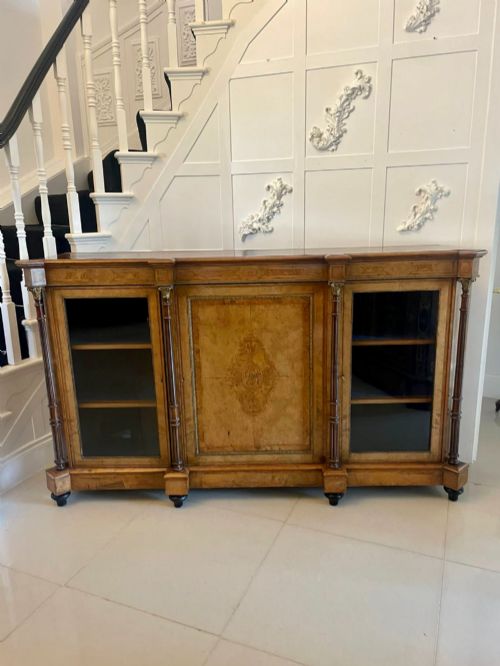
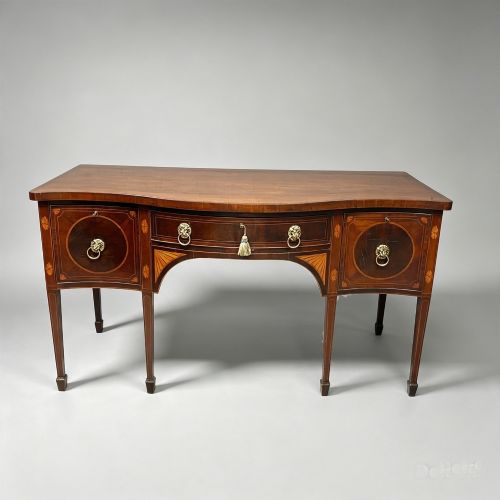
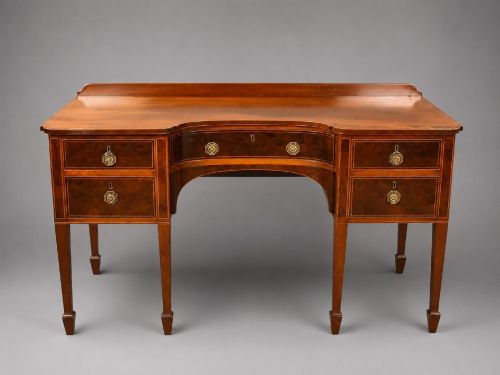
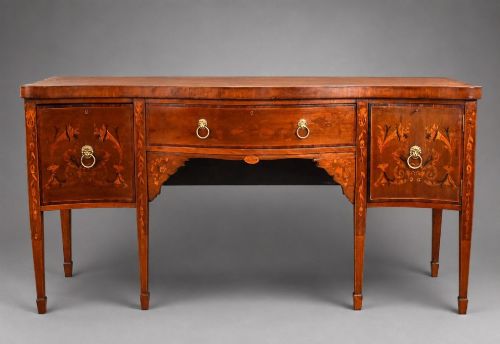
Antique Inlaid Dining Sideboard
An antique inlaid dining sideboard anchors a formal dining room with disciplined storage and polished timber.
Antique Inlaid Dining Sideboard
An antique inlaid dining sideboard provides substantial storage and serving space for dining rooms across several centuries of British cabinet-making. When searching for an antique inlaid dining sideboard, buyers encounter forms ranging from George III and Regency periods to later Victorian and Edwardian revivals.
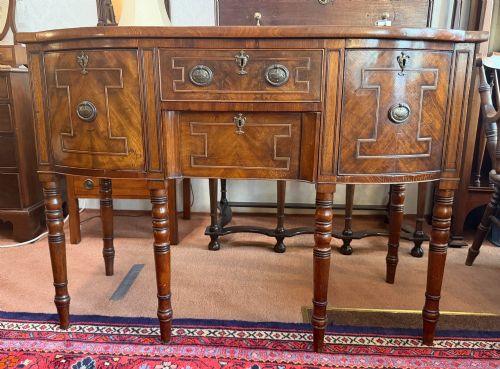
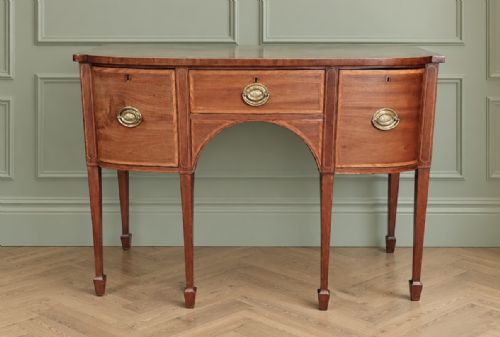
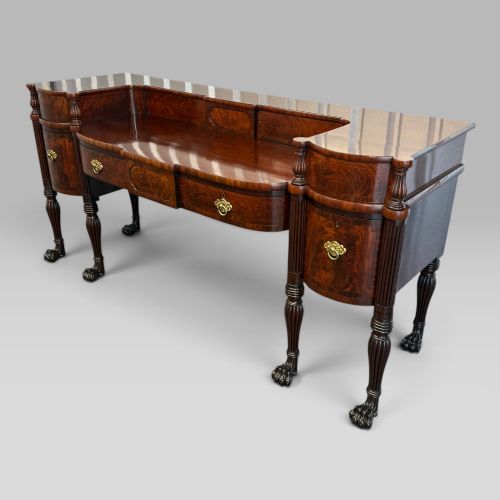
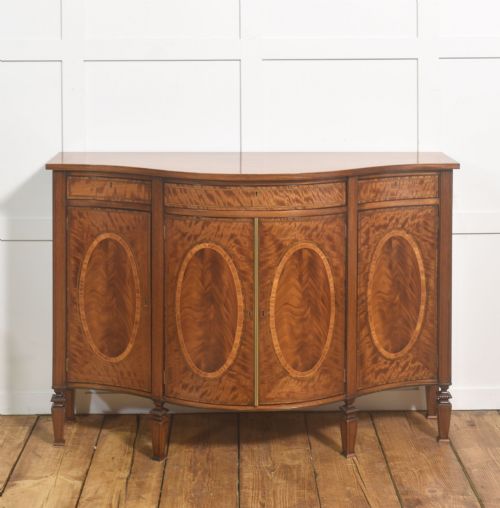
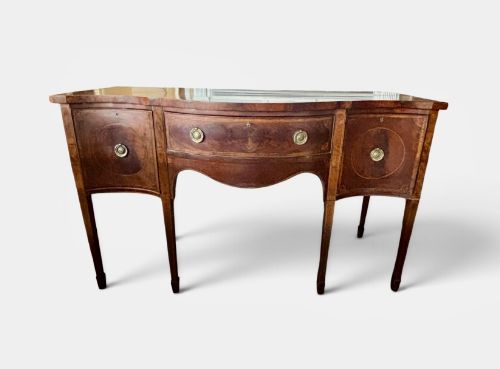
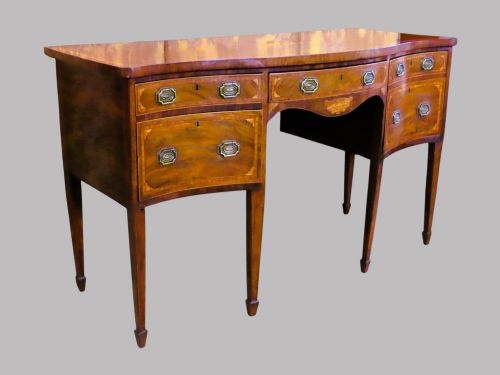
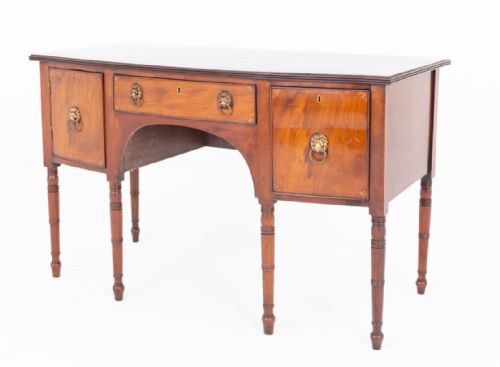
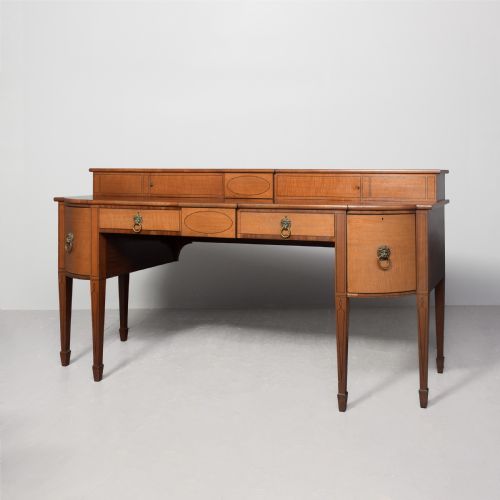
The pieces on this page include serpentine fronts, bow-fronts, and breakfront profiles executed in solid and figured timbers. Makers incorporated contrasting woods and detailed marquetry to decorate the carcases of these large dining room servers.
Georgian and Regency examples sit alongside Sheraton Revival interpretations from the early twentieth century. These sideboards function as both decorative focal points and practical storage units for dining silver, linen, and glassware.
Materials and construction methods
Cabinet-makers constructed these sideboards primarily using solid and veneered mahogany, often selecting flame mahogany or figured grain for the primary surfaces. Workshops applied satinwood, boxwood, and ebony as delicate stringing and detailed marquetry inlays to define drawer fronts and borders.
Craftsmen shaped the timber into curved serpentine and bow-front profiles requiring precise joinery. Brass fittings, lion paw feet, and mother of pearl details completed the construction of these substantial dining room pieces.
Listings feature mahogany, satinwood, burr walnut, and boxwood across Georgian, Regency, Victorian, and Edwardian periods.
Distinctions in construction and design
The fineness of the timber figure and the complexity of the inlay work separate standard production from superior pieces. Selection of figured mahogany and crisply executed satinwood inlay indicate higher workshop standards during manufacture.
Structural complexity such as serpentine fronts, breakfront carcases, and integrated stage-backs require advanced carpentry skills. The retention of original brass hardware and stable drawer construction further distinguish the finest examples.
Hewetsons London
The Antique Inlaid Dining Sideboard Glossary
- Serpentine front
- A furniture front curved with a convex centre flanked by concave wings. This sophisticated shape demands precise carpentry.
- Bow-front
- A convex curved front profile popular in Georgian and revival dining furniture. It softens the linear appearance of a large sideboard.
- Marquetry
- Decorative veneer patterns assembled from various coloured woods to form pictorial or geometric designs. Craftsmen apply these to drawer fronts and top panels.
- Crossbanding
- A border strip of veneer laid around the edges of a panel with the grain running perpendicular to the centre. This frames the primary timber.
- Stringing
- A thin, narrow line of contrasting wood inlaid into grooves on furniture surfaces. It outlines drawers and tabletops.
Antique Inlaid Dining Sideboard: Frequently Asked Questions
How do I date a sideboard?
Dating relies on timber selection, handle styles, and construction techniques visible in the carcase and drawers.
Georgian pieces show different proportions and inlay motifs compared to Edwardian Sheraton Revival productions.
Where were sideboards placed?
Dining rooms accommodated these large serving tables against a main wall during meals.
They held food, silver, and ceramics before staff transferred items to the dining table.
What is Sheraton Revival furniture?
Sheraton Revival pieces replicate the light neoclassical designs of the eighteenth century during the late Victorian and Edwardian eras.
These later interpretations frequently utilise satinwood and delicate marquetry inlay.