
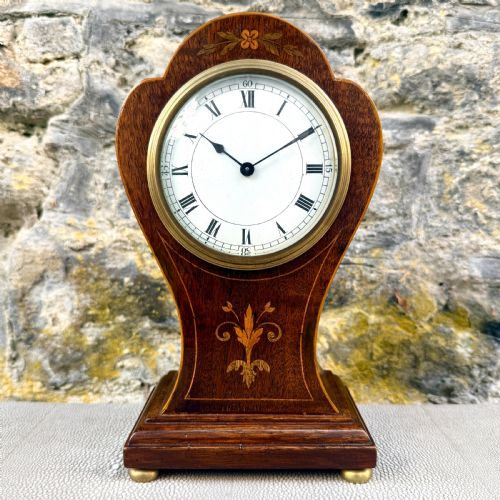
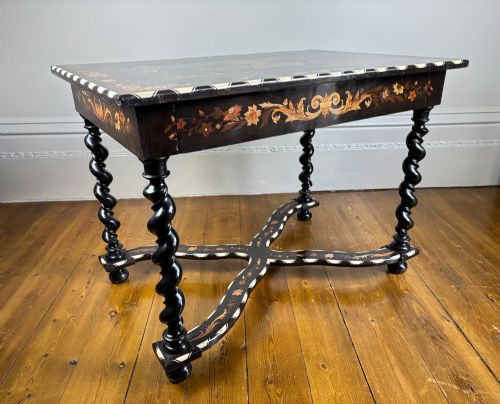
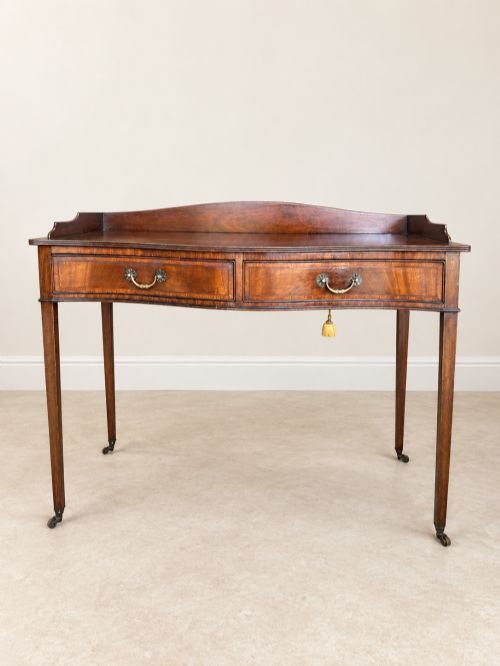
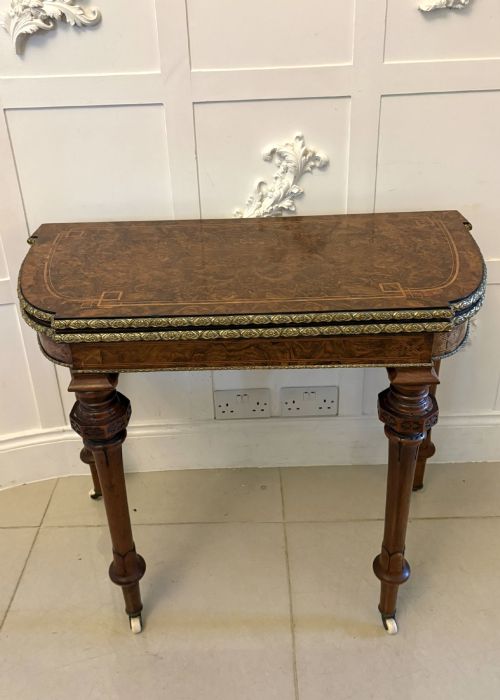
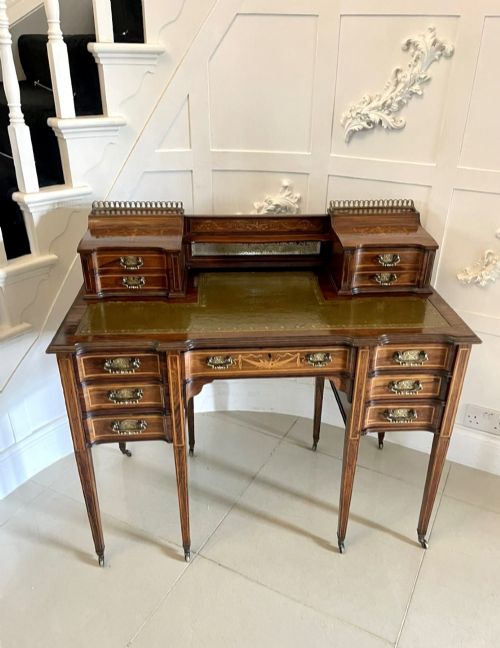
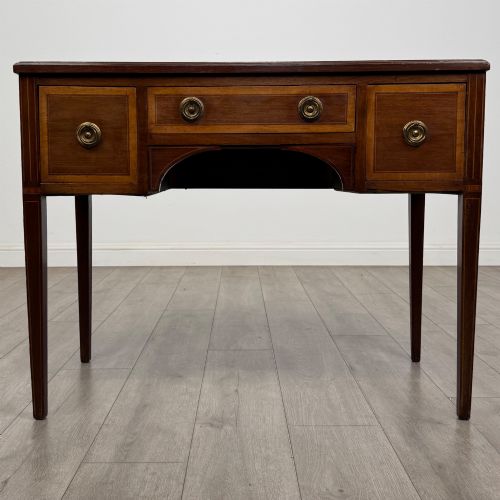
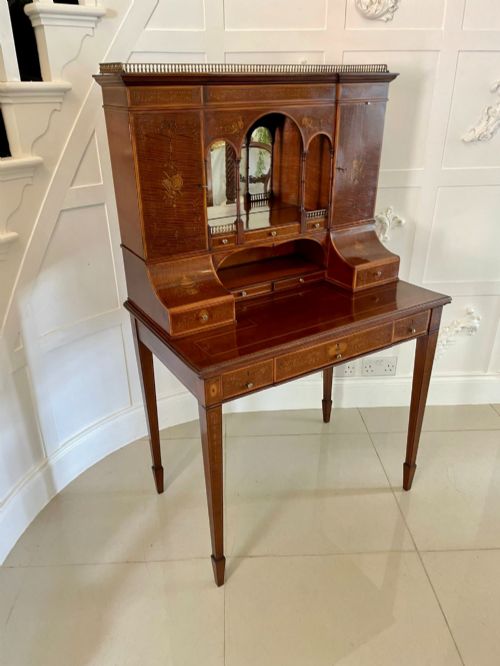
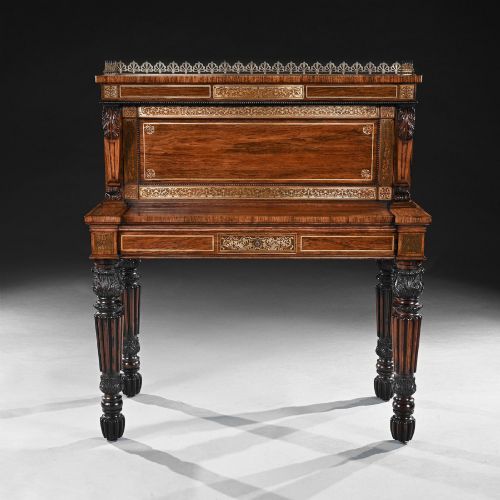
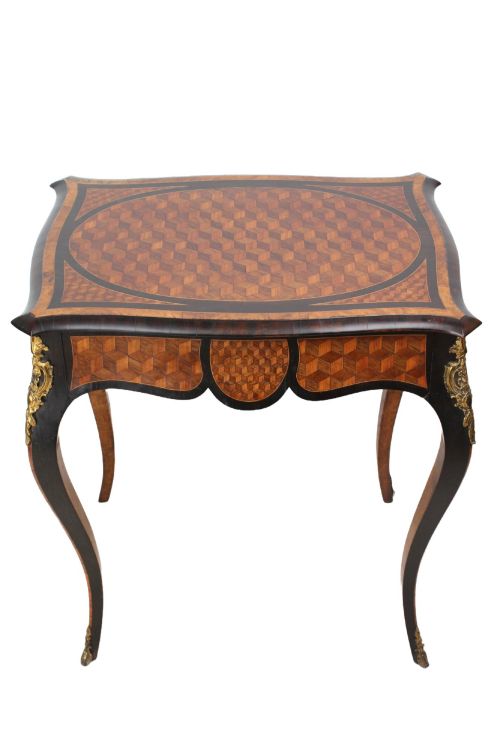
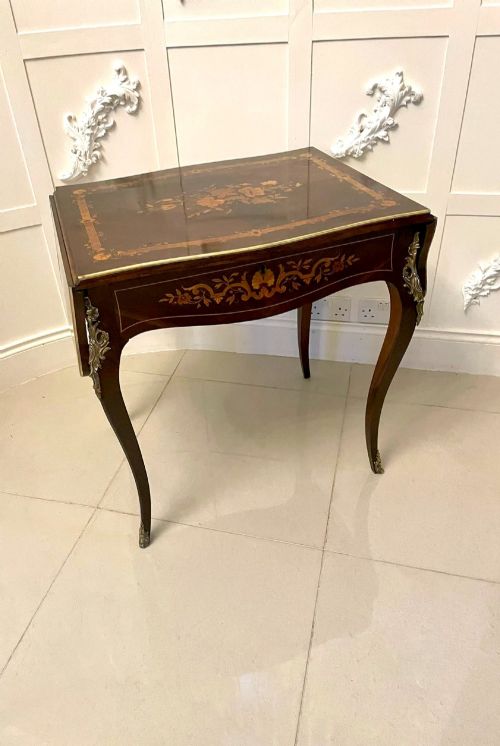
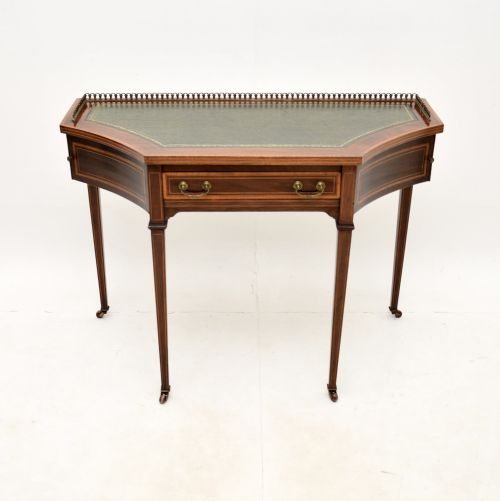
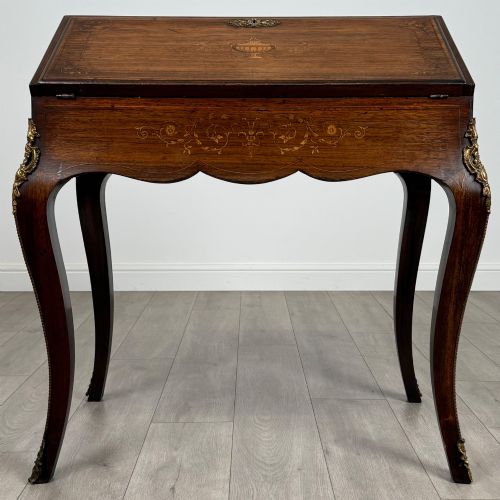

Antique Inlaid Desk Table
When you search for an antique inlaid desk table, you find a surface combining practicality with precise decorative woodwork from the Georgian, Victorian, and Edwardian eras.
Antique Inlaid Desk Table
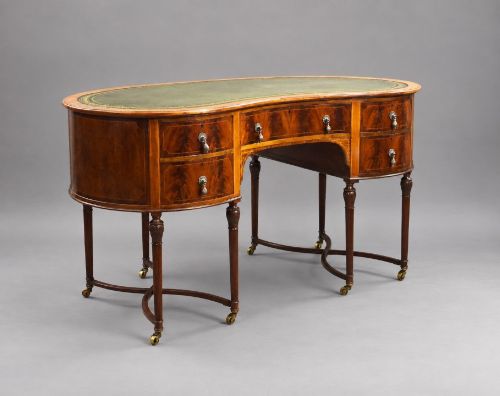
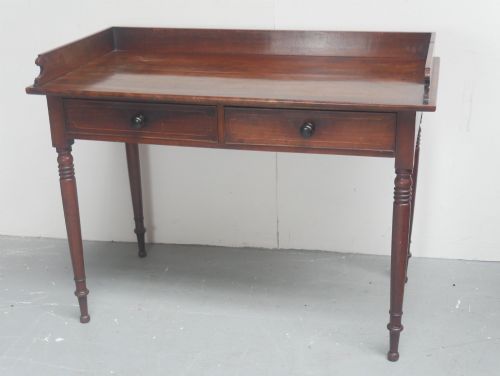
An antique inlaid desk table encompasses a variety of writing surfaces, from compact ladies' tables and kidney-shaped forms to larger pedestal desks and bureau plats. The evidence shows that Edwardian mahogany pieces and Victorian rosewood or walnut variations appear most frequently in this category.
Makers often drew upon Georgian proportions or Louis XV revival styles, incorporating satinwood, brass, and marquetry into freestanding centre tables and writing desks. These pieces served domestic libraries, drawing rooms, and studies where both writing utility and decorative presence mattered.
The periods represented span the late eighteenth century through the early twentieth century, with distinct shifts from restrained Sheraton satinwood designs to elaborate French-influenced marquetry. Buyers encounter both English cabinetwork and continental bureau formats among the current and past stock.
Materials and construction
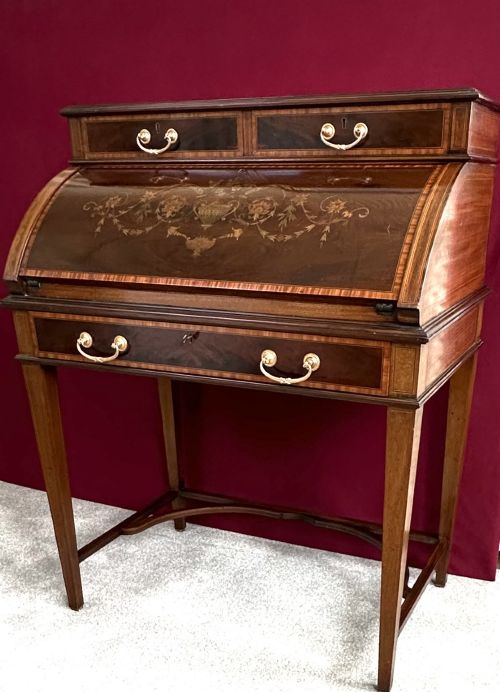
Cabinetmakers constructed these tables using a foundation of solid mahogany, walnut, or oak, overlaid with rich decorative veneers such as satinwood, rosewood, and kingwood. Inlayers cut contrasting timbers, mother-of-pearl, ivory, or brass into precise recesses to create floral or geometric motifs across the tops and drawer fronts.
French workshops favored complex marquetry and parquetry patterns combined with ormolu mounts, whilst English makers frequently utilised satinwood banding and stringing to frame mahogany or burr walnut panels. Secondary timbers like oak and pine lined the interior drawers, showing hand-cut dovetails appropriate to each period.
Listings feature mahogany, rosewood, satinwood, and walnut substrates enhanced with brass, ivory, and ormolu details across multiple centuries.
Judging execution and preservation
Quality rests upon the crispness of the inlay work and the integrity of the timber beneath, where tight joints and well-figured grain distinguish superior workshop output. Tables featuring signed maker plaques or attribution to established firms exhibit finer hand-carved details and more substantial brass or bronze hardware.
The preservation of the original polish, leather writing inserts, and delicate stringing dictates the desirability of a piece. Finer examples retain their original handles and fitted internal compartments without extensive timber replacement or lifting veneers.
Gillows Oxford Street Workshop·JAS Shoolbred·Edwards and Roberts·S and H Jewell of London·Jackson and Graham
The Antique Inlaid Desk Table Glossary
- Marquetry
- A decorative technique where small pieces of veneer are assembled to form pictorial or geometric designs on a timber surface. This differs from simpler inlays by covering the entire top with a cohesive picture.
- Parquetry
- Geometric wood-mosaic work used for flooring and furniture tops, creating repeating patterns like cubes or chequers. Makers applied this technique extensively on French bureau plat tables.
- Satinwood
- A durable, lustrous timber native to India and Ceylon with a golden-yellow sheen used heavily during the Sheraton and Edwardian periods. It provided a bright contrast against darker mahogany structures.
- Bureau Plat
- A freestanding writing table with drawers in the frieze, typically finished on all sides so it could sit in the centre of a room. French cabinetmakers popularized this form during the nineteenth century.
- Stringing
- Thin lines of contrasting wood or light-colored inlay embedded into the surface of a panel to create borders. This linear detail characterises much of the English cabinetwork seen here.
Antique Inlaid Desk Table: Frequently Asked Questions
What is a bureau plat?
A bureau plat is a flat-topped writing table featuring drawers along the frieze, designed specifically to stand free in the middle of a room rather than against a wall.
These pieces typically display finished backs and sophisticated parquetry or leather writing surfaces, reflecting their status use in grand libraries and studies.
How do I identify Edwardian pieces?
Edwardian examples, dating from around 1900 to 1910, frequently utilise light mahogany or satinwood with delicate stringing and symmetrical floral marquetry motifs.
They often appear as kidney-shaped writing desks or envelope card tables, showing lighter proportions than their heavy Victorian predecessors.
Where were these tables used?
These tables served as functional writing surfaces in private drawing rooms, libraries, boudoirs, and home offices throughout the nineteenth and early twentieth centuries.
Many smaller variants were designed for women's correspondence or as multi-functional dressing and writing furniture.
What distinguishes marquetry from inlay?
Marquetry involves cutting whole pictorial or geometric veneers as a single puzzle-like sheet before gluing them onto the carcase, covering the entire top surface.
Inlay traditionally refers to cutting recesses into a solid wood base and inserting contrasting materials like brass, mother-of-pearl, or individual wood pieces into those specific channels.