


Antique Playing Card Table
An antique playing card table is a folding timber piece designed for parlour games, offering clever folding leaves and fitted storage for social evenings.
Antique Playing Card Table
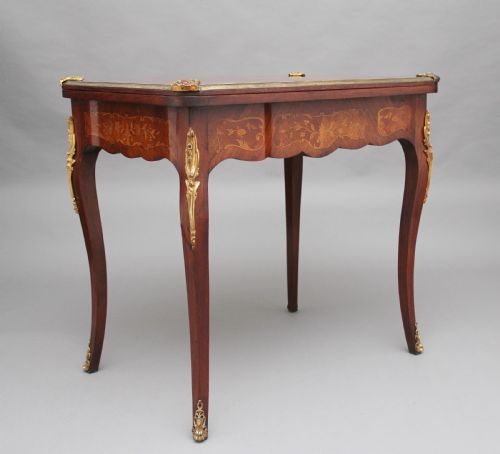
When you search for an antique playing card table, you encounter timber furniture designed for evening entertainment across the nineteenth and early twentieth centuries. The versions most frequently met on this page include fold-over console designs in mahogany, walnut, and burr walnut.
Makers produced these tables during the Regency, Victorian, and Edwardian eras to adapt quickly from a side table to a flat playing surface. Many incorporate internal compartments lined in baize or leather to hold cards and counters.
How they were made
Cabinet makers built these tables primarily from dense timbers such as mahogany, walnut, and rosewood, often applying fine veneers like burr walnut or kingwood to the main surfaces. They utilised folding top leaves supported by swing legs or pivoting mechanisms to bear the weight during play.
Working surfaces typically feature inset panels of wool baize or leather to cushion the cards, while specific examples incorporate subtle inlay work or brass mounts to accentuate the edges and borders.
Listings feature walnut, mahogany, and rosewood across Victorian, Edwardian, and Regency periods.
What varies in quality
The standard of an antique playing card table rests on the selection of timber veneers and the precision of the folding mechanism. Superior examples display carefully matched grain patterns across the fold-over top and rigid, smooth joints that operate without binding.
Lesser pieces rely on simpler construction methods with plain timber surfaces and looser pivot joints. The choice of interior lining materials, from thick baize to fitted leather, also signals the original grade of the piece.
The Antique Playing Card Table Glossary
- Fold-over top
- A hinged table surface that opens out to double its area for games. It typically rests on a rotating or swinging leg to support the extended leaf.
- Baize
- A coarse woollen fabric traditionally used to line the playing surfaces of gaming tables. It provides a flat, soft texture that prevents cards from sliding.
- Burr walnut
- A prized timber harvested from the gnarled growths of walnut trees, displaying intricate swirling grain patterns. Cabinet makers used its decorative veneer on prominent table tops.
- Console table
- A wall-mounted or side table designed to stand against a flat surface. Many card tables double as console tables when closed.
- Inlay
- A technique where pieces of contrasting wood, metal, or shell are inserted into depressions in the base timber to create decorative patterns.
Antique Playing Card Table: Frequently Asked Questions
How do I use an antique card table today?
These tables function well as console or side tables against a living room wall when closed. Opening the leaf reveals a useful surface for board games, writing, or serving drinks during gatherings.
The sturdy folding mechanism allows the table to adapt quickly to your daily needs without dominating the room. Placing coasters on the baize protects the historic fabric from moisture damage.
What woods were used for these tables?
Cabinet makers relied heavily on mahogany, walnut, and rosewood for the primary frames and legs. Burr walnut and kingwood veneers appeared frequently on the top surfaces to provide decorative contrast.
Secondary woods like pine or oak often formed the hidden internal structures and framing elements. Brass fixtures and leather or baize inserts completed the construction.
How can I tell Victorian from Regency tables?
Regency tables, dating from the early nineteenth century, typically feature cleaner classical lines, rosewood timbers, and brass inlay or lion paw feet. Victorian examples tend to be heavier, utilising mahogany or burr walnut with more ornate carved details.
Edwardian interpretations later revived lighter proportions and delicate satinwood or mahogany styling. Examining the leg turnings and timber grain helps place the piece within its correct era.
Do all these tables have storage compartments?
Many examples include a shallow well concealed beneath the folding top to hold playing cards, counters, and dice. This compartment remains hidden from view until the top leaf is lifted and swung open.
Simpler drop-leaf or console designs omit the internal well in favour of a purely flat folding surface. The presence of storage depends largely on the specific maker and the intended use for cards or chess.