





Antique Inlaid Corner Unit
An antique inlaid corner unit tucks neatly into disused angles, turning awkward junctions into displays of rich timber and fine joinery.
Antique Inlaid Corner Unit
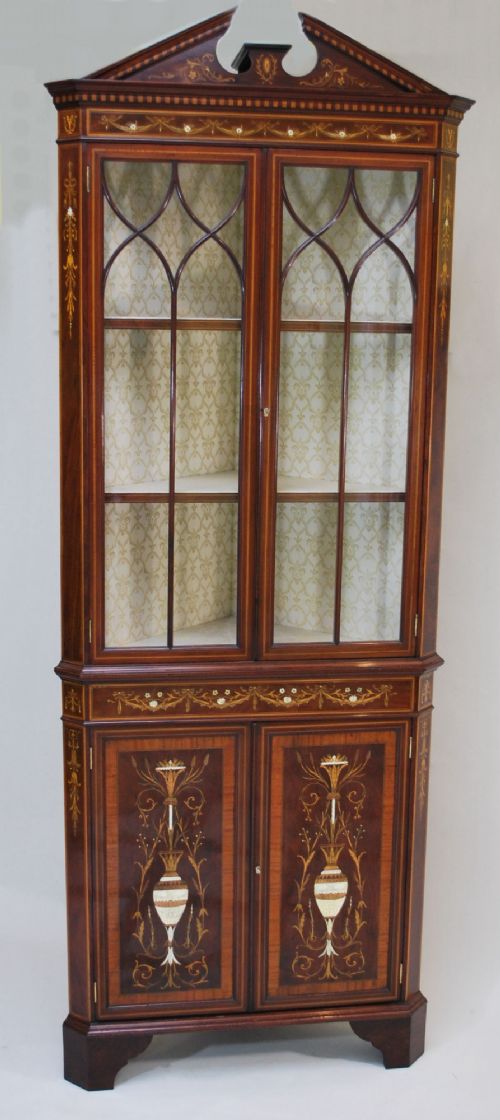
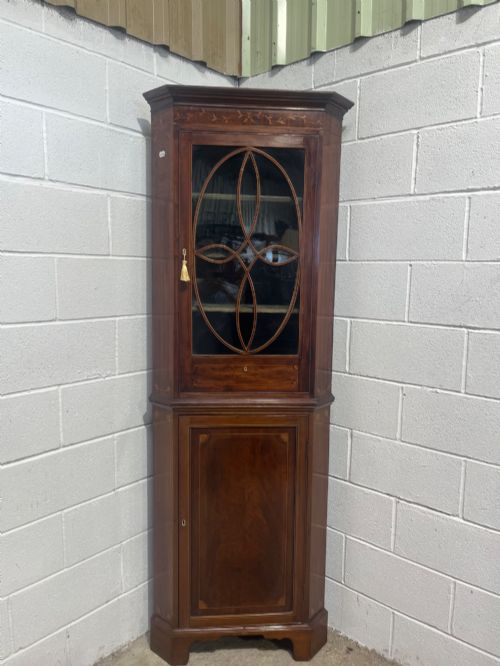
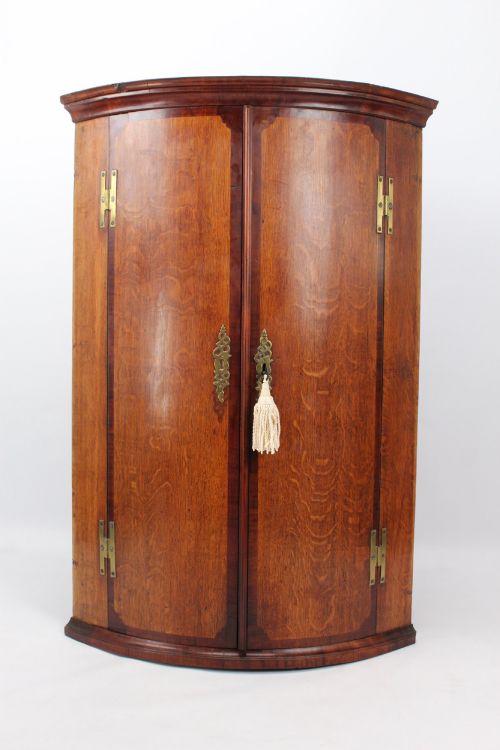
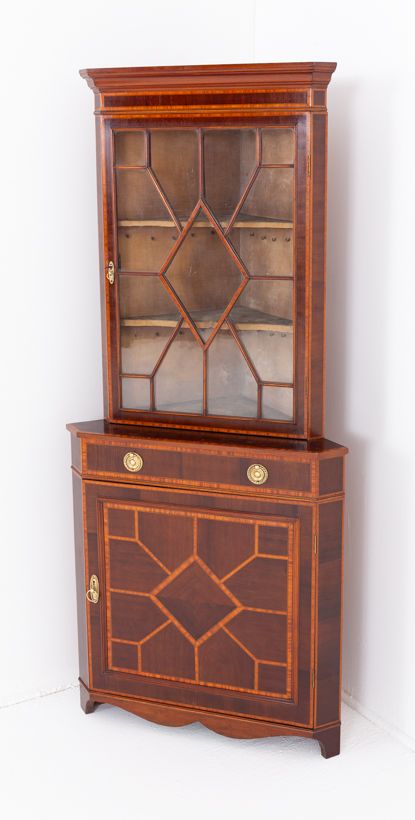
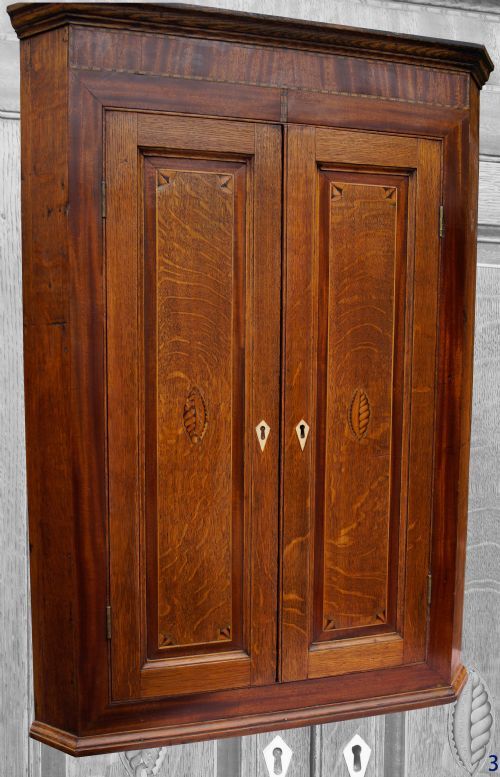
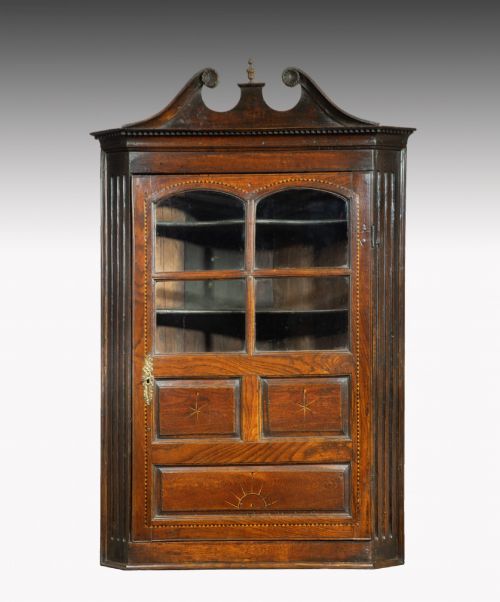
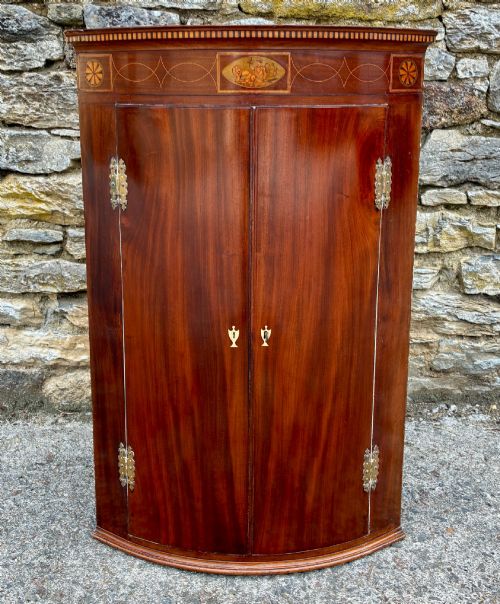
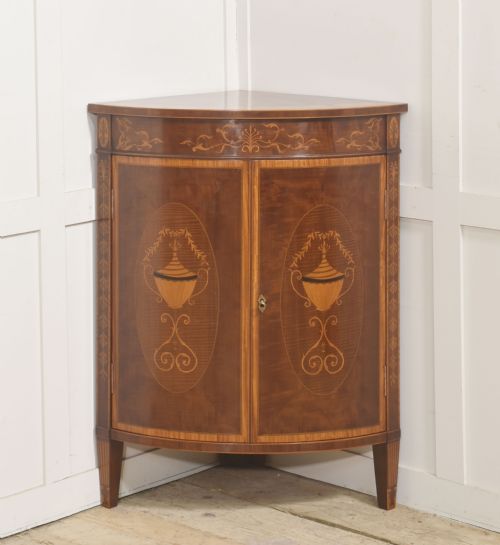
An antique inlaid corner unit encompasses hanging wall cupboards, floor-standing display cabinets, and open tier whatnots designed to fit room angles. The selections span Georgian oak and mahogany designs alongside Edwardian Sheraton Revival pieces and Victorian burr walnut examples.
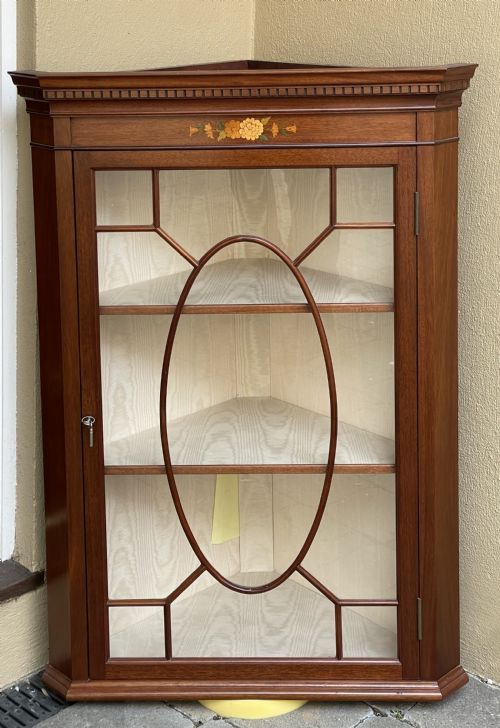
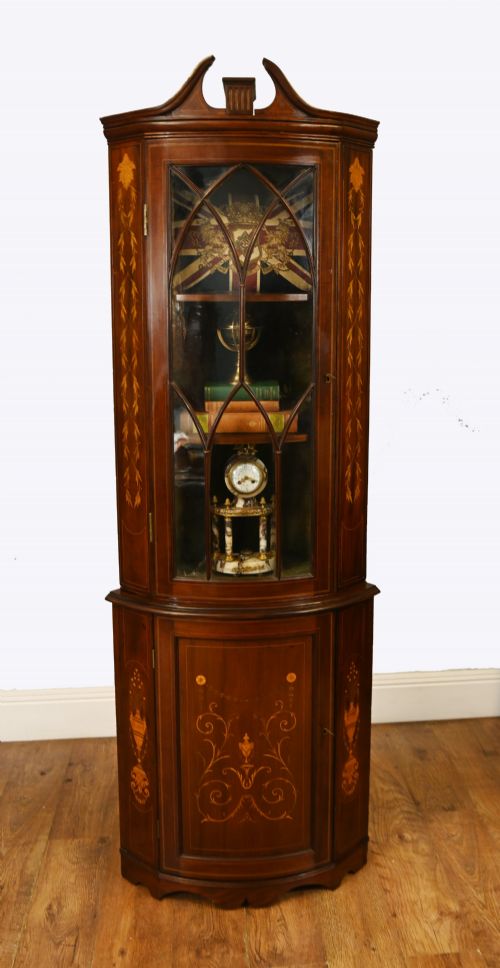
Most variations meet the eye as mahogany cabinets with glazed doors or solid panelled fronts, accented by contrasting wood details. Buyers frequently encounter Edwardian standing models and Georgian hanging cupboards that make efficient use of domestic space.
Origins stretch from eighteenth-century workshops to early twentieth-century factories, incorporating regional British cabinet-making traditions and specialised Sorrento olive wood production. Each iteration reflects the prevailing taste of its period for disciplined geometry combined with decorative surface detail.
Materials and Technique
Carinthian cabinet-makers built carcasses primarily in mahogany, oak, and walnut, selecting durable timbers capable of supporting heavy internal shelving. Secondary woods like pine frequently appear in structural carcases and backboards.
Decoration relies on precise inlay and marquetry techniques, integrating satinwood, boxwood, and contrasting veneers into geometric borders or floral motifs. Brass hardware, including butterfly hinges and escutcheons, secures doors and completes the construction.
Glazed display doors appear frequently alongside solid panelled cupboards and open multi-tiered whatnots.
Assessing the Craft
Quality reveals itself in the crispness of the cabinet-maker's joinery, particularly where the angled sides meet at the rear rebate and vertical wall edge. Superior pieces maintain tight dovetail joints and seamless door alignments without relying on heavy fillers.
The sophistication of the timber selection and inlay work separates standard utility pieces from high-status commissions. Finely figured mahogany or burr walnut paired with delicate boxwood stringing indicates a more costly original workshop production.
Edwards And Roberts
The Antique Inlaid Corner Unit Glossary
- Bow front
- A cabinet door or carcass curving outward in a convex arc. This shape gained popularity during the Georgian period to soften sharp angles.
- Marquetry
- The art of applying decorative veneer pieces onto a structural surface to form pictures or ornamental patterns. Craftsmen use varied coloured woods to create pictorial depth.
- Whatnot
- An open set of tiered shelves used for displaying ornaments and small objects. These pieces emerged in the Victorian and Edwardian eras.
- Stringing
- Thin lines of contrasting wood inlaid into channels cut into the main timber surface. It defines panels and edges on Sheraton Revival furniture.
- Escutcheon
- A protective plate surrounding a keyhole, usually fashioned from brass. It prevents the wood surrounding the lock from wearing down.
Antique Inlaid Corner Unit: Frequently Asked Questions
Where should I place a corner unit?
These pieces suit dead angles in dining rooms, hallways, or drawing rooms where standard rectangular furniture blocks traffic flow.
Wall-hanging versions mount above sideboards or desks, while floor-standing models anchor empty architectural corners.
How do I secure a hanging cupboard?
Hanging cupboards require sturdy fixings screwed directly into wall studs or masonry using appropriate brackets.
Because antique timber and glass carry significant weight, relying solely on plasterboard anchors risks pulling the cabinet from the wall.
Can these cabinets hold heavy books?
Open bookcases and sturdy oak cupboards handle heavy volumes, but delicate glass-fronted display cabinets suit lighter china and glassware.
Check the internal shelf supports before loading timber shelves to ensure the cleats or fixed grooves remain sound.
How do I distinguish Georgian from Edwardian pieces?
Georgian examples often feature simpler, heavier oak or mahogany carcasses with fielded panels and hand-cut dovetails.
Edwardian Sheraton Revival pieces typically display lighter satinwood inlays, marquetry urn motifs, and more refined machine-assisted construction.