
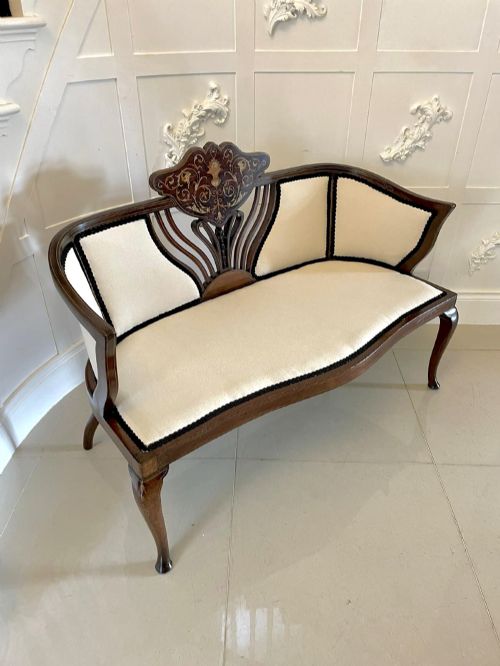
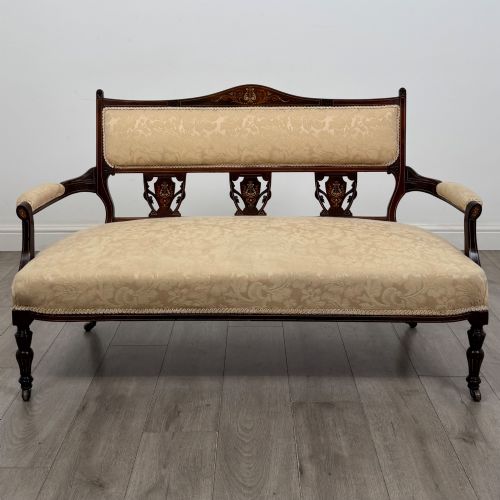
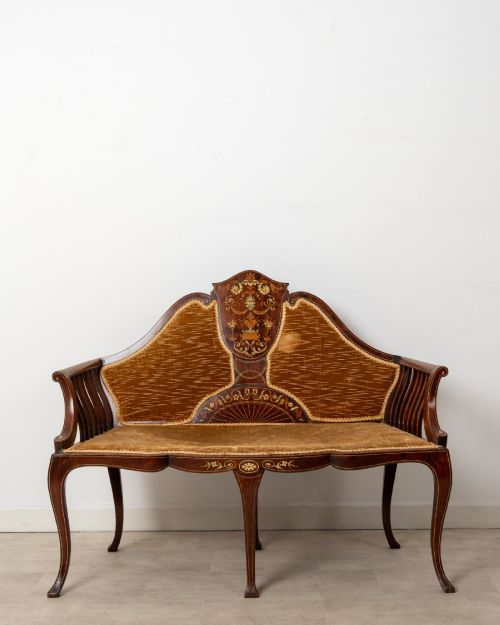
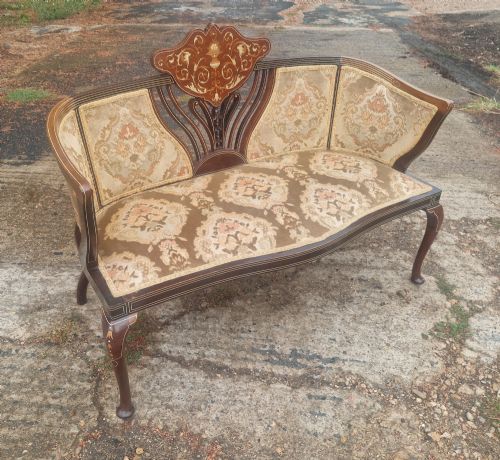
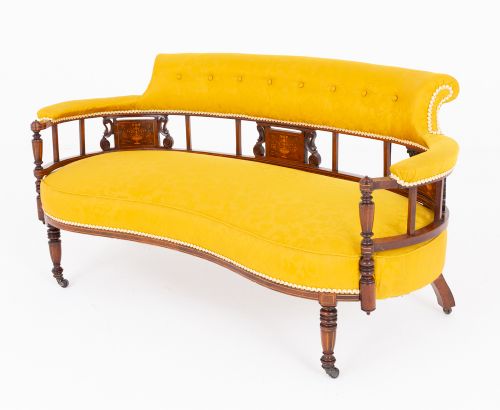


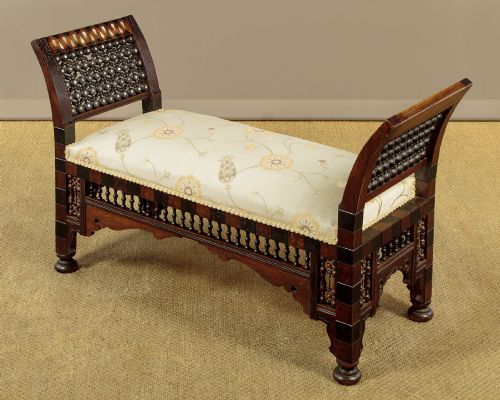


Antique Inlaid Bench
An antique inlaid bench brings refined craftsmanship and natural timber grain to a hallway, bedroom or salon.
Antique Inlaid Bench
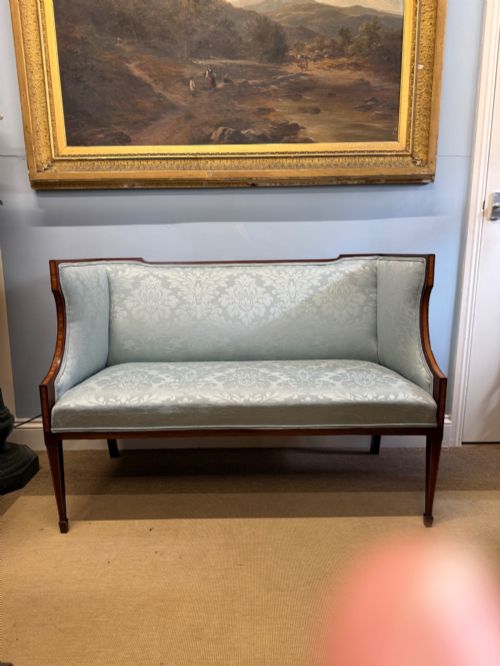
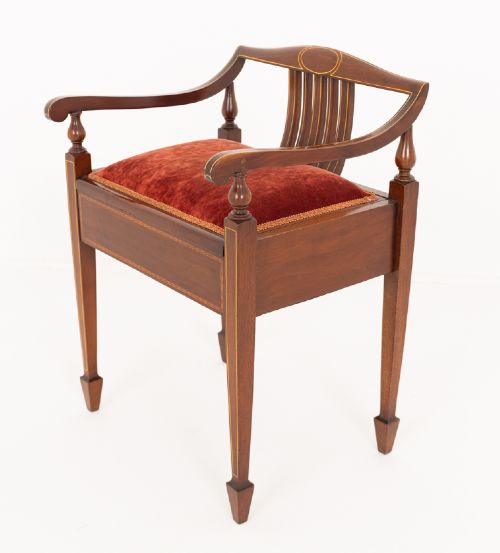
When you search for an antique inlaid bench, you encounter a varied selection of seating forms created across the nineteenth and early twentieth centuries. These pieces encompass everything from compact piano stools and window seats to generous Edwardian settees and Victorian sofas.
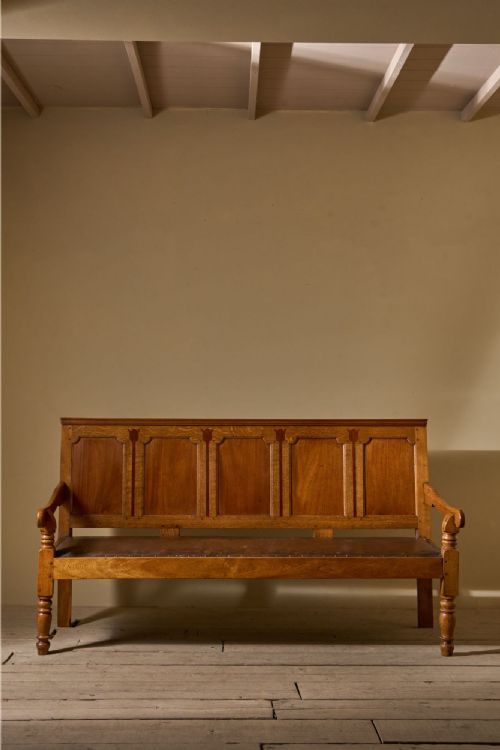
The most common examples on this page date from the Edwardian era and the Victorian period, constructed primarily from mahogany or rosewood. You will also find specialised pieces such as Chinese export hardwood benches featuring mother-of-pearl inlay and Georgian oak hall benches.
These items served diverse domestic functions, acting as seating for drawing rooms, parlor resting places, or decorative window seats. Their enduring appeal lies in the combination of functional seating with detailed surface decoration.
Materials and construction methods
Makers built these frames using solid hardwoods like mahogany, rosewood, and oak, often providing a robust structural foundation for the seat. Upholstered variants utilised supportive fabrics including velvet alongside traditional stuffing methods.
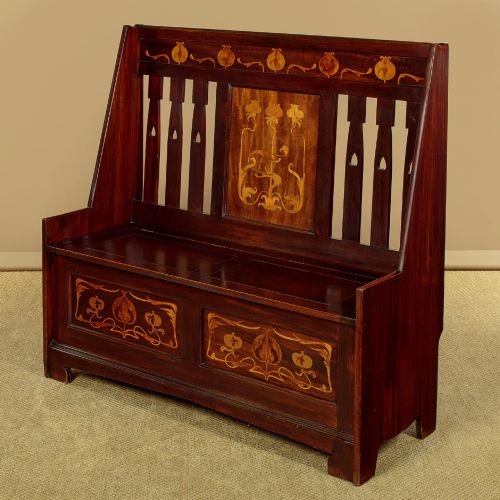
Surface ornamentation relied on meticulous woodworking techniques such as marquetry and contrasting timber stringing. Craftsmen embedded delicate strips and motifs of satinwood, boxwood, bone, or mother-of-pearl directly into the wooden panels.
Certain piano stools feature clever rotating mechanisms allowing musicians to adjust their height before playing.
Evaluating craftsmanship and detail
Quality in these seats rests on the precision of the timber joinery and the depth of the decorative work. Superior examples display tightly fitted joints and clean, securely seated inlay work that sits flush with the surrounding wood.
The refinement of the carved details and the choice of secondary woods elevate certain pieces above standard production. Furthermore, the complexity of the marquetry patterns and the integrity of the original frame construction distinguish finer workshops.
James Shoolbred & Co.
The Antique Inlaid Bench Glossary
- Marquetry Inlay
- An elaborate decorative technique where pieces of contrasting wood veneer are assembled to form pictorial or geometric patterns on a surface.
- Satinwood
- A lustrous, fine-grained yellowish timber frequently utilised by cabinetmakers for contrasting inlay work and banding.
- Settee
- A small upholstered sofa with a back and arms, designed to seat multiple people comfortably.
- Piano Stool
- A specialised adjustable or fixed seat originally created for musicians, often featuring box storage beneath the lid.
- Sheraton Revival
- A late nineteenth and early twentieth century design movement that reinterpreted the lighter, neoclassical furniture styles associated with George Sheraton.
Antique Inlaid Bench: Frequently Asked Questions
How do I date an inlaid bench?
Dating relies on identifying stylistic markers, timber choices, and construction techniques characteristic of specific periods like the Edwardian era or Victorian reign.
Examining secondary woods and the specific type of inlay, such as satinwood or mother-of-pearl, provides further clues regarding the decade of manufacture.
Where were these benches placed originally?
These seating forms occupied prominent spaces throughout the home, including drawing rooms, parlors, and bedrooms.
Smaller variants like piano stools and window seats served specialised functions near instruments or alcoves, while hall benches welcomed visitors near entranceways.
How should I care for antique inlaid wood?
Maintain the timber by keeping the piece away from direct sunlight and fluctuating heat sources that cause wood to dry and split.
Apply a gentle, appropriate wax polish periodically to nourish the grain and protect the delicate surface inlay from wear.