





Antique Hunting Flask
An antique hunting flask is a portable spirit container built for the field, prized for its robust construction and heritage craftsmanship.
What an antique hunting flask is
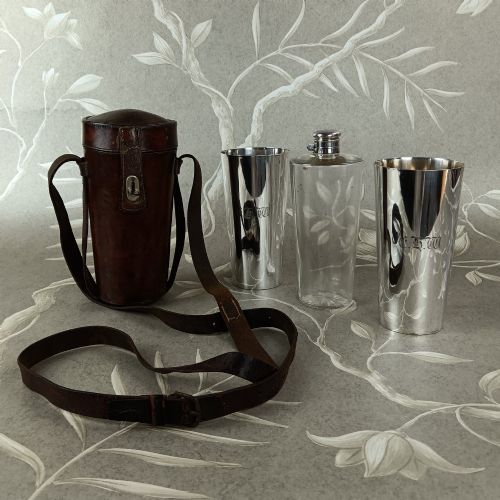
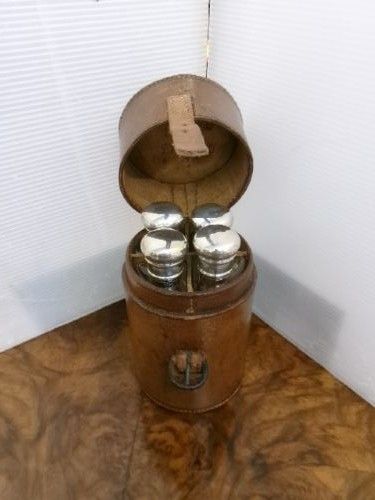
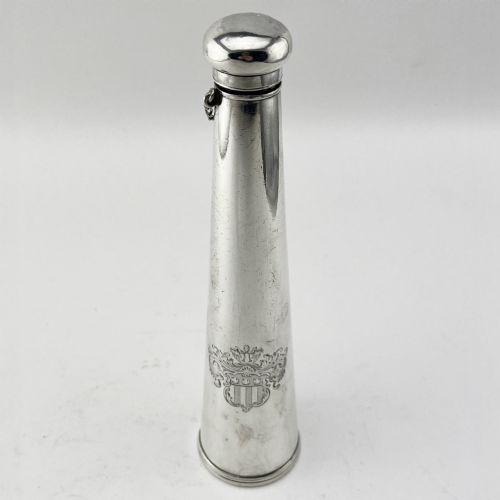
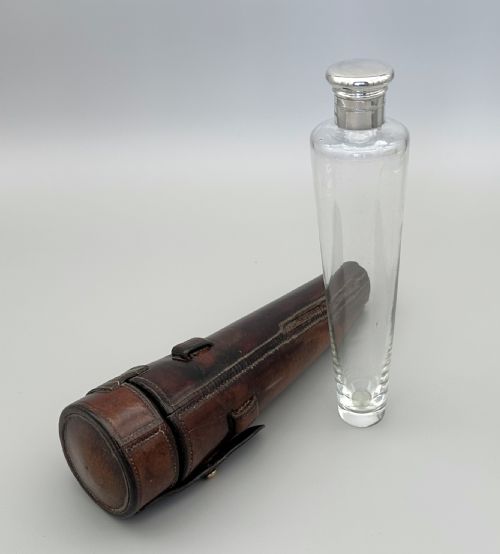
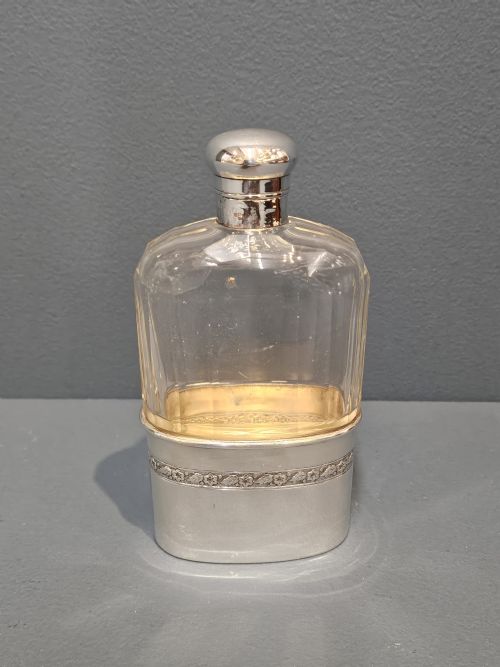
When you search for an antique hunting flask, you encounter robust spirit containers designed for equestrian pursuits, field sports, and outdoor excursions. These pieces include curved hip flasks, saddle flasks meant to fit into leather cases on horseback, and complete campaign spirit sets.
The versions most frequently met on this page range from Victorian and Edwardian examples to later Art Deco designs. Many combine glass bodies with leather casing, metal cups, and secure screw caps suited for active use.
How they were made
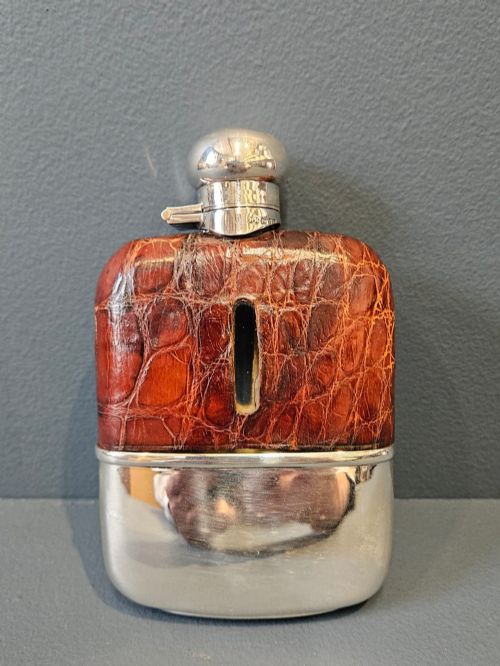
Materials span sterling silver, silver plate, pewter, and metal alongside clear and cut glass bottles. Leather cases and crocodile skin bindings provide durable outer protection for fragile glass inner containers.
Silversmiths and metalworkers shaped precious and base metals into curved profiles to fit a pocket or holster comfortably. Glass bottles were mouth-blown and cut, then fitted with hinged or screw tops designed to prevent leaks during movement.
Retail Price Guide 2026
Typical UK retail prices for hunting flask, calculated from the Sellingantiques database of over a million retail prices indexed since 2003. This retail price guide relies exclusively on Sellingantiques data; no external sources or auction records are used, so the figures do not describe the wider market.
Listings feature periods spanning from the mid-eighteenth century through the Victorian, Edwardian, and Art Deco eras.
What varies in quality
The distinction between standard production and finer pieces lies in the choice of materials and the integrity of the maker's execution. Sterling silver mounts and thick-walled cut glass elevate a piece above basic silver-plated or plain glass alternatives.
Complete sets that retain their original leather cases, fitted sandwich tins, detachable cups, or matching funnels demonstrate higher original intent and greater survival of associated components.
James Dixon & Sons·Asprey
The Antique Hunting Flask Glossary
- Saddle Flask
- A specialised bottle shaped to slide securely into a leather case mounted on a horse saddle. These often feature a rounded or slightly tapered base.
- Campaign Spirit Set
- A portable collection incorporating a spirit flask alongside drinking vessels housed together in a fitted case. Such sets were built for travel and outdoor dining.
- Vesta
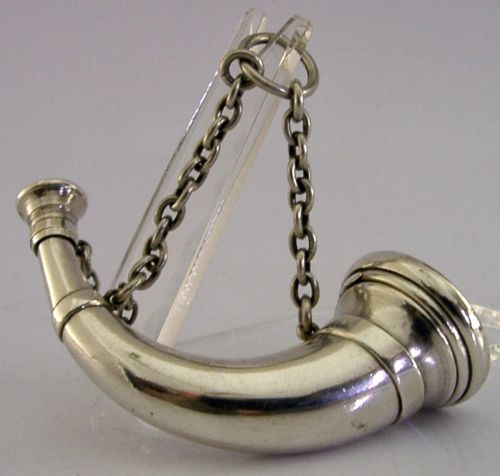
- A small pocket box intended for holding matches, occasionally incorporated into novelty hunting flask designs. It reflects the multi-use accessory style of the period.
- Sterling Silver
- A precious metal alloy containing a high proportion of pure silver, widely utilised by silversmiths for high-grade flask bodies and removable cups.
Frequently Asked Questions
What is an antique hunting flask used for?
These vessels served to carry spirits such as whisky or brandy during horseback riding, hunting expeditions, and outdoor field sports.
Their curved designs allowed them to sit comfortably in a pocket or slide directly into a dedicated saddle case for travel.
How do I identify a Victorian flask?
Victorian pieces often display hallmarks indicating British assay offices alongside maker marks such as James Dixon & Sons.
They frequently combine heavy sterling silver or silver plate with robust leather cases and thick glass bodies typical of nineteenth-century manufacturing.
Why do some flasks have cups?
Many hunting flasks feature a removable metal cup that slips over the bottom half of the glass or metal bottle.
This provided a convenient drinking vessel for sharing contents in the field without needing separate glassware.
What materials are common in these pieces?
The primary materials include sterling silver, silver plate, pewter, cut glass, and plain glass.
Outer protection was frequently added through leather wraps or crocodile skin bindings to prevent breakage during active use.
Are saddle flasks different from hip flasks?
Saddle flasks were specifically proportioned to slide into leather holster cases attached to horse saddles rather than pockets.
They often share similar glass and metal construction with standard hip flasks but follow specific dimensional constraints.