





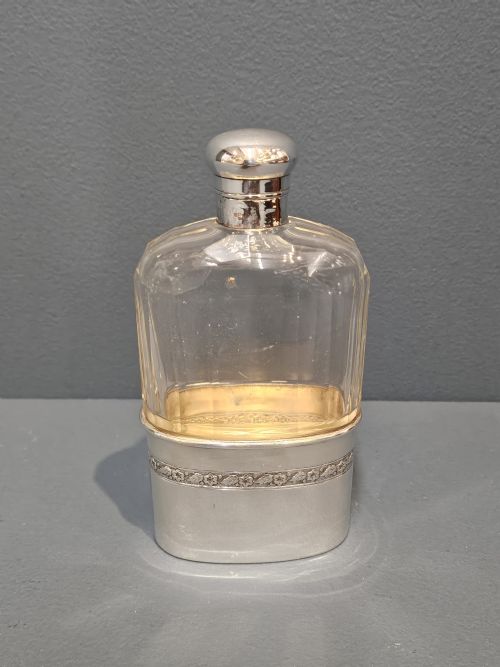


Edwardian Hip Flask
An edwardian hip flask combines pocket-sized utility with period metalwork, offering a portable drinking vessel for spirits on the move.
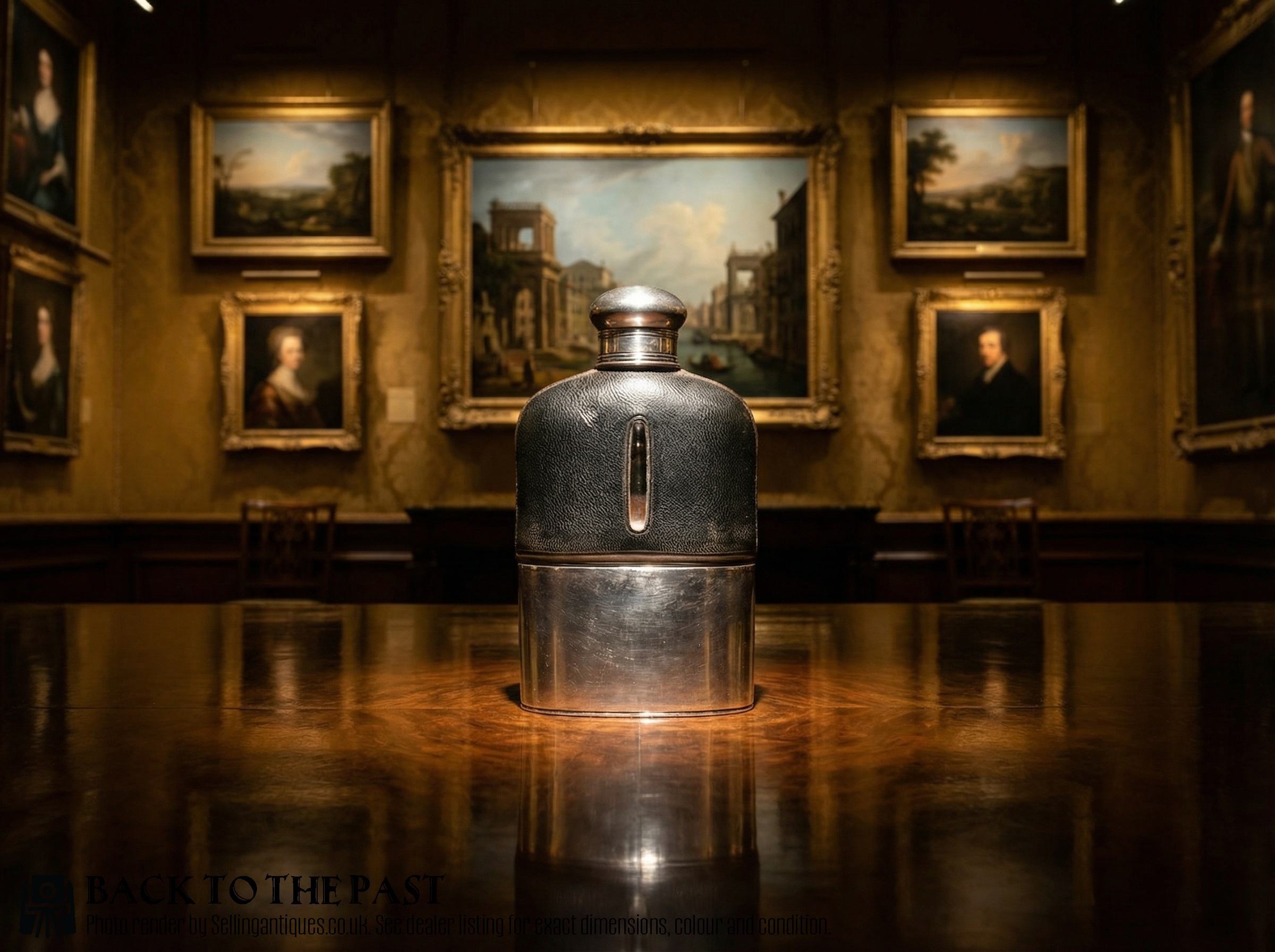
Edwardian Hip Flask Forms
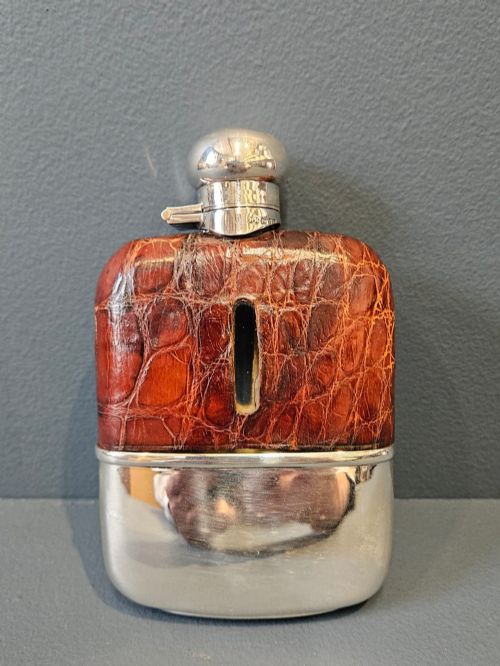
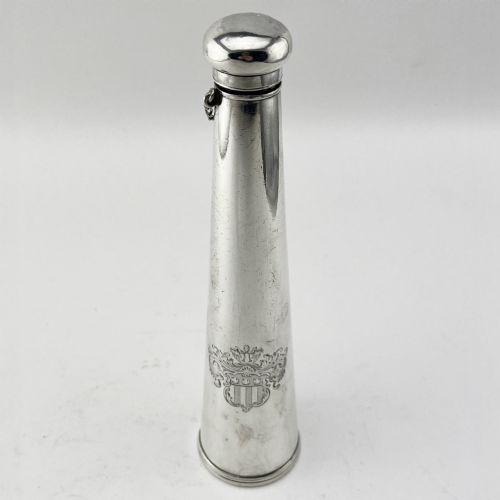
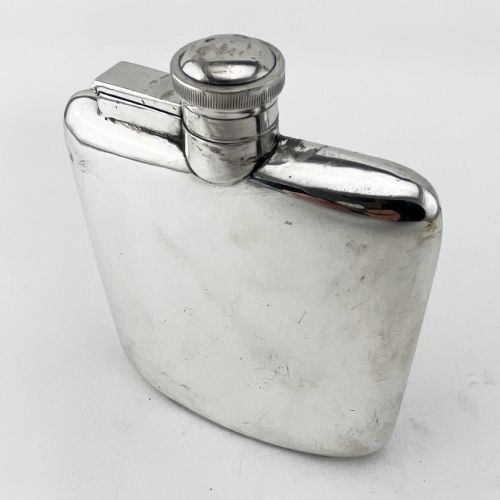
The edwardian hip flask appears in curved, kidney, and oval shapes designed to sit comfortably against the body in a pocket or hunting coat. Many examples combine precious metal work with glass bodies, leather wrapping, or textured crocodile leather.
Makers produced varying formats from small pocket vessels to large sixteen-ounce capacities, alongside specialised iterations featuring detachable lower cups for drinking in the field.
Silver plate and solid sterling silver dominate the evidence, frequently accompanied by bayonet-fitting hinged lids to prevent leaks during outdoor pursuits.
Materials and Construction
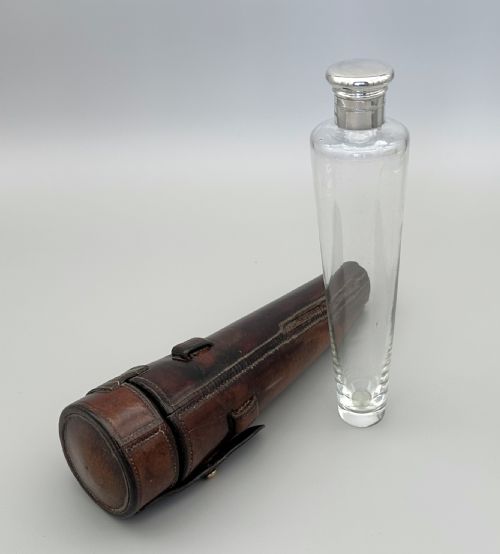
Silversmiths utilised sterling silver and silver plate for the primary bodies and mounts, sometimes applying silver gilt interiors. Clear glass bodies provide visibility of the contents, while leather and crocodile leather sleeves offer secure grip.
Hinged lids incorporate bayonet fittings requiring a push and twist action to seal securely against the collar, often paired with captive caps that remain attached during use.
Retail Price Guide 2026
Typical UK retail prices for edwardian hip flask, calculated from the Sellingantiques database of over a million retail prices indexed since 2003. This retail price guide relies exclusively on Sellingantiques data; no external sources or auction records are used, so the figures do not describe the wider market.
Listings demonstrate that edwardian hip flasks frequently combine sterling silver with glass, plain leather, and exotic crocodile leather.
Assessing Distinction
Composite pieces utilising glass and leather depend on the snugness of the fit and the quality of the hide, where genuine crocodile leather elevates the finish above standard plain leather wraps.
Hukin and Heath·James Dixon and Sons·Deakin Francis Ltd·Drew and Sons·J C Vickery·Alfred Clark·G Nathan and R Hayes·Mappin and Webb
The Edwardian Hip Flask Glossary
- Bayonet fitting
- A closure mechanism requiring the cap to be pushed down and twisted onto pins within the collar to create a tight seal. This design prevents accidental opening in a pocket.
- Silver gilt
- Sterling silver that has been coated with a thin layer of gold on the interior surfaces. This treatment protects the metal from corrosion caused by acidic spirits.
- Engine turned
- A mechanical decoration technique producing intricate geometric patterns of engraved lines across the metal surface. It provides texture and conceals minor handling marks.
- Armorial
- A heraldic design or coat of arms engraved onto the metal surface. These markers denote the original owning family or regiment.
- Detachable cup
- A lower portion of the flask case that slides off to serve as a drinking vessel. It adds versatility for field sports.
Frequently Asked Questions
What is an edwardian hip flask?
An edwardian hip flask is a portable container manufactured around the early twentieth century for holding spirits. These vessels use materials such as sterling silver, glass, and leather to combine durability with pocket-sized convenience.
They reflect the social habits of the period, particularly shooting, hunting, and outdoor excursions where travellers required a private refreshment.
How do I use a bayonet fitting lid?
The bayonet fitting lid requires a downward push followed by a short twist to release the mechanism from the retaining pins. This secure closure prevents the spirit from leaking during movement.
Ensure the cap is aligned correctly before twisting to maintain the integrity of the cork or washer inside.
Why do some flasks have detachable cups?
Flasks featuring detachable cups provide an immediate vessel for drinking without needing separate glassware in the field. The cup fits snugly over the base of the flask and slides off when needed.
This addition was particularly useful for hunting parties and gentlemen participating in outdoor sports.
How do I identify the date of a silver flask?
British silver flasks carry hallmarks stamped directly into the metal, which include city assay marks, date letters, and maker initials. These official stamps allow accurate dating of the piece to specific years.
Unmarked silver plate relies on style, proportions, and comparative manufacturing techniques to determine its period of origin.
Are glass and silver flasks fragile?
Glass and silver flasks require careful handling because the glass body sits inside a metal frame or leather sleeve. While the outer mounts offer protection, heavy impacts can crack the interior glass container.
Owners should inspect the fit of the glass within the mounts to ensure it remains stable during use.