
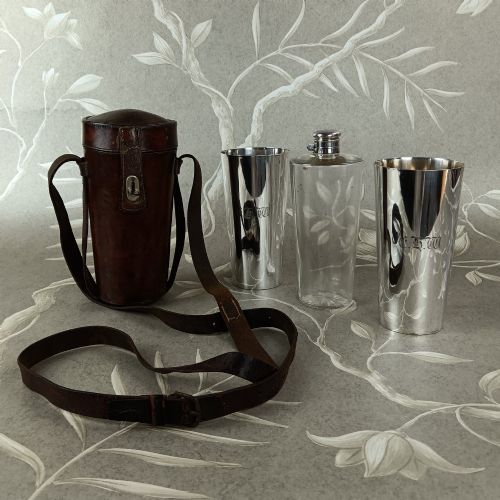
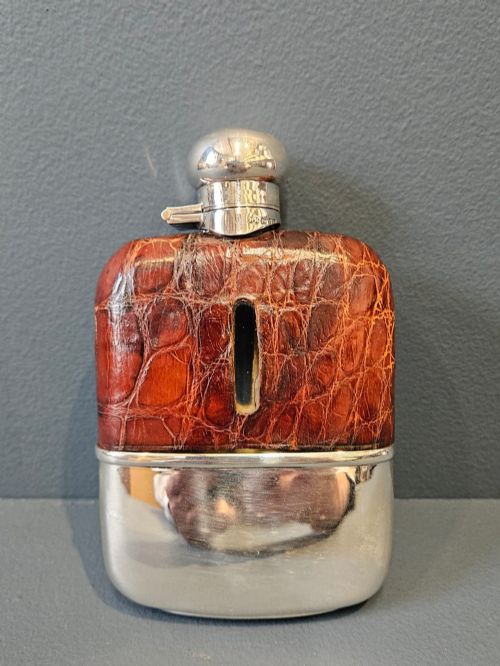


Brown Leather Hip Flask
These brown leather hip flasks combine sturdy glass and metal with tactile hides, offering a portable vessel for spirits.
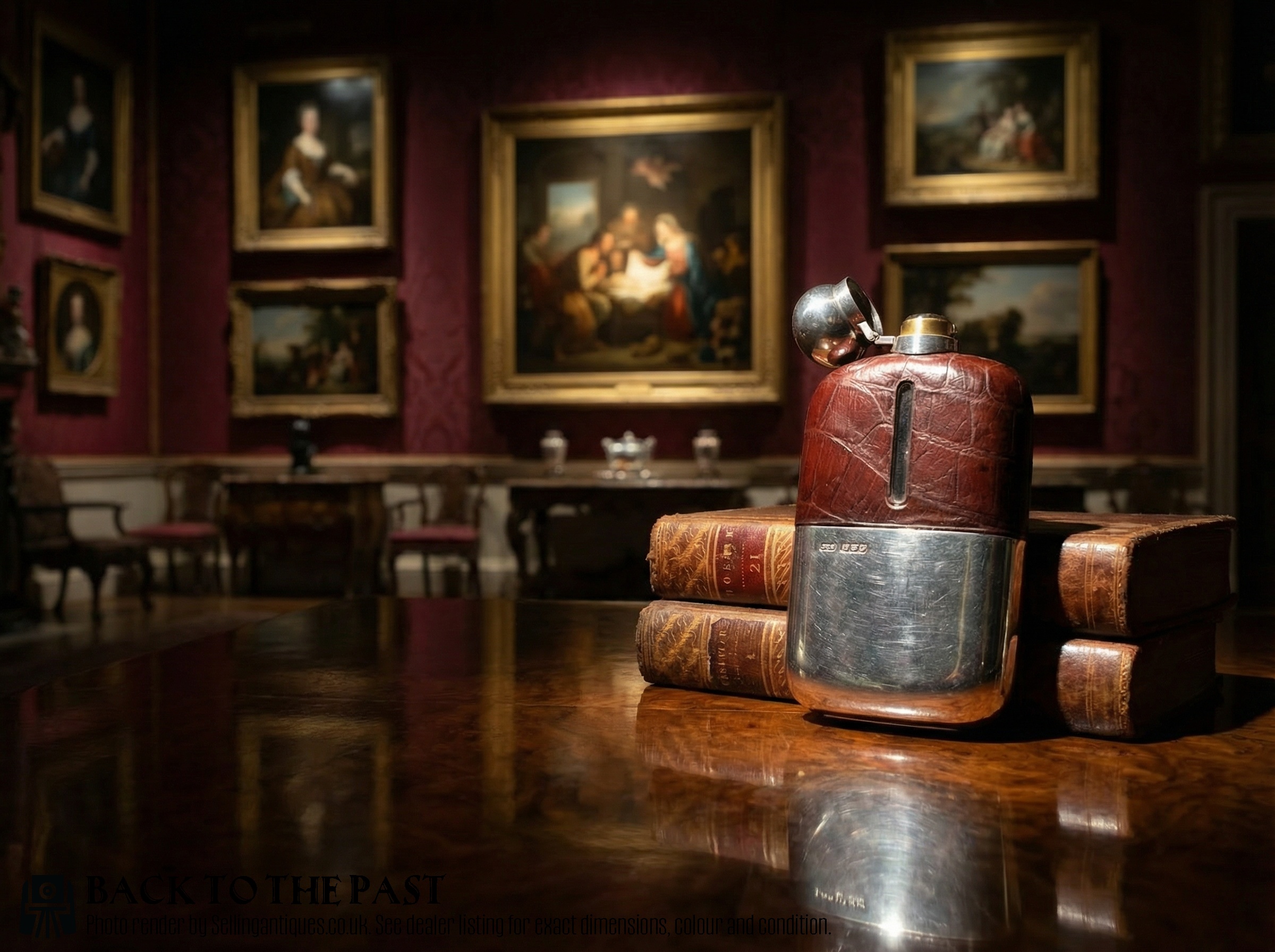
Brown Leather Hip Flasks
A brown leather hip flask provides a pocket-sized container for whisky and other spirits, combining a robust inner body with a protective outer wrap. These items appear primarily from the Edwardian era, spanning the early decades of the twentieth century.
The versions encountered on this page pair glass bodies with metal hardware, frequently enclosed in textured animal hide. Silver plate and solid silver components finish the necks, caps, and detachable cups.
Makers such as James Dixon produced these portable drinking accessories, which survive from around 1900 through the 1930s. The forms combine practical pocket curves with secure screw caps and nesting cups.
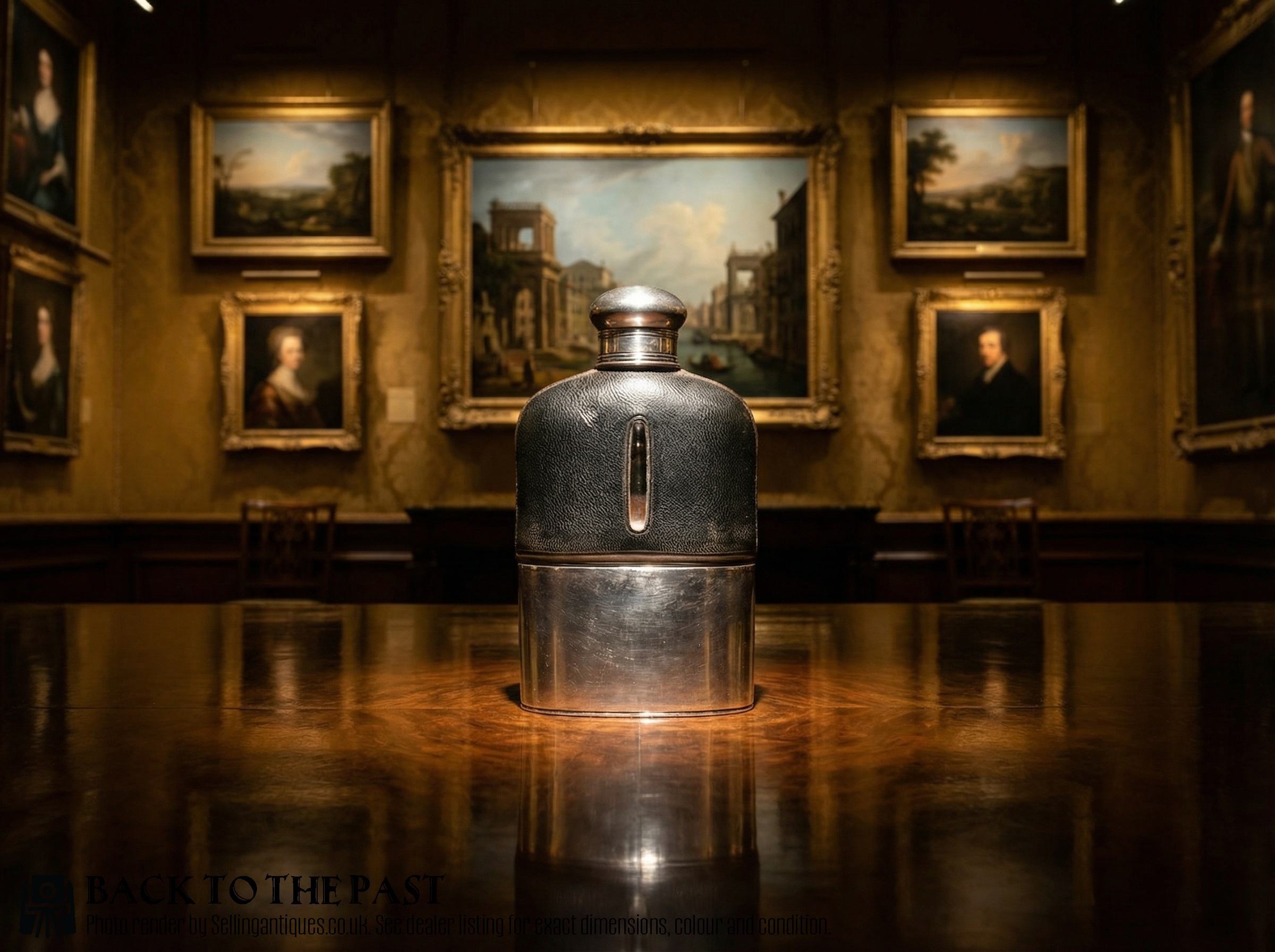
Construction and Materials
Makers formed the internal reservoirs from clear glass, shaping them with gentle curves to fit comfortably against the body. Metal elements including sterling silver and silver plate form the hinged caps and protective collars.
The exterior wraps utilise brown leather, frequently embossed to imitate crocodile skin or finished as smooth hide. These coverings were stitched or adhered around the glass body to improve grip and appearance.
Retail Price Guide 2026
Typical UK retail prices for brown leather hip flask, calculated from the Sellingantiques database of over a million retail prices indexed since 2003. This retail price guide relies exclusively on Sellingantiques data; no external sources or auction records are used, so the figures do not describe the wider market.
Listings span the Edwardian era up to the 1930s, utilising glass, silver, silver plate, and crocodile leather.
Judging Quality
Quality rests upon the choice of metal and the fidelity of the hide work, distinguishing solid silver mounts from simpler silver plate. Hallmarks stamped into the metal provide clear markers of origin and standard.
The refinement of the leather tooling and the preservation of the crocodile texture separate standard pieces from finer examples. Complete sets that retain their original matching bottom cup demonstrate higher preservation.
James Dixon
The Brown Leather Hip Flask Glossary
- Edwardian
- A period spanning the reign of King Edward VII from 1901 to 1910, though the style extends slightly beyond these dates. Pieces from this era often feature restrained decoration and practical utility.
- Silver Plate
- A base metal coated with a thin layer of silver through electroplating. This technique provided the appearance of solid silver at a lower cost during the nineteenth and twentieth centuries.
- Hallmark
- A series of official marks stamped onto precious metals to indicate the standard of purity, the assay office, and the date letter. British silver standards are strictly regulated by these impressions.
- Crocodile Leather
- Hide embossed or sourced to display the distinctive tiled scale pattern of the reptile. It was widely used on luxury travel goods and flasks during the Edwardian period.
Frequently Asked Questions
What are brown leather hip flasks made of?
These flasks combine internal glass bodies with exterior wraps of brown leather or crocodile skin. The mounts, caps, and nesting cups utilise either solid sterling silver or silver plate.
Precious metal components carry hallmarks that identify the assay office and year of manufacture. The combination of materials ensures both fluid containment and exterior durability.
How do I date a hip flask?
Dating relies heavily on metal hallmarks stamped onto the silver collars, caps, or cups. These marks indicate the exact year the piece was assayed and registered by the maker.
Stylistic cues such as the Edwardian preference for crocodile-embossed leather also narrow the period of production. Surviving records and maker marks help establish a precise timeline.
Were these flasks used for whisky?
Historical examples served to carry spirits such as whisky during outdoor pursuits, travel, and sporting events. The compact curved shape allowed the vessel to slip easily into a pocket or hunting bag.
Detachable lower cups provided a ready drinking vessel while on the move. The secure screw caps prevented leakage during active use.
How do I care for antique leather flasks?
Maintenance involves keeping the leather dry and gently cleaning the glass interior with warm water. Metal components respond well to occasional polishing with a soft cloth designed for silver.
Harsh chemical cleaners should be avoided to protect both the leather hide and the metal plating. Proper storage away from direct sunlight preserves the original tone of the materials.