
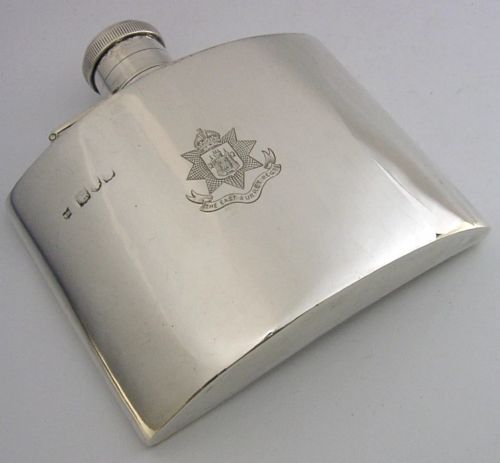
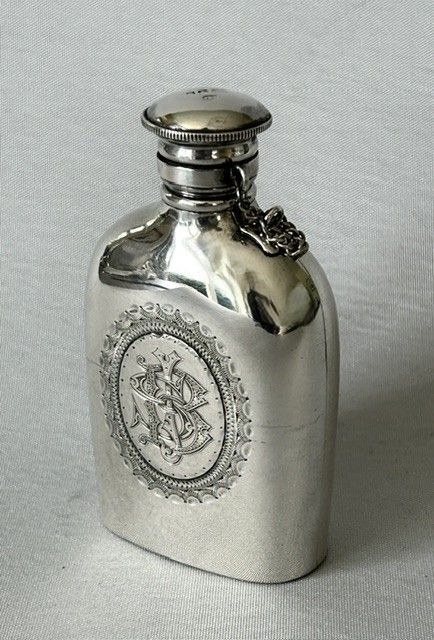


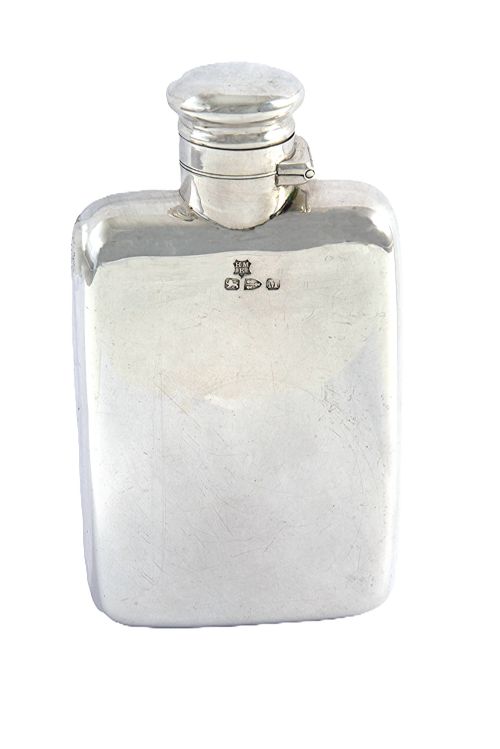


Bayonet Cap Hip Flask
A bayonet cap hip flask is a portable pocket vessel designed for spirits, prized for its secure, twist-and-lock closure that prevents leaks.
Understanding the bayonet cap hip flask
The bayonet cap hip flask category encompasses pocket containers designed for carrying spirits during travel, outdoor pursuits, or social occasions. When examining the available selection, a buyer encounters pieces originating from the Edwardian and Art Deco periods, spanning the early twentieth century.
The most common forms on this page pair glass bodies with precious or plated metalwork, often featuring leather or crocodile skin grips. These items reflect the social habits of their respective eras, combining functional portability with refined craftsmanship.
Materials and construction
Makers constructed these vessels using sterling silver, silver plate, and clear glass, frequently combining materials within a single piece. Outer covers utilise leather or crocodile skin to improve grip and aesthetic appeal.
Metal components undergo traditional silversmithing techniques, incorporating hinged mechanisms and specialised bayonet caps that secure tightly with a quarter-turn. Hallmarks stamped into the silver provide official assay office marks, dates, and maker identifications.
Retail Price Guide 2026
Typical UK retail prices for bayonet cap hip flask, calculated from the Sellingantiques database of over a million retail prices indexed since 2003. This retail price guide relies exclusively on Sellingantiques data; no external sources or auction records are used, so the figures do not describe the wider market.
Materials represented across the selection include sterling silver, silver plate, glass, leather, and crocodile skin.
Distinctions in quality
Quality separates pieces through the weight of the silver, the precision of the bayonet mechanism, and the integrity of the glass or leather sheath. Finer examples display crisp hallmarks, robust hinges, and unblemished materials that withstand active use.
Artisanal execution dictates the overall standing of an object, where well-known makers and balanced proportions elevate a utilitarian pocket container into an example of fine metalwork.
William Neale·JB Chatterley and Sons·Asprey·Edward Smith
The Bayonet Cap Hip Flask Glossary
- Bayonet cap
- A closure mechanism that locks securely onto the neck of the flask with a simple push and twist, preventing accidental spills.
- Sterling silver
- An alloy consisting of pure silver and other metals, typically copper, standardly marked to guarantee its metal content.
- Silver plate
- A base metal substrate coated with a thin layer of silver, offering the appearance of solid silver at a different cost.
- Hallmark
- A series of official marks stamped onto precious metal items, indicating the maker, assay office, and year of manufacture.
Frequently Asked Questions
How does a bayonet cap work?
The cap uses internal pins that slide into matching slots on the collar of the flask. A firm downward push and a short twist lock the stopper firmly in place.
This design provides a reliable seal for liquid contents, preventing leaks while remaining quick to open when needed.
What materials are used for these flasks?
Makers commonly used sterling silver and silver plate for the caps, cups, and body mounts. Glass forms the main reservoir, often wrapped in leather or crocodile skin.
Precious metals like gold also appear on select luxury items alongside silver components.
How do I date an antique flask?
Silver components usually feature hallmarks that include date letters corresponding to specific assay office years. Maker marks and style periods also help determine the era of production.
Comparing stylistic elements like Edwardian details or Art Deco geometry provides further chronological context.
Were these flasks meant for daily use?
Original owners carried them during hunting, travelling, and outdoor sports for personal refreshment. The sturdy metal and glass construction suited active pocket transportation.
Over time, many transitioned from active accessories to collectible display pieces.