




Pocket Liquor Flask
A pocket liquor flask is a portable vessel for spirits, offering a discreet companion for outdoor pursuits and travel.
Pocket Liquor Flask
A pocket liquor flask is designed for carrying spirits securely on the person, taking the form of hip flasks and barware in the current selection. These pieces emerge predominantly from periods such as the Victorian, Edwardian, and Art Deco eras, alongside examples from the eighteenth century and the nineteen-forties.
Buyers encounter forms constructed entirely from solid metals or combinations involving glass and crystal, sometimes fitted with leather cases or removable cups. The styles span plain utilitarian surfaces to regimentally inscribed military pieces and decorative enamelled work.
Materials and construction
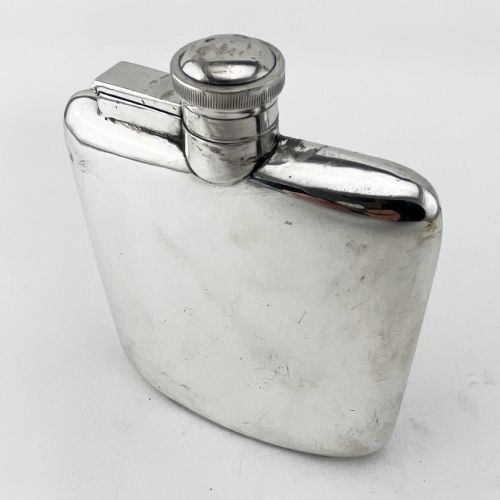
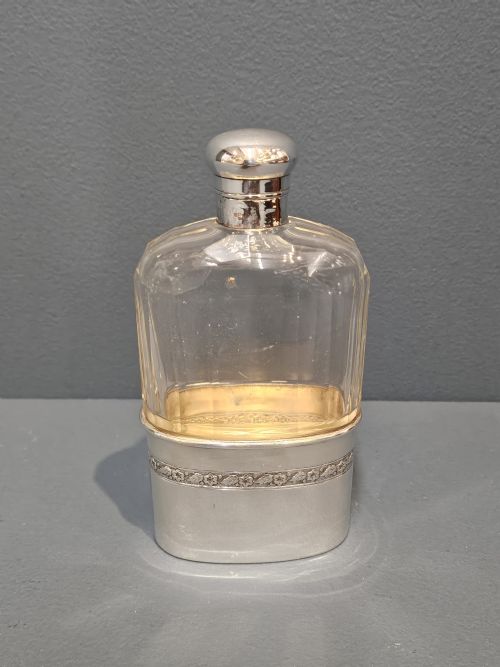
Makers utilised sterling silver, silver plate, and sterling silver gilt to form the rigid bodies and captive or flip tops of these vessels. Glass and cut crystal bodies also feature frequently, often encased in leather or mounted with silver caps and bases.
Techniques range from plain metalsmithing and hinge-work to detailed surface embellishments like polychrome enamelling and Mary Gregory glass decoration. Hallmarks stamped into the metal provide official records of assay offices, dates, and makers.
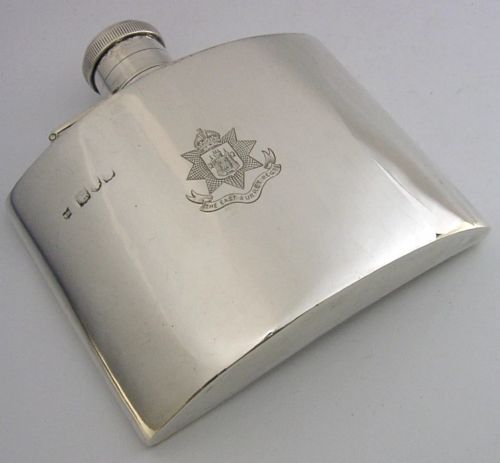
A military flask from the Boer War era carried regiment pride right alongside the brandy.
Assessing craftsmanship and condition
The distinction between ordinary and superior pieces rests upon the weight and thickness of the metal, the precision of the cap seal, and the crispness of any engraved or chased decoration. Solid sterling silver vessels with heavy gauges command greater attention than plated alternatives.
The integrity of integrated elements, such as removable base cups and secure hinges, dictates the overall execution. Furthermore, the clarity of glass or crystal bodies and the fit of protective leather sleeves influence desirability.
JB Chatterley & Sons·James Dixon & Sons
The Pocket Liquor Flask Glossary
- Sterling silver
- A silver alloy containing 92.5 percent pure silver by mass, providing the durable standard for high-quality pocket flasks.
- Removable cup
- A metal drinking vessel that fits over the base of the flask, secured by friction or a bayonet mount for field use.
- Silver gilt
- Sterling silver that has been coated with a thin layer of gold on its interior or exterior surfaces for decorative effect and corrosion resistance.
- Mary Gregory glass
- Glass decorated with white enamel figures, typically depicting children in pastoral settings, popular on early twentieth-century containers.
- Flip top
- A hinged lid mechanism operated by a thumbpiece to allow rapid access to the contents while remaining attached to the neck.
Pocket Liquor Flask: Frequently Asked Questions
How do I clean a silver flask?
Wash the interior with warm soapy water and rinse thoroughly, avoiding harsh abrasives that might damage seals. Polish the exterior with a soft cloth and a dedicated silver cream to preserve the metal finish.
Ensure the vessel dries completely before storing it with the cap left open to prevent moisture retention inside the chamber.
Are these flasks still watertight?
Many retain functional seals, but older cork or metal-to-metal closures can degrade over decades of non-use. Test the vessel with water before filling it with spirits for an outing.
Replacement of aged internal cork washers by a specialist can often restore a dependable liquid barrier.
What spirits belong in a flask?
High-proof distilled spirits such as whisky, brandy, or gin suit these vessels well due to their stability. Avoid sugary liqueurs or citrus-heavy mixtures that leave residues difficult to clean from narrow interiors.
Empty and rinse the container promptly after use to protect both the metal and the taste of future fills.
How do I date a silver flask?
Examine the hallmarks stamped into the metal, which typically include a city mark, a standard mark, and a date letter corresponding to assay office records. Stylistic cues like Art Deco geometric lines or Victorian chased foliage also indicate the period of manufacture.
Makers' marks provide additional clues when cross-referenced against historical silversmith registries.