



Silver Drinking Flask
These silver drinking flask examples offer portable refreshment in sterling silver, plate, glass, and leather from Victorian, Edwardian, and Art Deco periods.
Silver Drinking Flask
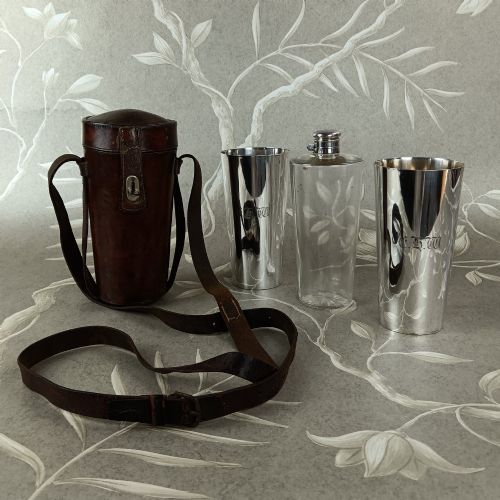
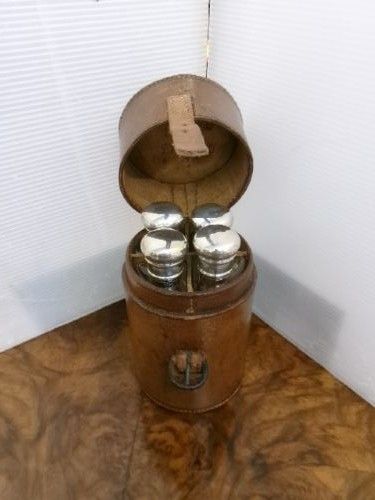
A silver drinking flask provides a portable vessel for spirits, appearing in forms such as hip flasks, spirit flasks, barware, and field campaign spirit sets. Buyers searching this phrase encounter practical pocket containers and larger cased sets designed for travel and outdoor pursuits.
The pieces on this page span the Victorian, Edwardian, and Art Deco eras, showing how utility met evolving tastes from the late nineteenth century through the interwar decades. Forms range from plain sterling silver shapes to complex combinations involving glass, leather, and detachable cups.
Victorian examples often feature glass bodies with silver mounts, removable cups, and leather cases, while later Art Deco pieces lean towards clean lines and floral patterns in solid sterling silver. Makers utilised materials like cut glass, crocodile leather, and cork alongside silver plate and solid silver to create diverse receptacles.
Materials and construction
Silversmiths constructed the metal bodies using sterling silver or silver plate, shaping them into curved profiles designed to fit comfortably against the body. Many models incorporate clear cut glass bodies protected by hinged silver caps and threaded cork stoppers to prevent leaks.
Leather bound and crocodile leather wrapped examples demonstrate the application of organic coverings over metal or glass cores, often paired with matching leather cases. Removable drinking cups slide onto the base of the flask, secured by internal flanges or bayonet mounts.
Many a Victorian gentleman relied on a cunningly curved pocket container to survive long sermons and tedious train journeys with spirits intact.
Distinctions in quality
Quality resides in the weight and gauge of the silver, the precision of the hinge mechanisms, and the clarity of the cut glass. Substantial wall thickness and crisp hallmarks denote higher manufacturing standards.
The integration of secondary materials defines the better pieces, seen in tightly stitched leather, precisely fitted crocodile skin, and sturdy bayonet cup attachments that operate smoothly without binding.
James Dixon & Sons·JB Chatterley & Sons
The Silver Drinking Flask Glossary
- Hip flask
- A pocket-sized container designed specifically for carrying alcoholic liquor. These curved vessels fit snugly into a coat or trouser pocket.
- Bayonet mount
- A fastening mechanism involving a plug and a socket that lock together with a push and a twist. This secure closure prevents accidental spills in transit.
- Spirit set
- A portable collection comprising a flask and additional drinking vessels housed together in a fitted case. These were popular for field campaigns and travel.
- Silver plate
- A thin layer of silver applied to a base metal core such as brass or copper. This technique offered the appearance of solid silver at a lower cost.
- Sterling silver
- An alloy consisting of silver and other metals, typically copper, standardising at a specific high purity. It provides durability alongside a bright metallic lustre.
Silver Drinking Flask: Frequently Asked Questions
How do I clean a vintage flask?
Rinse the interior thoroughly with warm water and mild dish soap, avoiding harsh abrasives that might damage interior linings or cork seals. Dry the inside completely before storing to prevent moisture accumulation.
Polish the exterior silver surfaces gently using a dedicated cloth and approved metal cleaner. Keep polishes away from leather wraps, glass bodies, and cork stoppers.
Can I actually drink from these?
Many of these containers remain structurally sound for holding spirits, provided the internal seals and corks are intact. Inspect the interior thoroughly for residues or wear before introducing liquids.
Silver and glass are generally inert, but older solders and deteriorated cork closures may affect the contents. Many collectors prefer to keep them as display objects rather than active utility items.
How do I date a silver flask?
Hallmarks stamped onto the silver components provide the most reliable dating evidence, including town marks, date letters, and maker's marks. Consulting assay office records decodes these symbols to the exact year of production.
Stylistic indicators such as Victorian ornamentation, Edwardian restraint, or Art Deco geometric patterns also narrow down the period of manufacture when hallmarks are worn or absent.