


Antique Horse Canvas
Selecting an antique horse canvas brings centuries of sporting heritage and equine portraiture straight into a room through oil paint on woven fabric.
Antique Horse Canvas
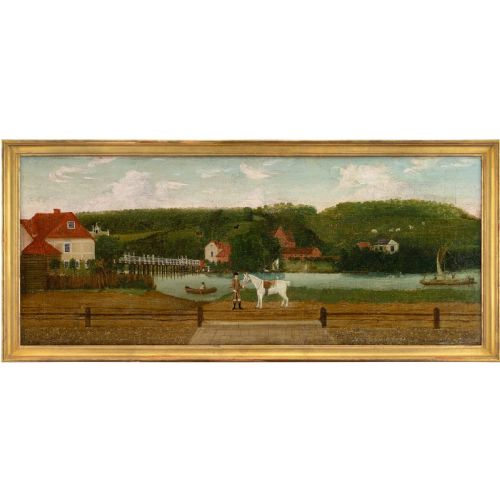
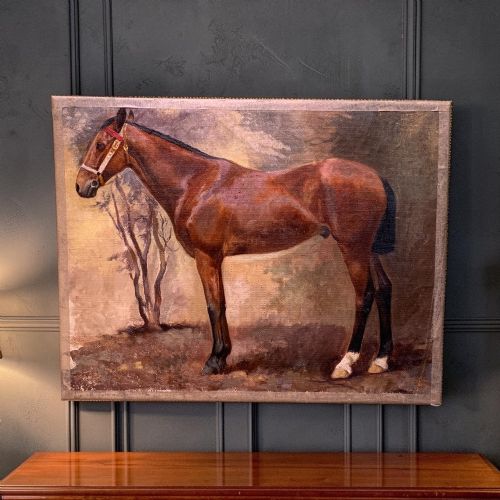
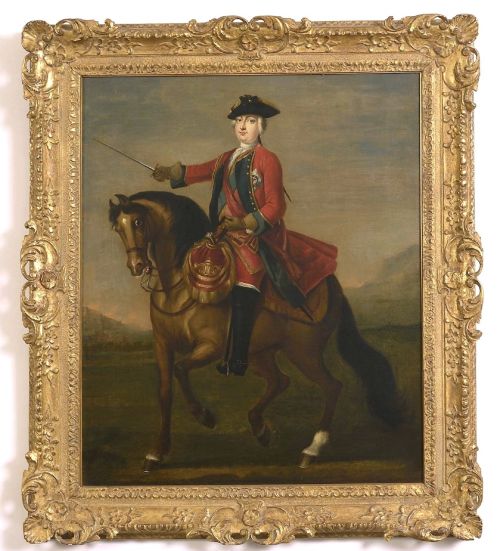
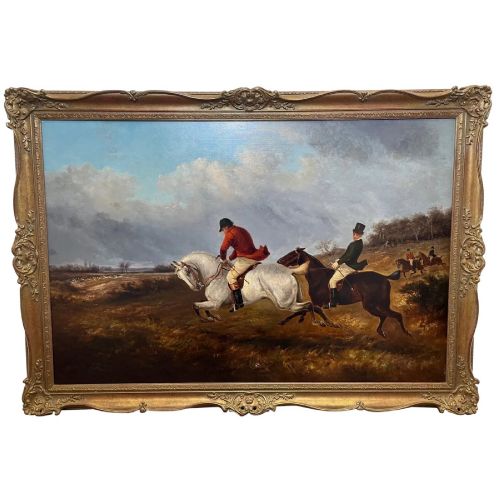
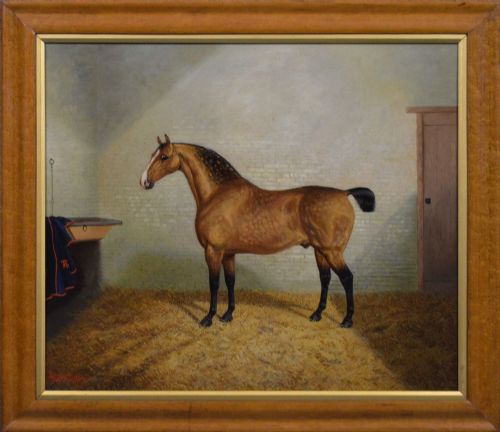
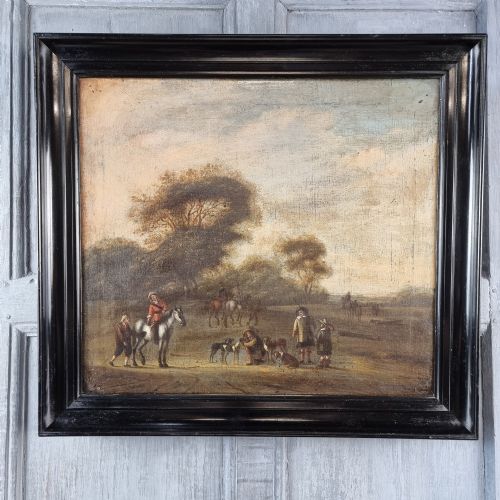
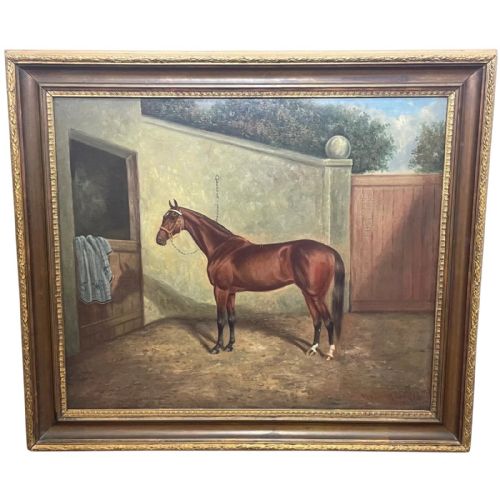
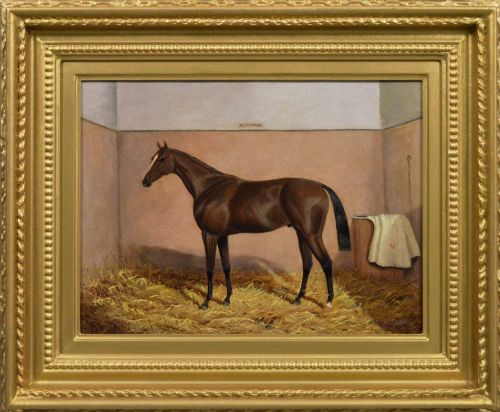
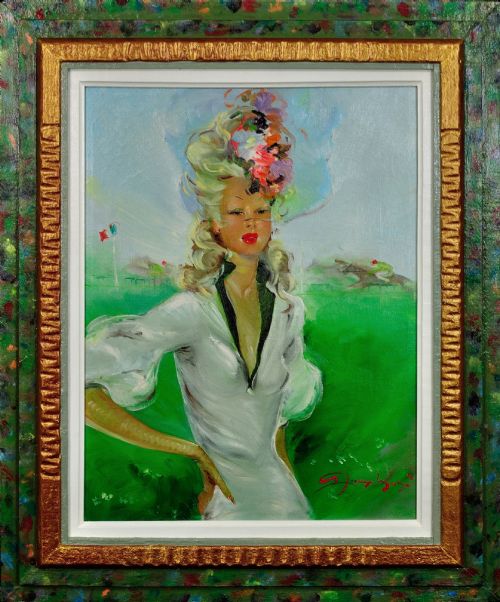
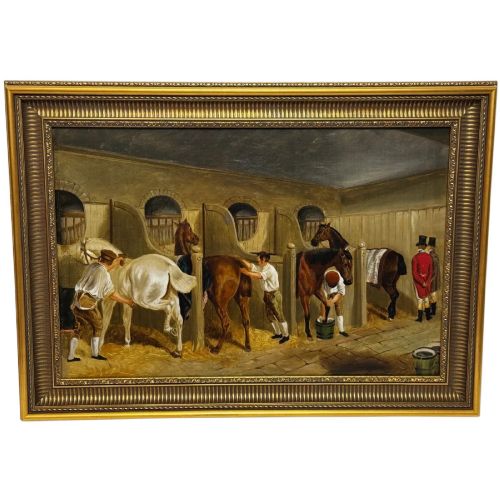
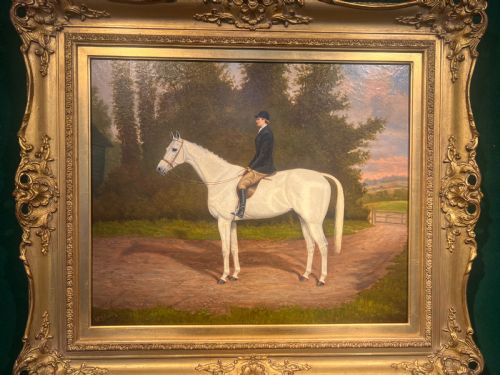
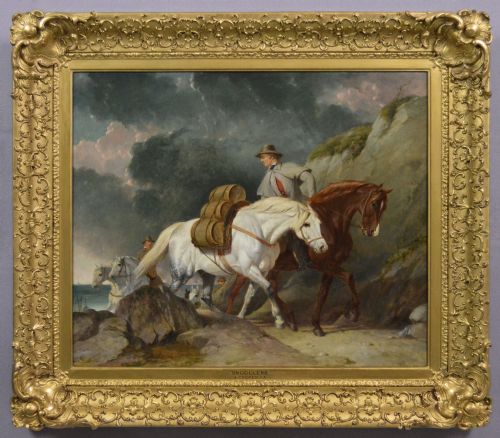
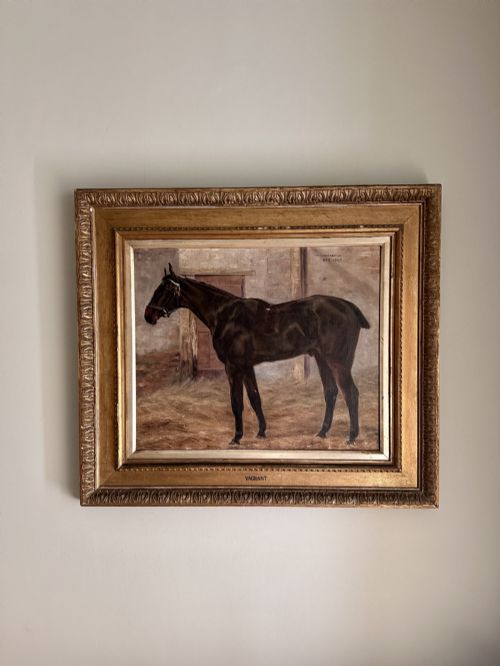
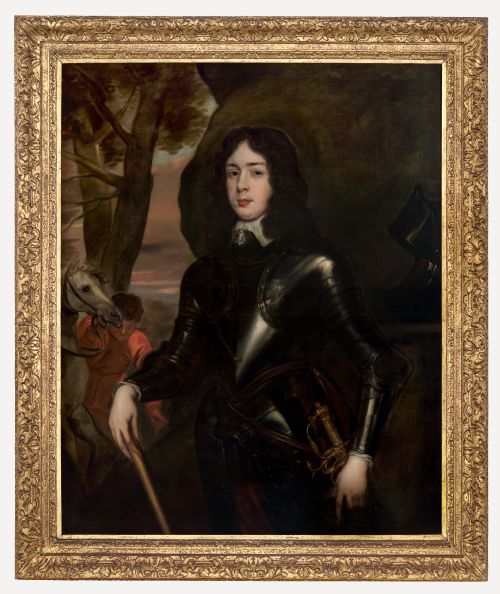
When searching for an antique horse canvas, collectors encounter centuries of equestrian art, spanning from seventeenth-century portraits to mid-twentieth-century rural and racing scenes. The pieces on this page comprise oil paintings on canvas, depicting individual racehorses, hunting scenes, working draft horses, and coaching vignettes within British and European landscapes.
The selection ranges from intimate studies of named winners like Spion Kop to expansive Victorian fox hunting canvases and rustic farmyard depictions. Most examples originate from the nineteenth and early twentieth centuries, reflecting the central role of the horse in rural labour, transport, and sport before the widespread adoption of mechanisation.
Materials and construction
These works rely on oil paint applied to stretched canvas, often housed within period timber or giltwood frames. Artists utilised ground pigments mixed with oils to build deep tones for horse coats, landscapes, and skies, allowing for subtle tonal gradation across musculature and coats.
The underlying canvas provides a textured ground that holds thick impasto in nineteenth-century sporting works or smoother glazes in earlier portraiture. Surviving examples frequently show the natural weave of the fabric beneath layers of aged varnish and pigment.
Several horses captured on these canvases outran their contemporaries at Epsom and Cambridge before retiring to immortalisation in oil paint.
Separating top examples
Quality in these works rests upon anatomical precision, the artist's handling of light, and the presence of documented provenance identifying the horse, owner, or maker. Superior canvases capture the distinct conformation and spirit of the animal, whether a tense racehorse at the post or a steady hunter in a stable interior.
The strength of the surrounding landscape and the integration of the horse into its environment also distinguish finer compositions from standard provincial output. Original period framing, particularly carved and gilt wood matching the era of the painting, elevates the overall integrity of the piece.
Thomas Smythe·Albert Clark·Abraham Cooper·John Ferneley Senior·Thomas Walker Bretland
The Antique Horse Canvas Glossary
- Canvas
- A heavy woven fabric, typically linen or cotton, stretched across a wooden frame to serve as the foundation for oil paintings.
- Giltwood
- Wood carved and coated with a thin layer of gold leaf, commonly used for nineteenth-century picture frames.
- Impasto
- Paint applied thickly to a canvas, leaving visible brushstrokes that stand proud of the surface.
- Provenance
- The documented history of ownership of a work of art, tracing its path from creation to the present day.
Antique Horse Canvas: Frequently Asked Questions
How do I identify the age of an oil painting?
Dating relies on examining the canvas weave, the stretcher frame construction, and the ageing patterns of the oil paint and varnish layers. Stylistic clues within the clothing, landscape, and architectural elements also help anchor the work to a specific decade.
Signatures, monograms, and exhibition labels on the reverse provide further historical markers, though many period works remain unsigned or attributed to broader regional schools.
What is the difference between a portrait and a sporting scene?
An equine portrait focuses primarily on a specific, often named animal, frequently shown in profile or within a stable setting to highlight its breeding and conformation. These pieces serve as a direct record of valued livestock or racehorses.
Sporting scenes place the horse in active narrative contexts, such as fox hunting, coaching along country lanes, or competing on the racecourse. These compositions emphasise movement, human figures, and broader landscape interaction.
How should I care for an antique canvas?
Keep paintings away from direct sunlight, high humidity, and rapid temperature fluctuations to prevent the canvas from slackening and the paint layers from cracking. Avoid hanging them above active fireplaces where soot and heat can damage the surface.
Dust the canvas gently with a soft, dry brush or cloth without applying pressure. Professional conservation should be sought for any cleaning or varnish removal.
Why do some canvases show craquelure?
Craquelure is the fine network of microscopic cracks that develops naturally in ageing oil paint and varnish as the materials lose flexibility over decades. This network reflects the organic drying process of oil mediums and serves as an indicator of age.
While stable craquelure is normal in period art, lifting or flaking paint requires attention from a specialist conservator to stabilise the surface.