

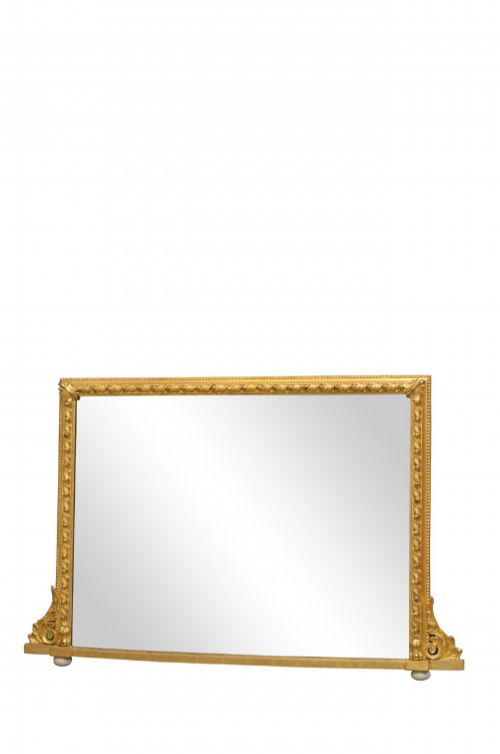


Antique Horizontal Overmantel
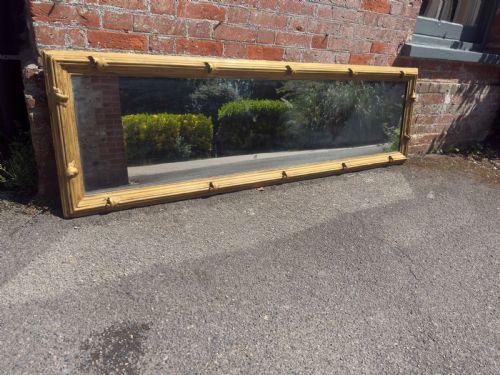
An antique horizontal overmantel grounds a fireplace with architectural width, reflecting light across a room through centuries of carved wood and giltwood.
Antique Horizontal Overmantel
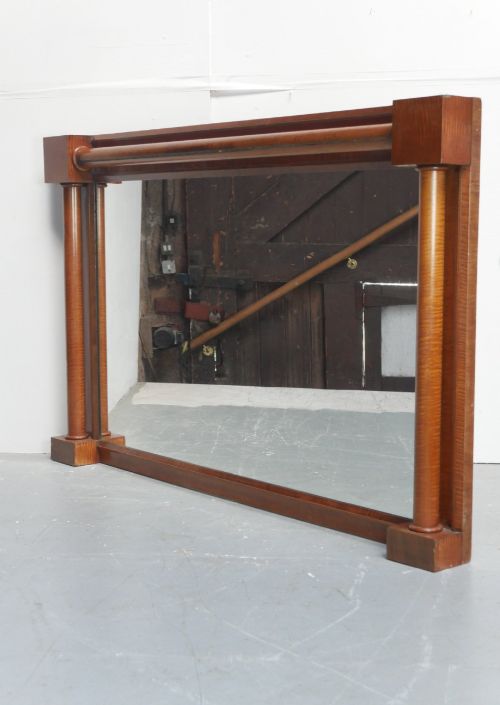
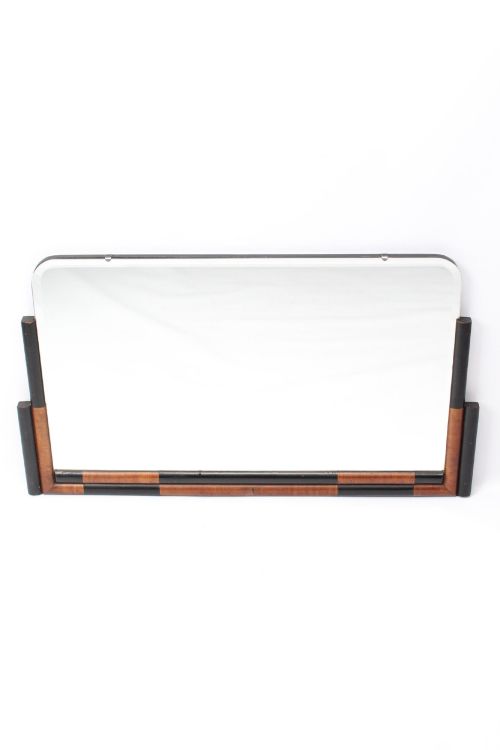
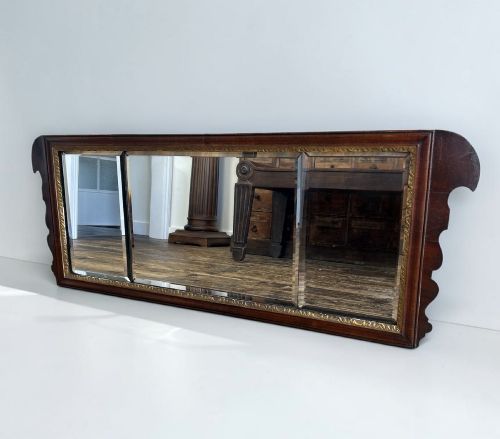
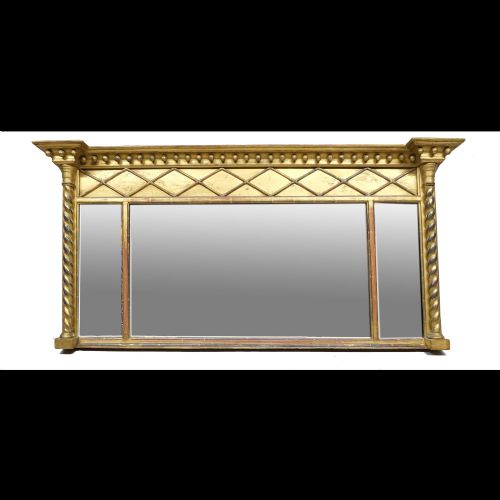
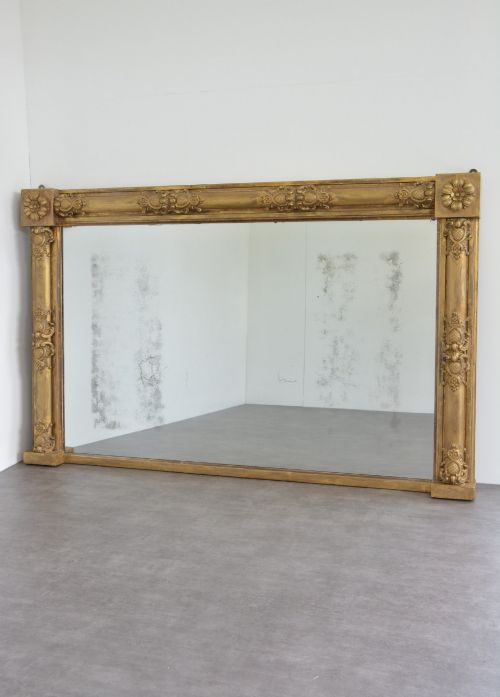
An antique horizontal overmantel is a wide mirror designed to sit directly above a fireplace mantel, filling the wall space beneath the chimney breast. The pieces seen here span from the Georgian and Regency eras through the Victorian period and into Art Deco, offering both landscape formats and tall triple-plate configurations.
Most examples encountered on this page belong to the nineteenth century, built from carved wood and finished with giltwood, gesso, or paint. They range from simple mahogany and rosewood frames to elaborate Regency and Rococo Revival designs featuring tripartite glass plates.
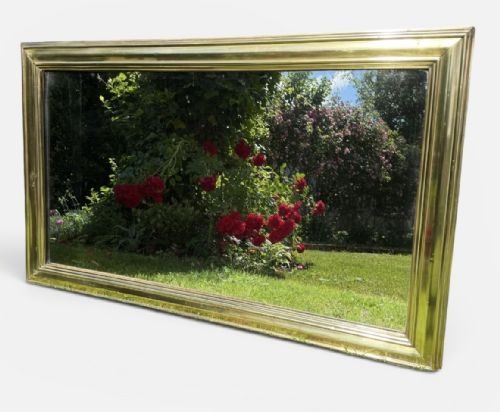
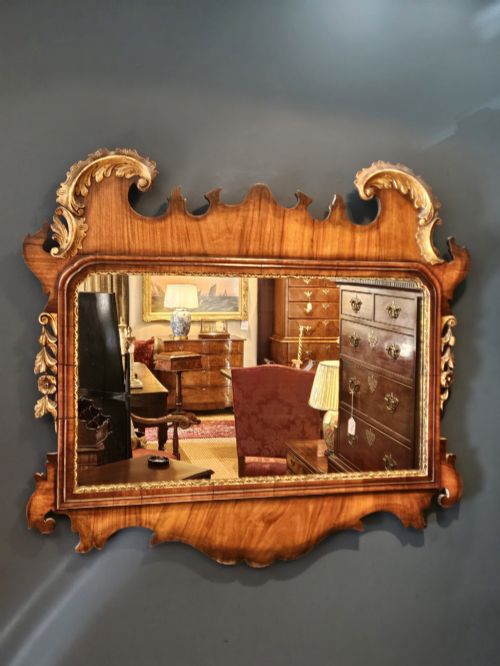
Beyond standard giltwood overmantels, the selection includes related wall mirrors, landscape mirrors, and French bistro mirrors that share the same horizontal emphasis. These frames serve to anchor a room's proportions while bouncing natural light from windows opposite the hearth.
Materials and Construction
Makers built the structural carcases of these frames from dense timbers like mahogany, walnut, oak, and bird's-eye maple, often applying decorative mouldings directly to the solid wood. Carved details were frequently shaped from softer woods before receiving layers of gesso to build up crisp relief work.
Guilders and decorators finished many frames using gold leaf or metallic paint over the gesso base, while others retained natural wood grains polished with wax. Glass plates were traditionally silvered by hand, resulting in characteristic imperfections and light foxing over time.
Some nineteenth-century glasses carry the quiet ghosts of vanished drawing rooms in their softly foxed corners.
Assessing Quality and Handiwork
Quality in an antique horizontal overmantel reveals itself in the depth and precision of the carved ornament rather than surface shine alone. Superior pieces display hand-carved wooden details under the gesso rather than relying entirely on moulded composition ornament.
The integrity of the frame joints and the retention of original gilding and mirror plates dictate the standing of an individual piece. Finer examples maintain their original glass surfaces, where subtle oxidation and foxing confirm historical depth.
The Antique Horizontal Overmantel Glossary
- Giltwood
- Wood that has been covered with a thin layer of gold leaf. This finish defines many formal nineteenth-century frames.
- Gesso
- A plaster-like mixture applied to wooden frames as a base for carving and gilding. It allows for intricate moulded details.
- Tryptic
- A mirror divided into three distinct panels or plates. These are common in wider Regency overmantel designs.
- Foxing
- Age-related spots and discolouration within the mirror glass. This chemical change occurs naturally over long periods.
- Parcel Gilt
- A finish where only specific portions of a wooden frame are gilded. The remaining areas show exposed walnut or paint.
Antique Horizontal Overmantel: Frequently Asked Questions
Where should an overmantel mirror be hung?
These mirrors were originally scaled to sit squarely on the wooden shelf of a fireplace mantel, anchoring the chimney breast.
They also function effectively on any large blank wall where a strong horizontal anchor is required.
How do I identify a Regency overmantel?
Regency frames often incorporate architectural motifs, verre eglomise panels, or tripartite glass divisions within gilded mouldings.
They reflect the neoclassical tastes prevalent during the early nineteenth century.
Are the mirror plates original?
Many older pieces retain their original glass, which can be identified by slight distortions, uneven thickness, and natural foxing.
Replacement glass is common in pieces that have undergone restoration.
How do I clean an antique frame?
Dust the carved wooden or gilded surfaces gently with a dry, soft brush to protect fragile gesso and gold leaf.
Avoid liquid cleaners and harsh chemical sprays that can strip historic finishes.