


Antique Hooped Windsor Chair
An antique hooped windsor chair brings tactile warmth and vernacular character to an interior.
Antique Hooped Windsor Chair
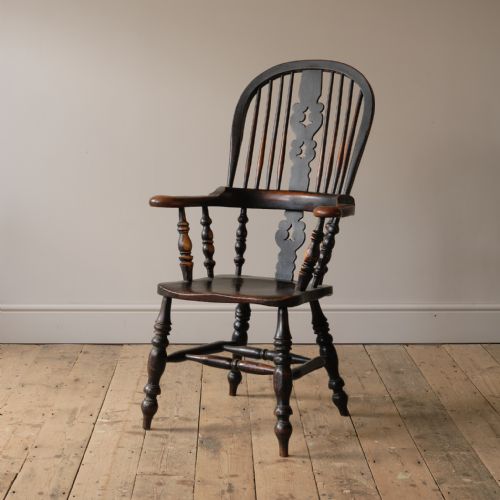
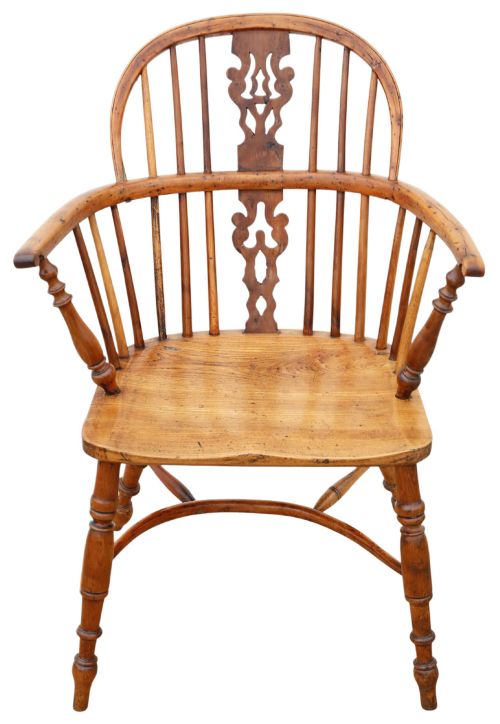
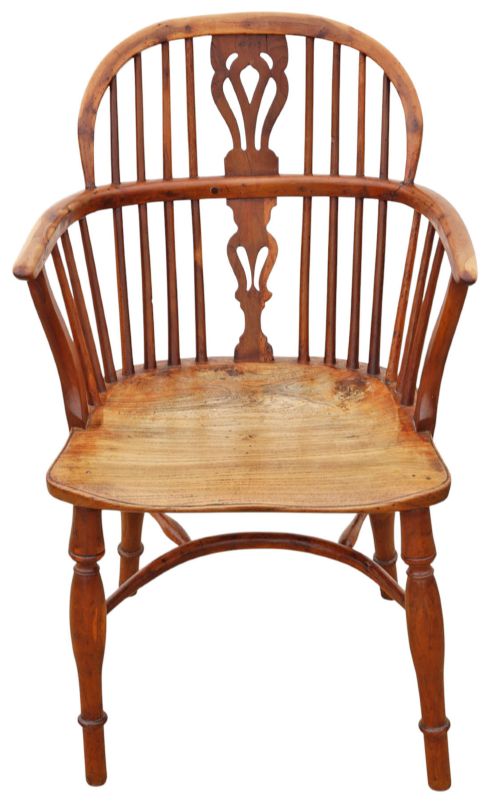
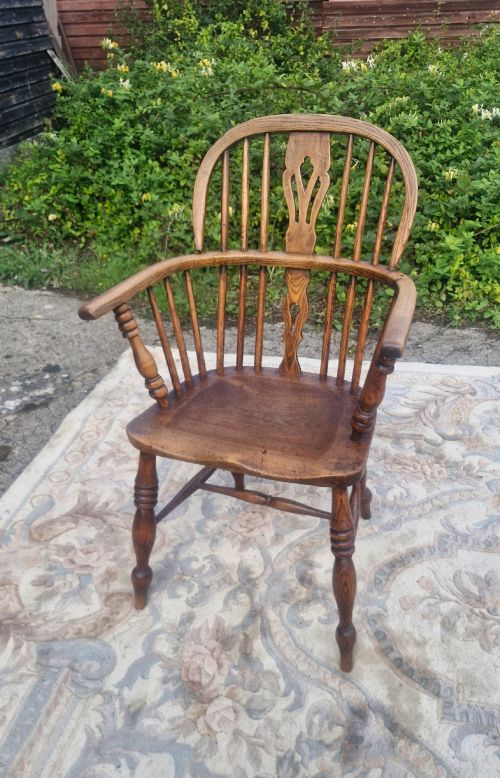
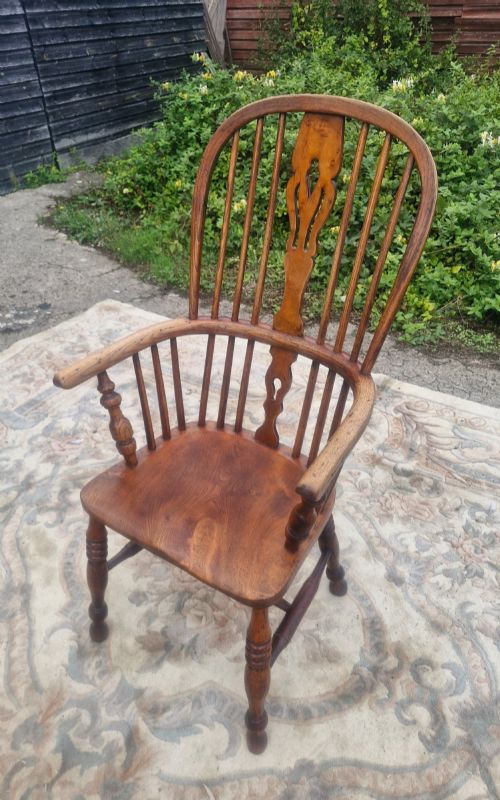
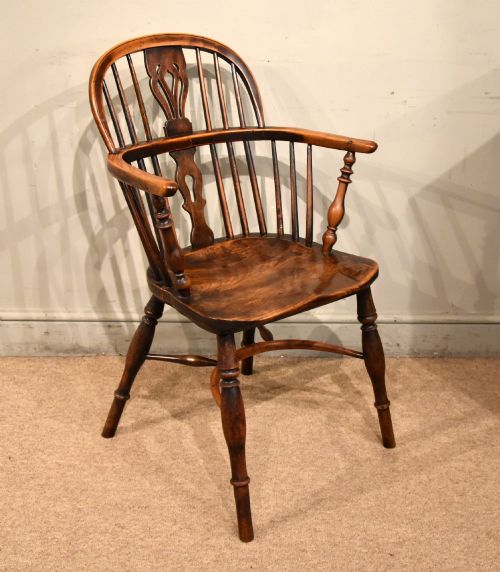
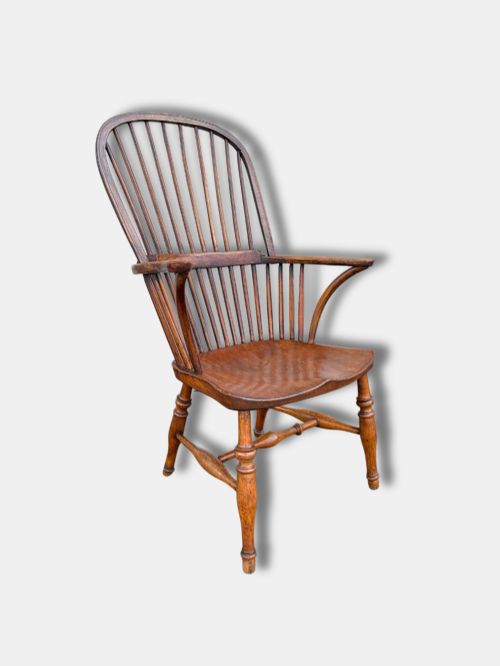
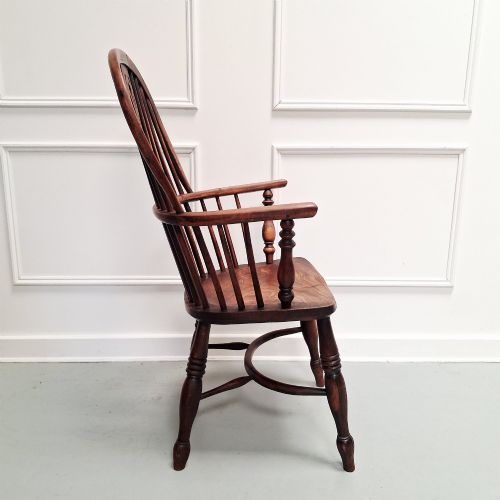
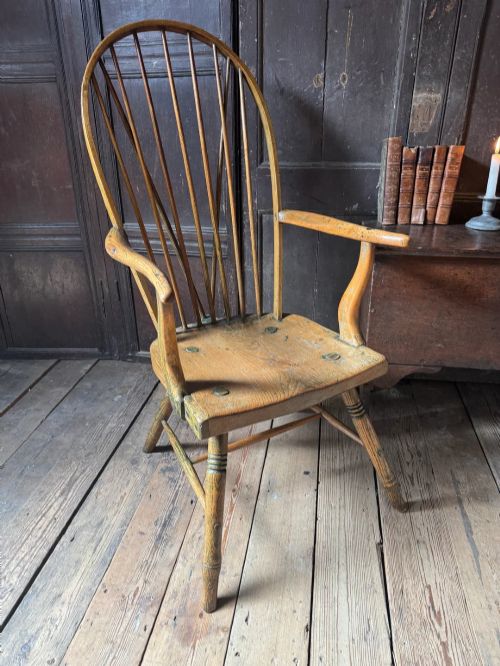
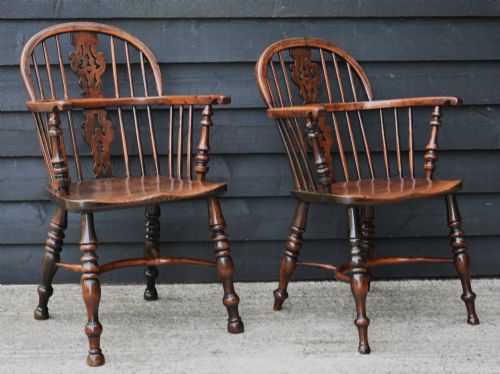
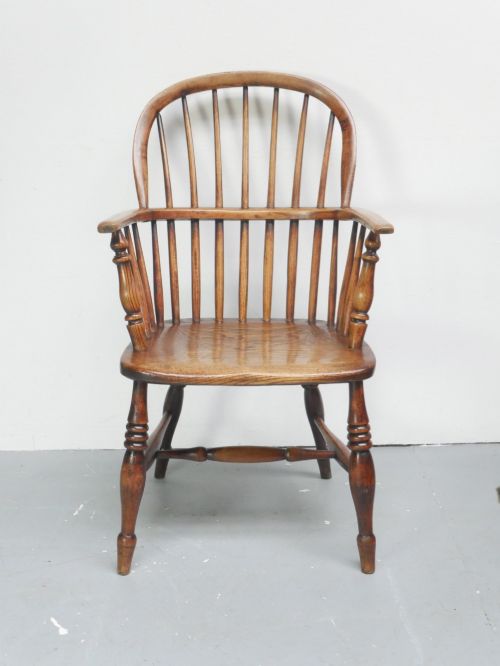
An antique hooped windsor chair is a traditional seating form defined by a bentwood upper bow connected directly into a solid wooden seat. Buyers examining this search phrase encounter regional variations spanning the eighteenth, nineteenth, and early twentieth centuries, including armchairs, low backs, and high backs.
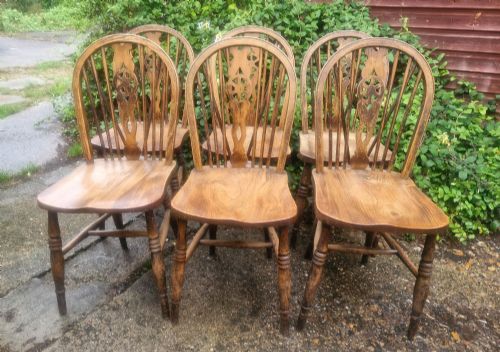
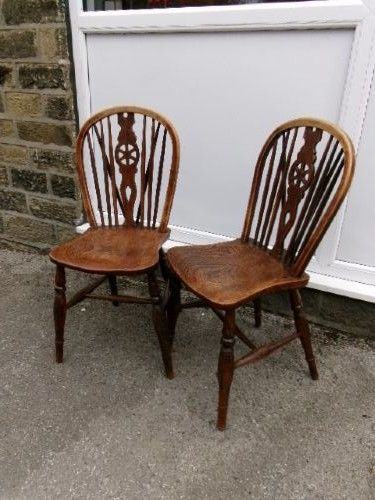
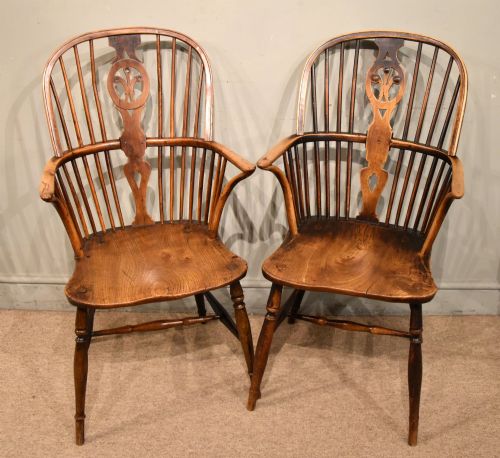
The most common examples on this page combine elm seats with ash or yew superstructures, reflecting English country vernacular traditions. Makers shaped these pieces for domestic utility in farmhouses, kitchens, and country houses, producing forms that ranged from simple stick backs to elaborate wheel backs.
Materials and construction methods
The construction relies on contrasting timbers selected for their specific mechanical properties, pairing solid elm for deeply saddled seats with flexible ash or richly grained yew for bent hoops and spindles. Craftsmen steamed the back bow to achieve the characteristic curve before securing the components through bored holes in the seat.
Makers utilised traditional green woodworking techniques, turning legs and stretchers on a pole lathe and joining the undercarriage with wedged tenons. This integration of rigid and pliable woods created a resilient structure without relying on complex box framing.
Some chairs incorporate miniature proportions intended specifically as children's armchairs.
Evaluating quality and proportion
Quality rests in the depth of the saddle carving in the seat, the elegance of the spindle turnings, and the balance of the overall proportions. Finer examples display carefully selected yew wood grain and well-defined steam-bent hoops that retain their original tension and geometry.
Disparities arise from the preservation of original surfaces, such as early brown paint or patinated bare timber, compared against excessive sanding or replaced undercarriage components. Regional idiosyncrasies, such as crinoline stretchers or broad armrests, also separate standard production from more ambitious workshops.
J SPENCER
The Antique Hooped Windsor Chair Glossary
- Hoop back
- A continuous bentwood rail forming the back and armrests of a chair. This component required skilled steam-bending to achieve the smooth curve.
- Saddled seat
- A wooden seat scooped and hollowed by hand for ergonomic comfort. It provides depth and tactile contouring.
- Stick back
- A chair back constructed from vertical turned or cleft wooden rods inserted into the seat. These provide simple structural support.
- Crinoline stretcher
- An arched undercarriage brace resembling a hoop skirt that ties the legs together. It adds rigidity while offering a distinct decorative profile.
- Elm
- A dense, interlocking timber frequently utilised for Windsor seats. Its fibrous nature resisted splitting under the stress of wedged legs.
Antique Hooped Windsor Chair: Frequently Asked Questions
What is an antique hooped windsor chair?
An antique hooped windsor chair is a traditional wooden seat featuring a steam-bent continuous rail attached to a solid plank seat.
These pieces emerged from regional vernacular traditions, employing mixed timbers like elm, ash, and yew to achieve structural resilience and domestic utility.
How were these chairs used historically?
Historically, these chairs served as functional seating in kitchens, farmhouses, and country residences.
Their sturdy construction made them suitable for daily domestic tasks, while armchair variants often occupied prominent positions near hearths.
How do I tell different periods apart?
Earlier eighteenth-century pieces often display broader proportions, distinct vernacular details, and original painted surfaces.
Nineteenth and early twentieth-century examples frequently incorporate standardised turnings, wheel-back motifs, or steam-bent hoops associated with larger regional production centres.
How do I live with these chairs?
Living with these chairs involves placing them in dining spaces, studies, or hallways where their sculptural timber forms can be appreciated.
Maintaining stable indoor humidity levels protects the joined timbers from drying out or loosening over time.